


Magnolia Seeds | Magnoliaceae Tree
LATIN NAME: Magnolia
COMMON NAME: Magnolia
Plant Profile
Magnolias appeared before bees did, and their flowers are built to be pollinated by beetles, not by the bees that came later. Fossil pollen places the family among the most ancient lineages of angiosperms, so a magnolia in bloom is closer kin to the first flowering tree than to almost anything else in a temperate garden, a fact that surprises visitors who expect the group to be a modern hybrid. Flower parts assigned to the magnolia line turn up in rocks far older than the dinosaurs, a deep pedigree that few garden plants can claim, and one that explains the odd, spiral, beetle-friendly bloom.
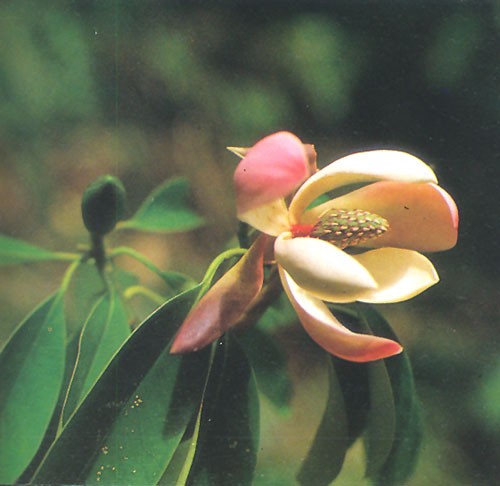
What looks like a petal is a tepal, because the family never split its outer whorl from its inner one. The parts spiral around a cone-like receptacle rather than sitting in neat rings, and the many carpels later open to shed seeds coated in a red aril. That spiral plan is the mark of a basal angiosperm and the reason the flower looks so different from a rose or a pea.
The family splits between Asia and eastern North America, a disconnected range left by continental drift. Chinese and Japanese species such as Magnolia denudata and M. liliiflora were cultivated for a thousand years before Linnaeus named the genus for the French botanist Pierre Magnol, whose work on plant families earned the honour. The split range means an American magnolia and an Asian one can be closer cousins than two Asian species that look alike, which keeps plant hunters alert when they sort wild-collected seed from the two continents.
Classic Magnolia species lift their cup-shaped flowers on bare wood in spring, while the Michelia group, now folded into Magnolia, opens smaller, often fragrant blooms among the leaves. The tulip tree, Liriodendron, is the family’s other face, with lobed leaves and green-and-orange cups that few beginners connect to the magnolia at first glance.
Science & Biotechnology
Magnolia bark yields the lignans magnolol and honokiol, the active markers of the Chinese drug magnolia bark from Magnolia officinalis. These compounds are the focus of pharmacology work on calmative and antioxidant effects, and they are measured by HPLC to standardise extracts used in traditional practice and in modern supplements alike.
Slow seedling flowering pushed growers to micropropagate prized forms on woody-plant media, and somatic embryogenesis is used for the tulip tree in forestry. This fixes a selected colour or form instead of waiting years for a seedling to bloom, which is why the best garden magnolias are nearly always clones rather than seed-raised plants.
Molecular studies reorganised the family, moving many Michelia species into Magnolia and clarifying that Liriodendron is its sister genus. That work guides which species can cross and which are safe parents for ornamentals, and it explains why older books list names that current nurseries no longer use.
Uses & Benefits
Magnolias star as specimen trees and courtyard shrubs; the saucer magnolia and the star magnolia open before the leaves in cold climates. In warm zones the evergreen M. grandiflora screens a wall with glossy leaves and fragrant white cups that scent a whole garden on a still evening.
Magnolia officinalis bark is a standard herb in East Asia for its bitter, warming properties, and M. obovata supplies similar material in Japan. The harvested bark is dried and sliced for decoction, and the tree is planted both for the drug and for the shade it casts over a temple court.
Liriodendron tulipifera gives a pale, workable wood for joinery and veneer, while several Asian magnolias are planted for shade and avenue use. The tulip tree’s straight trunk made it a favourite for clear, knot-free boards in older American furniture workshops.
Growing from Seed
Magnolia seed carries a hard coat and an embryo that needs a warm then cold period; sow cleaned seed in a leafy mix and expect the root to show after the cold spell. The red aril should be removed before sowing, since it can harbour mould in a damp medium and slow the whole tray.
Prick out seedlings at ten centimetres into deep tubes, because the root is thick and brittle. Transplant to the field when the stem is thirty to fifty centimetres, keeping the taproot straight and the collar at soil level, and shade the young tree for its first spring so late frost does not brown the flower buds.
Give shelter from late frost that browns the flowers, acidic loam and even moisture. Mulch the surface and avoid deep cultivation near the shallow roots, since a damaged root crown invites dieback that is slow to recover on a magnolia.
Our Take
If you want a specific magnolia rather than the whole family, start with Magnolia denudata for the white lily tree, Magnolia grandiflora for evergreen screens, or Magnolia officinalis for the medicinal bark. The cross Magnolia x soulangeana is the classic saucer magnolia.
Related Reading
Readers interested in Magnolia frequently explore these as well: