


Quercus coccinea Seeds | Scarlet Oak
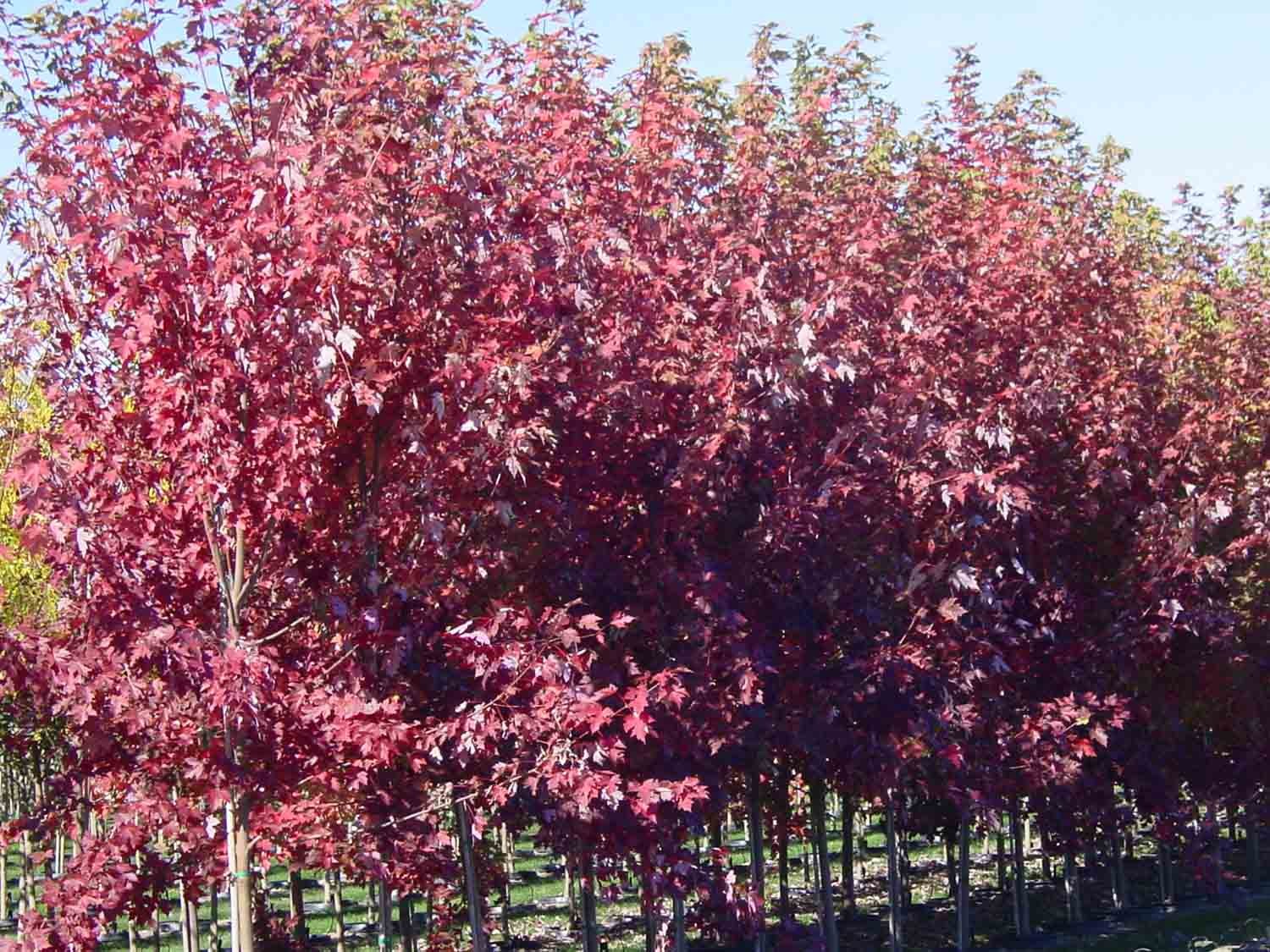
LATIN NAME: Quercus coccinea
COMMON NAME: Scarlet Oak
Plant Profile
No other eastern oak turns a cleaner, sharper scarlet than Quercus coccinea, and the colour holds for weeks instead of browning overnight. That reliable autumn display, more than its timber, is why it was carried to parks and estates from Boston to Beijing as a specimen tree, and why nurseries still list it among the first choices for a cold-climate red. The name coccinea is simply Latin for scarlet, a label earned honestly every October when the crown glows against a clear blue sky and draws drivers slowing to look.
Scarlet oak belongs to the red oak subgenus, marked by leaf lobes tipped with a tiny bristle and by acorns that take two seasons to ripen. Its leaves are deeply cut into five to nine narrow, pointed lobes with a shine that separates it from the duller black oak. The blade is a bright green all summer, then flips to vivid red as day length shortens. On a sunny day the leaf surface flashes, and the leaf shape alone is a good field mark even before the autumn colour arrives to settle the name.
In the wild the tree favours dry, acidic, sandy or rocky uplands, often on south-facing slopes with the black oak and chestnut oak. It grows fast for an oak and tolerates drought once established, which suits it to reclamation ground and to the thin soils of a road-cut bank where slower trees fail.
Each autumn the small, striped acorns feed turkeys, blue jays, woodpeckers and squirrels; a good mast year draws deer as well. Because the acorns are bitter with tannin, they store better on the tree than the sweet-acorn white oaks, which drop and sprout almost as soon as they land. A heavy acorn year is called a good mast year by foresters, and it arrives on the weather rather than on a fixed calendar, so hunters and grocers alike watch the crop from late summer.
Science & Biotechnology
The red autumn pigment is anthocyanin laid down as chlorophyll breaks down, and the leaves are also loaded with condensed tannins that defend against insects. These same tannins are why red-oak bark and acorn cup have been studied for leather tanning extracts, a use that runs through the whole genus and gave several oaks their old trade names. Collecting the bark for dye and tanning was once a cottage task in the Appalachian uplands, where the red-brown extract coloured homespun wool before synthetic tannins took over the trade.
Uses & Benefits
The heavy, ring-porous wood is marketed with other red oaks for flooring, furniture and veneer, though scarlet oak logs are the smaller end of that trade. More distinct is the bark, dark and ridged, once gathered for its tannin-rich extracts used in curriers’ work before synthetic tannins took over the leather trade.
Red oaks hybridise freely, and scarlet oak crosses with the pin oak and the black oak where their ranges meet. Researchers use DNA markers to sort wild seedlings and to track which parent gave the sharper autumn colour, feeding the selection of ornamental clones for the nursery trade.
Given room, scarlet oak forms a broad, rounded crown fifty feet high that earns its place as a lawn specimen. Its open habit lets grass grow beneath, unlike the dense shade of maples, and the red crown reads from a long way down a rural road in late October.
On mine spoil and road cuts it establishes where slower oaks fail, fixing soil with a deep taproot. Mixed with pines it builds a quick shelterbelt, and its tolerance of poor, dry ground makes it a dependable first tree on a bare, exposed new site.
Growing from Seed
Collect sound acorns as they fall and heel them into damp sand or refrigerate them; they lose viability if they dry. Sow at roughly twice their own depth in a sandy seedbed, and give a cold moist period so the embryo finishes ripening before the root pushes down in spring.
Lift seedlings when they reach fifteen to twenty centimetres and move them to tubes. Transplant to the field once the stem is forty centimetres tall, planting the root collar at ground level and staking only on windy sites, since a straight, untwisted taproot matters more than early height for a long-lived oak.
Choose full sun and acidic soil; water the first season, then trust it. Watch for oak wilt and the twig-pruning gouty oak gall, neither of which usually kills a healthy tree, and avoid compacting the soil over the root zone where cars or foot traffic would starve the fine feeder roots.
Our Take
Scarlet oak is the dependable red for cold, dry sites where the pin oak struggles. For relatives with their own merits, compare Quercus palustris for wet ground, Quercus macrocarpa for the broad bur acorn, and Quercus acutissima for an Asian sawtooth oak. The kermes oak at Quercus coccifera shows the Old World side of the group.
Related Reading
Readers interested in Scarlet Oak frequently explore these as well: