


Cichorium intybus Seeds | Chicory
LATIN NAME: Cichorium intybus
COMMON NAME: Chicory
Plant Profile
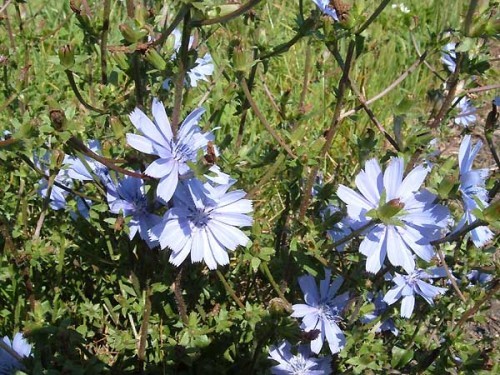
Each chicory head is a composite of ray florets with squared-off tips, a clean field mark that separates it from the similar dandelion. The root is a thick, fleshy taproot that can run deep into the soil, which is why the plant shrugs off drought and why it is grown as a root crop rather than a leaf crop in many regions.
As a hardy perennial, chicory dies back in winter and pushes fresh rosettes each spring from the crown. Left alone it grows into a branching, blue-flowered bush along roadsides; cultivated for salad it is cut back hard to force tender new shoots. Wild chicory varies in flower size across its range, and some North American populations open larger blue heads than the European type, yet all share the habit of closing by midday.
The taproot stores much of its carbohydrate as inulin, a chain of fructose units that the human gut ferments rather than digests, giving chicory its prebiotic reputation. The root is harvested, sliced, and dried before roasting, and the roasting step is what turns the mild, slightly bitter root into a dark, coffee-like product.
Heat drives the conversion of inulin toward shorter sugars and develops colour through Maillard browning, so the roasted root smells of toast and cocoa rather than of raw vegetable. The result contains no caffeine, which is precisely why it became the evening alternative to coffee across Europe. The roasted product is sold as a caffeine-free blend and is mixed with coffee in many households precisely for its darker, smoother cup.
Science & Biotechnology
The bitterness of chicory comes from sesquiterpene lactones, chiefly lactucin and lactucopicrin, concentrated in the root and the leaves. These same compounds give wild chicories their sharp, sought-after bite in salads. When the root is roasted, the sugars caramelise and the bitter lactones mellow into the malty, coffee-like note that defines the substitute brew.
Chicory’s close relative Cichorium endivia is the endive and escarole of the salad bowl, bred for broad, blanched leaves rather than a deep root. Both share the blue flower and the bitter lactones, but intybus is the perennial root crop while endivia is the annual leaf crop. Knowing which you grow decides whether you dig or you cut.
Uses & Benefits
Drive a summer road in Europe and you will see chicory’s sapphire flowers line the verge, then notice by midday that every one of them has shut. The blooms open at dawn and close by late morning, a daily rhythm that fooled many a forager into thinking the plants had vanished. Behind that blue is a deep taproot that has fed and caffeinated people for centuries: dried and roasted, it becomes the coffee substitute still sold across the continent, and the same root stores inulin, a prebiotic carbohydrate that modern food science has rediscovered.
A specialised technique takes chicory roots, packs them in darkness and warmth, and forces tight, pale shoots called chicons, the Belgian endive of the market. The absence of light prevents greening and keeps the bite mild. The same forcing logic is why salad chicory is often blanched before eating.
Growing from Seed
Sow chicory in drills on open, well-drained ground and thin the seedlings so each plant has room for a full taproot. The seed is straightforward and the plants are unfussy about soil, though deep, loose ground gives the straightest roots. For salad types, cut the leaves repeatedly rather than letting the plant bolt.
Space the drill rows widely and thin the young plants to a comfortable gap so the roots can swell without crowding. Keep the bed weed-free in the first weeks while the seedlings are small, then the deep root takes over and the plant needs little care through the season.
For tender salad shoots, pile straw or a pot over the regrowing crown to exclude light, which blanches the leaves and softens the bitter edge. Lift roots for coffee in the autumn after the tops fade, and dry them thoroughly before roasting so the grind stays even.
Our Take
Chicory is two plants in one: a blue wildflower and a coffee root. Grow it for the verges or the cup, but give it room for the taproot. Related crops to explore are Cichorium endivia, the garden Chrysanthemum indicum, and Ox-Eye Daisy.
Related Reading
Continue exploring with these related plants: