


Dianthus caryophyllus Seeds | Carnation
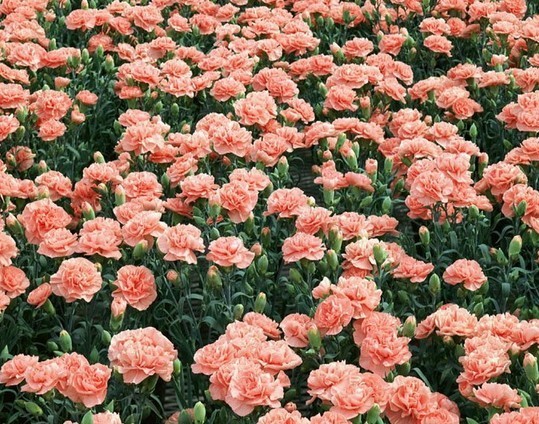
LATIN NAME: Dianthus caryophyllus
COMMON NAME: Carnation
Plant Profile
Carnation (Dianthus caryophyllus) is a tufted, grey-leaved perennial of the pink family (Caryophyllaceae), native to the Mediterranean region and grown in gardens for more than two thousand years. It produces slender stems 40-80 cm tall, topped by fringed, clove-scented flowers in a huge range of colours. Its long vase life and rich scent have made it one of the world’s most important cut flowers.
Science & Biotechnology
Dianthus caryophyllus sits in the Dianthus group, a group that keeps botanists, horticulturists and plant breeders busy with questions of classification, adaptation and ornamental potential. Modern carnation breeding continues to be a substantial commercial horticultural industry, particularly focused on developing improved vase life and colour range for global cut-flower trade. Gardeners benefit directly from its long cultivation: what the plant will do in a garden is well understood.
Uses & Benefits
In the garden, Carnation earns its place in borders, containers and mixed plantings, and it also rewards growers who raise plants for cutting, drying or kitchen use. Its long cultivation history and clove-like fragrance also continue to make it a favourite for fragrant garden borders and traditional flower arranging. Given the right start, it carries on with minimal intervention.
Pinks and carnations are cutting-flower royalty; in Chinese medicine the related Qu Mai is a classical diuretic herb, and the petals of scented types are a traditional edible garnish.
Growing from Seed
Raising Carnation from seed is straightforward. Sow seed into a loose, well-drained mix at a shallow depth, keeping it consistently moist until germination. Full sun suits this hardy perennial well, and it typically flowers within its first year from an early sowing, developing into a reliable, long-lived perennial in favourable conditions. Use a loose, well-drained seed compost, sow evenly over the surface and cover lightly, and keep everything evenly moist in full sun. Grow the youngsters on steadily in pots until well rooted, then move them to their final positions.
Our Take
Carnation earns its space through character rather than fuss. Carnation settles in quickly once it finds its footing. Careful watering early on is rewarded by toughness at maturity.
Related Reading
More species in the same orbit as Carnation: