


Davidia involucrata Seeds | Dove Tree Handkerchief Tree
LATIN NAME: Davidia involucrata
COMMON NAME: Dove Tree, Handkerchief Tree, Ghost Tree
Plant Profile
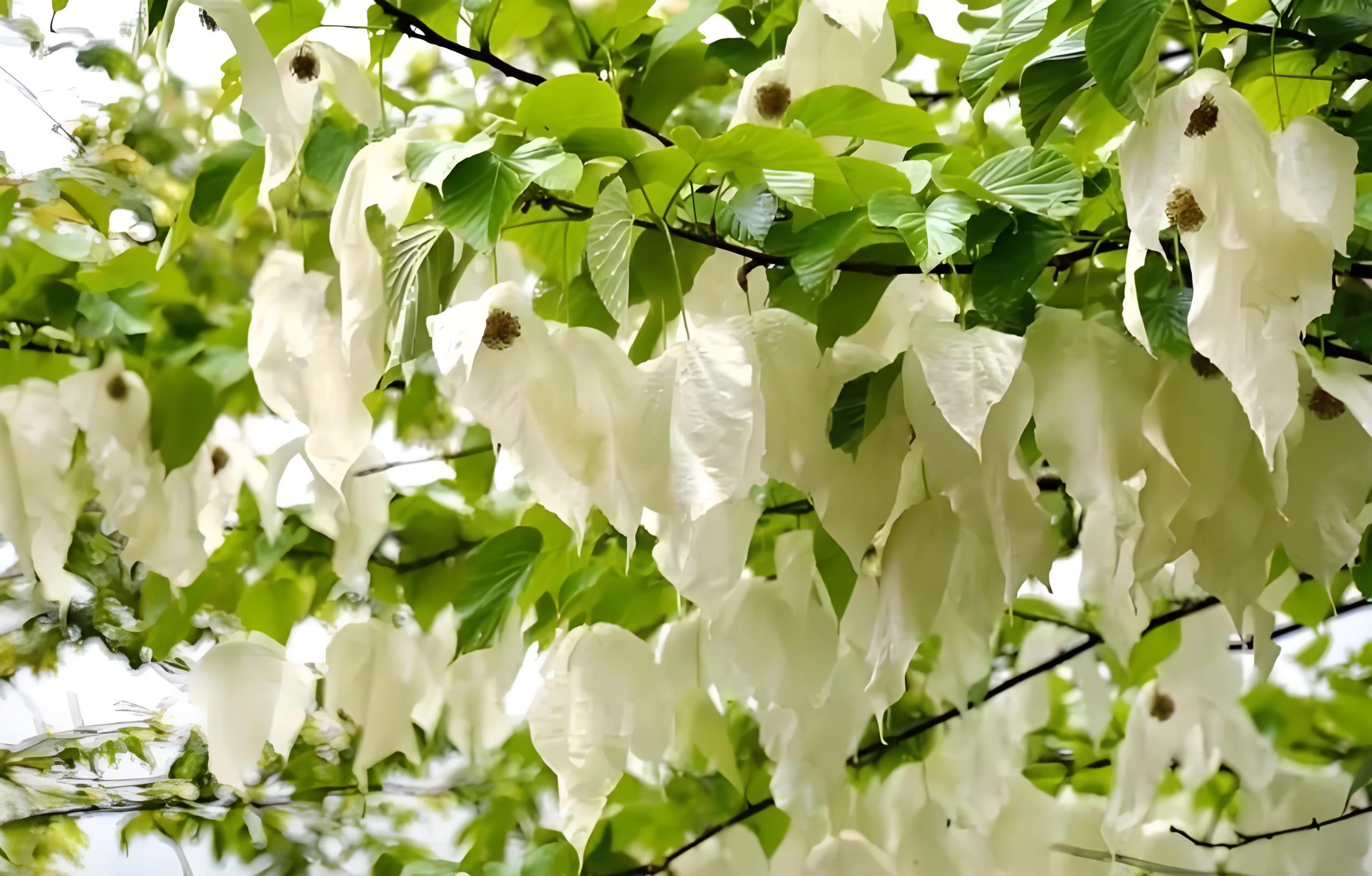
Davidia involucrata is a deciduous tree of medium to large size with a layered, spreading crown and smooth grey-brown bark. The leaves are large, oval to heart-shaped, pointed, and finely toothed, carried alternately on the branches. The true flowers are small and grouped in a head, flanked by two long, drooping, white bracts that can reach the length of a hand and that give the tree its common names. A single tree in flower is a cloud of pale flags.
What reads as a blossom is actually a modified leaf, the bract, and the real flower sits at its base. This is the same trick played by the dogwoods, which is why the dove tree was long placed in the dogwood family and still sits near it in modern classifications. The bracts fade from green-tinged to pure white as they open and tremble in the lightest wind.
In cultivation the dove tree is an arboretum specimen and a feature tree for a large garden, prized for the late-spring bract display and the bold foliage through summer. It is too big for a small urban lot but superb where it has room and root space. It pairs in the bract-tree theme with the flowering dogwoods, both of which also show big floral bracts.
Planted as a single specimen on open lawn, the tree puts on its handkerchief show where nothing competes for attention, and the fallen bracts litter the grass like dropped linen. The display lasts only a brief while, which is part of its preciousness and the reason a mature specimen is worth a place of honour.
For a collection of bract-bearing trees, the dove tree sits naturally with the dogwoods named above, and with the David peach, another Chinese plant gathered by Armand David, linking the two by exploration history as well as garden use. A mixed planting turns a single curiosity into a small museum of bract biology.
Science & Biotechnology
The interesting chemistry of Davidia is in the leaf and bract tissue, where flavonoids and tannins typical of the order have been recorded, though the tree is grown for neither drug nor oil. More active is the conservation and propagation science: the species is valued as a relic endemic, and tissue culture and grafting are used to multiply named forms and to protect wild genetic material. The bract developmental pathway is also a small model for how one organ can be reshaped into another.
Studying how a leafy bract is coaxed into a great white flag informs a wider question in plant development about organ identity, the same ABC-type logic that explains flower formation elsewhere. The dove tree is a striking, teachable example rather than a chemical resource, and it is often used to show students the difference between a bract and a petal.
Uses & Benefits
Because seedlings are slow and variable, choice forms are grafted onto seedling rootstock or multiplied by tissue culture to hold the bract size and tree shape true. This clonal work mirrors the micropropagation done on many ornamental trees and keeps a cultivar consistent from one garden to the next.
Growing from Seed
In the wild it grows in cool, moist mountain forest, often on slopes among other broad-leaved trees, which tells the grower that it wants shelter from harsh wind and a humus-rich soil rather than a hot, dry exposure. Armand David sent the first Western collections from China in the 1860s, and the tree reached English and French gardens soon after.
The seed is a hard, bony nutlet that needs a long moist cold period to break dormancy and may take more than one season to appear, so patience is the first requirement. Sow it deep in a sheltered bed or start it in a deep pot, keep the medium cool and damp, and do not expect uniformity. The resulting seedling is slow and must be protected from hot sun and drying wind in its first years.
Clean the seed, mix it with damp media, and hold it cold through the cool months; a warm, dry start simply stalls it. Some seeds wait a second season, which is normal for the species and not a sign of failure, so label the pot and forget it rather than digging to check.
Move the young tree to its permanent place once it stands a sturdy height with a straight leader, never on a calendar date, and plant it deeper than it sat in the pot to steady the stem. Shelter it from wind, water through dry spells, and shape a single trunk. Pests are few, though the leaves can brown at the edges in hot, dry sites and the young bark is worth guarding from deer.
Our Take
Grow the dove tree for the brief window each year when your garden looks like it is full of resting doves; build a bract-tree collection around it with Cornus florida seed and Cornus kousa seed, and remember its collector through Prunus davidiana seed.
Related Reading
Gardeners who grow Dove Tree often pair it with these related subjects: