


Cornus kousa Seeds | Kousa Dogwood
LATIN NAME: Cornus kousa
COMMON NAME: Kousa Dogwood
Plant Profile
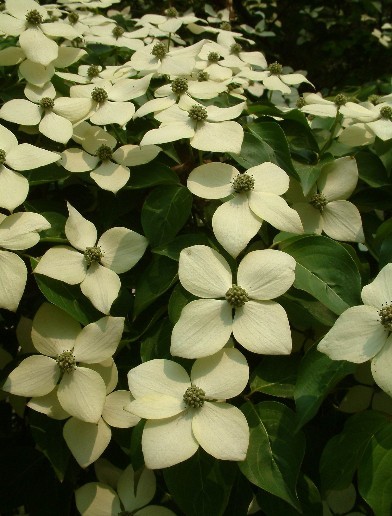
Cornus kousa is a small tree of the dogwood family, four to eight metres tall, native to Japan, Korea and central China. What look like four white petals are bracts, and they open in late May, a month after the American flowering dogwood, coming to a sharp point rather than a rounded notch.
The true flowers are the small green cluster in the centre, which becomes a knobbly red fruit in autumn, resembling a raspberry on a stalk. The fruit is edible but mealy and bland, and birds leave it until late winter. The bark is grey and exfoliating, and on old trees it peels in patches that give the trunk a mottled look.
Science & Biotechnology
The bracts are modified leaves, and their white colour comes from air spaces in the tissue rather than from pigment, which is why they fade to pink as the tissue ages. Flowering is heaviest after a warm, dry summer the previous year, since the buds are formed in autumn.
Kousa dogwood is markedly more resistant to dogwood anthracnose than Cornus florida, and the two species have been hybridised to produce trees with the American flower form and the Asian disease resistance. The hybrids, sold as Cornus rutgersensis, are sterile and flower over a longer period.
Uses & Benefits
The tree is grown almost entirely as an ornamental, for the layered horizontal habit, the bracts in spring and the scarlet autumn foliage. It is also one of the better small trees for a lawn, since the roots run deep and the canopy casts light shade.
The fruit is edible in the sense that it will not harm you, but it is not worth picking. In China and Japan the young leaves are sometimes cooked, and the wood has been used for small tools. The bark is thin and easily damaged by string trimmers, which is the commonest way a planted tree dies. In autumn the foliage turns a deep purple-red that lasts for several weeks, which is the second reason the tree is planted, and the colour is stronger on acid soil and in an open site.
Growing from Seed
Seed has a double dormancy: a warm period for the embryo to develop, then a cold period to break it. Four months at 20°C followed by three at 4°C, or simply sowing fresh in autumn and waiting two springs, is the reliable method.
Trees want acid soil, moisture and light shade for the first years, then sun for flowering. They transplant well as small bare-root plants and badly as large ones. Expect the first flowers at five to seven years from seed, and twenty years to reach the layered shape that makes the tree worth growing. The tree tolerates clay better than most dogwoods, provided the ground does not stay wet through winter.
Our Take
The best small flowering tree for a cold garden with dogwood anthracnose, and one that rewards patience with a shape no other tree quite has.
Related Reading
If Kousa Dogwood appeals to you, these related plants are worth a look: