


Lolium multiflorum Seeds | Italian Ryegrass
LATIN NAME: Lolium multiflorum
COMMON NAME: Italian Ryegrass
Plant Profile
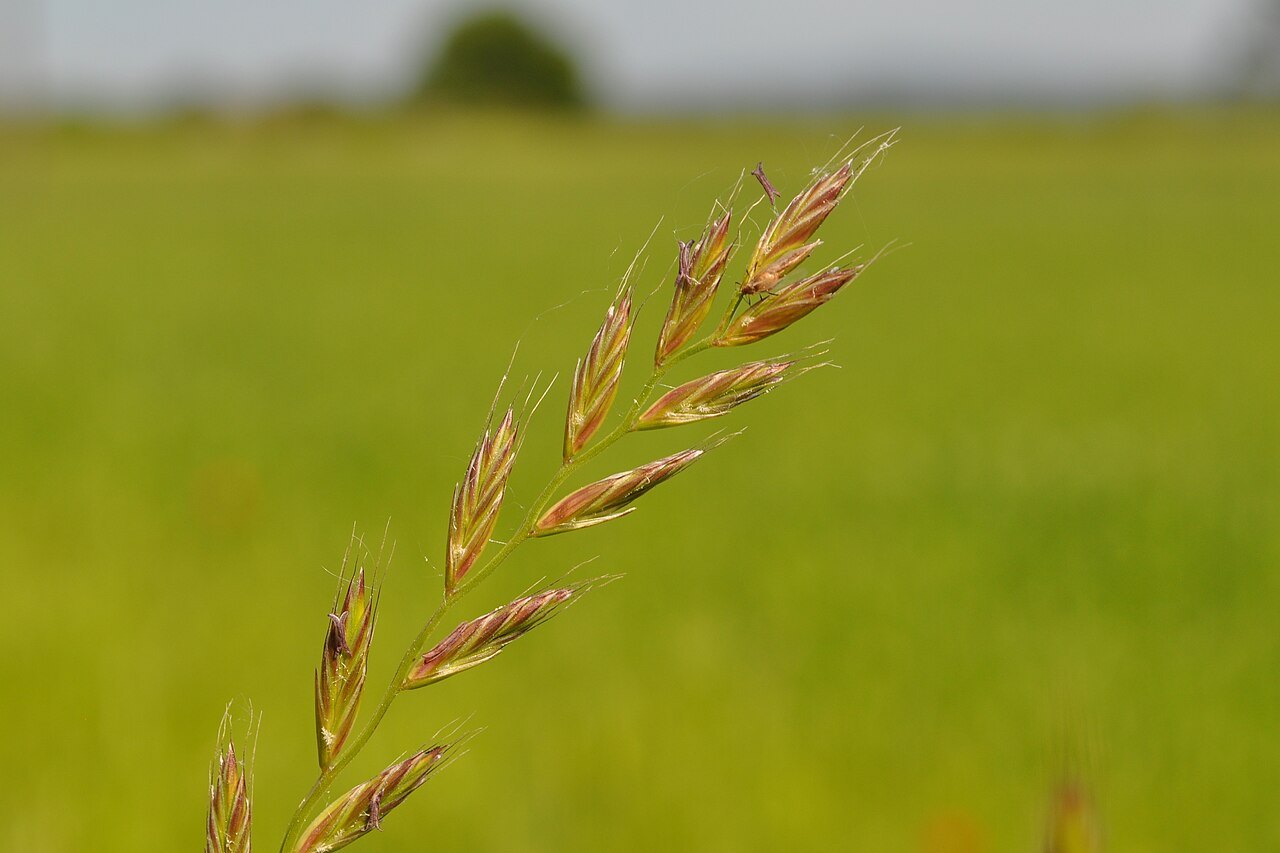
Lolium multiflorum is Italian ryegrass, a tufted grass of the Poaceae from southern Europe and the Mediterranean basin, though it has been carried around for so long that nobody can draw the edge of its native range with confidence. It reaches a metre in a good season, with broad, glossy, dark green leaves, a short blunt ligule and a spike whose lemmas carry awns.
The awns are the quickest way to tell it from perennial ryegrass in the field, and the other test is in the shoot: Italian ryegrass leaves are rolled in the bud, while perennial ryegrass leaves are folded. It comes up faster than anything else in the seed trade, five to seven days in warm soil, and it tillers hard from the base once it is through.
Annual, biennial and short-lived perennial forms all exist, and the plant crosses freely with L. perenne wherever the two grow together, so intermediate types turn up in old leys and in seed crops that were not isolated. Dutch growers selected the truly annual form at Westerwolde in Groningen at the end of the nineteenth century. Seed of that type is still sold as Westerwold ryegrass, and it is the one to buy if you want a single season and no leftovers.
Science & Biotechnology
The species is diploid with fourteen chromosomes, like perennial ryegrass, and the two interbreed so easily that some taxonomists have treated Italian ryegrass as a subspecies of L. perenne. Tetraploid cultivars, raised by treating seedlings with colchicine, have wider leaves, thicker tillers and higher yields, and they now dominate the silage trade on both sides of the Atlantic.
Italian ryegrass usually carries Epichloë occultans, a seed-borne endophyte that is itself a hybrid of two other Epichloë species. It produces lolines, which deter insects, but not the lolitrem B that causes ryegrass staggers in grazing animals, so this grass does not carry the toxic reputation of its perennial cousin and can be grazed hard through the summer.
The same vigour that makes it useful makes it hard to be rid of. Populations in several countries now resist ACCase inhibitors, ALS inhibitors and glyphosate, often in combination, and the species is a host of wheat yellow leaf virus and ryegrass mosaic virus. In the grass-seed districts of Oregon, where the crop is grown for seed rather than for forage, resistant Italian ryegrass in the rows has been a running problem for decades.
Uses & Benefits
Sown alone, it is winter grazing and green manure in mild climates. Sown with something slower, it is a nurse crop that holds the soil and covers the ground while the main species establishes, and it is cut or grazed off before it can compete with what it was meant to protect.
As a lawn grass it is used where speed matters more than texture, and in a mixture it contributes establishment vigour at the cost of a coarser sward. In the southern United States it is oversown into dormant bermudagrass lawns and sports fields in autumn to give winter colour, and the same practice is common on golf courses through the warm belt from Florida to Arizona.
For silage and haylage it yields heavily under nitrogen and cuts early, and the tetraploid types wilt faster, which matters when the weather is unsettled at cutting time. Seed rates run from about 10 kg/ha as a nurse crop to 30 kg/ha for a pure stand. Fellow Poaceae members here: Lolium perenne, Pennisetum orientale and Achnatherum splendens.
Growing from Seed
Broadcast or drill in late summer or early autumn in mild climates, or in early spring where winters are hard. It wants a firm, fine seedbed and enough moisture to germinate. On a rough surface establishment is uneven, and the grass loses the very advantage you sowed it for. In Ireland and New Zealand, autumn sowing is the default.
Cover the seed by one to two centimetres. Deeper than that and the seedling runs out of reserves before it reaches the light. It responds to nitrogen early, and a light dressing after the first grazing keeps it tillering into the autumn.
Do not let it set seed where you do not want it. A single plant can shed enough to carpet a border the following year, and the seedlings are vigorous enough to smother small perennials. Mow the heads off as they colour, or accept that you have sown a permanent colony.
Our Take
Italian ryegrass is scaffolding. It covers ground, feeds stock and holds a slope for a season, and then it should give way. Treat it as a permanent lawn and you will be disappointed by the texture and by the way it thins in a cold winter. The place it earns is the new garden and the damaged bank: sow it, use it, and let the slower species take over.
Related Reading
More species in the same orbit as Italian Ryegrass: