


Artemisia argyi Seeds | Chinese Mugwort
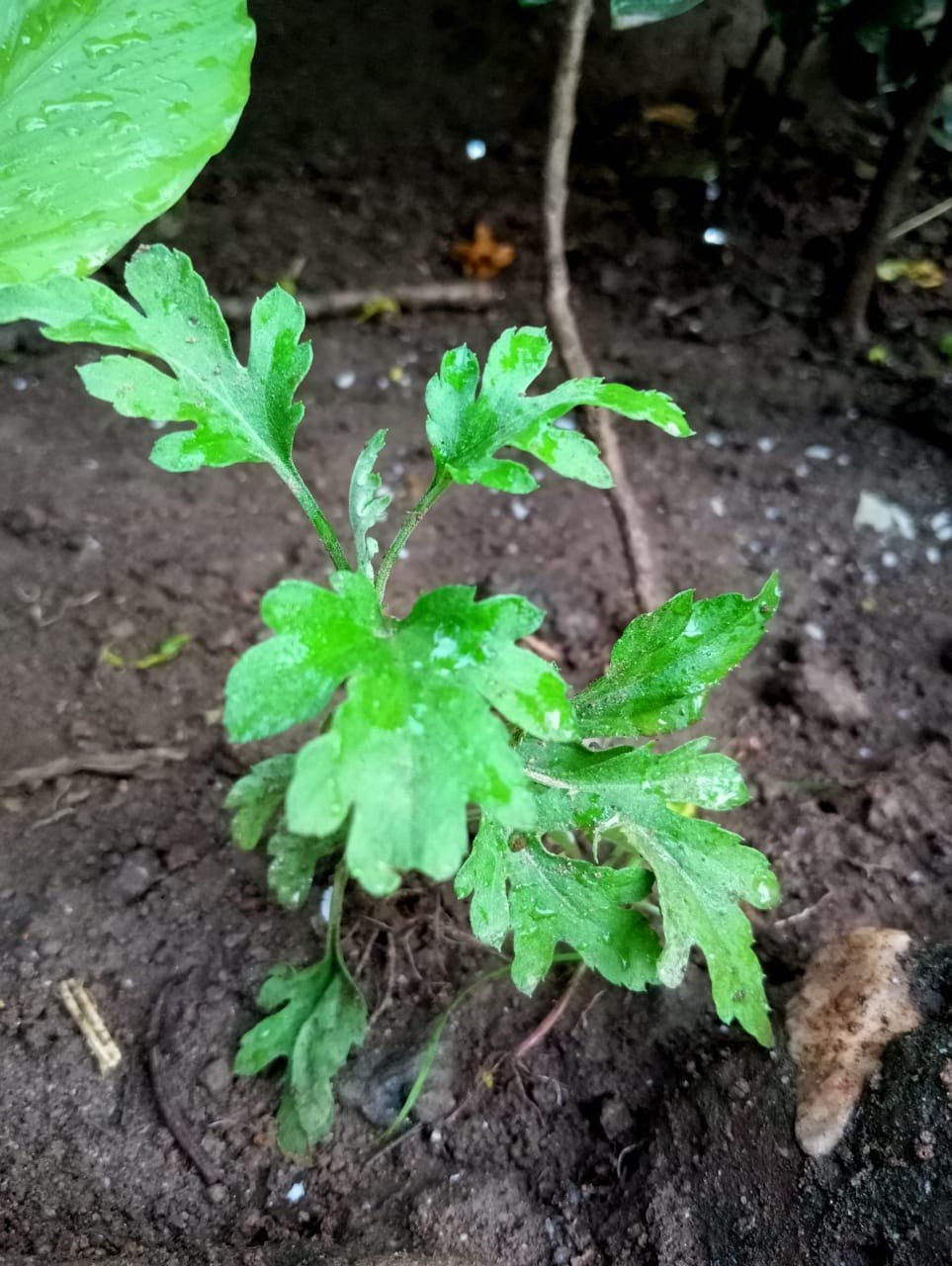
LATIN NAME: Artemisia argyi
COMMON NAME: Chinese Mugwort
Plant Profile
Artemisia argyi is a herbaceous perennial of the Asteraceae, described by Leveille and Vaniot from material collected in China. It grows 80 to 150 cm tall, with deeply divided leaves that are green above and white-felted beneath, and a spreading root system that forms colonies. Chinese plants carry 34 chromosomes, and counts of 18 and 36 also appear in the literature.
The leaves are the plant’s most distinctive feature: green above, densely covered with white hairs beneath, which gives them a silvery look and a soft, felty texture. The hairs are why the plant survives dry hillsides, since they reflect light and hold a layer of still air over the leaf. The flowers are small and yellow-green, produced in narrow panicles in late summer.
The plant is one of the most important herbs in Chinese culture, used for moxibustion, for medicinal teas, and for food. The dried leaves are burned in moxa sticks and cones, which are used in acupuncture to warm the skin and the meridians, and the young leaves are used to colour and flavour qingtuan, the green rice cakes eaten at Qingming.
It is also a garden plant, where the silver foliage and the strong scent are worth having, and one of the few Artemisia species grown for both medicine and ornament. It is hardy and vigorous and spreads by rhizomes, which suits a wild corner and ruins a small border. In China the leaves are cut in early summer, before the flowering stems harden.
Science & Biotechnology
Artemisia is a genus of about 500 species in the Asteraceae, and it includes wormwood, tarragon, mugwort and the source of the antimalarial drug artemisinin, A. annua. The genus is characterised by the aromatic foliage and by the small, wind-pollinated flowers.
The silver colour of the leaves is structural, produced by dense hairs that reflect light and reduce water loss. The same mechanism gives the leaves of olive and lavender their colour, and it is more pronounced in dry, sunny conditions.
The genus is built on x = 9, and A. argyi carries 34 chromosomes, with 18 and 36 also reported. Genome work shows chromosomes 8 and 9 fused to form chromosome 10, which explains the odd base number. The genome is 7.9 gigabases and nearly three-quarters transposable elements. Steam distillation gives about 0.7 per cent oil, dominated by thujone at 14.9 per cent, globulol at 11.6 per cent and 1,8-cineole at 11.3 per cent.
Uses & Benefits
It is used in herb gardens, in borders and in wild gardens, where its silver leaves and its scent are valuable. It belongs in a pollinator planting too, because bees and butterflies work the flowers for weeks. In Chinese medicine it is used for cold and damp conditions, for menstrual complaints and for skin problems, and the moxa made from the leaves is one of the most widely used therapeutic tools in the tradition. The essential oil contains cineole and thujone, and it has been studied for its antimicrobial and anti-inflammatory activity.
The young leaves are edible and go into the green rice cakes of the Qingming festival, where their colour and faint bitterness are the point. The leaf also carries three O-methylated flavones, hispidulin, jaceosidin and eupatilin, and an oil that stops several food-borne bacteria at 16 to 64 micrograms per millilitre. Dried leaves are burned as a fumigant and packed into moxa.
The plant is not a garden plant for a small border, since it spreads and can become invasive. It is a plant for a wild corner or a herb garden where its running habit can be tolerated, and it should be kept away from delicate neighbours. It shares the family with Artemisia carvifolia, Tagetes lucida and Pericallis hybrida.
Growing from Seed
Sow indoors six to eight weeks before the last frost at 15 to 20 °C, on the surface and only just covered, since the seed needs light. A slow start, then a fortnight of steady germination. Pot them on singly at 15 °C. Set them out 45 cm apart once the frost has gone, in full sun and sharp drainage. Poor soil suits it, and feeding does more harm than good.
Keep the young plants watered, then let the weather do the work. Cut the plant back in spring to keep it compact, and divide clumps every three or four years to control its spread. Harvest the leaves before flowering for the strongest scent and the highest oil content.
Grow it in a pot if you are worried about it spreading, since it can be invasive in a rich, moist garden. In a herb garden, give it a corner of its own and be ruthless about removing the runners that escape.
Our Take
Artemisia argyi is a plant with a thousand years of use behind it, and it is worth growing for its scent and its silver leaves as well as for its medicine. It is vigorous, hardy and useful, but it spreads, so give it room.
Grow it in a herb garden or a wild corner, harvest the leaves in summer, and use them in tea or in moxa. It is a plant that connects a garden to a long tradition, and that is worth something.
Related Reading
More species in the same orbit as Chinese Mugwort: