


Cynanchum paniculatum Seeds | Paniculate Swallowwort
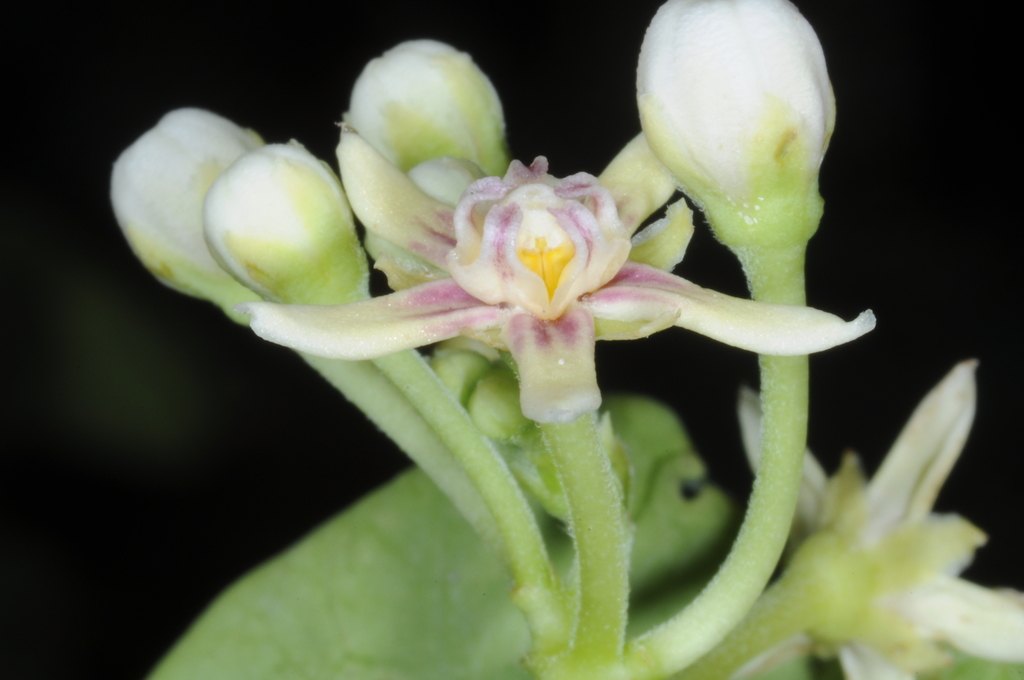
LATIN NAME: Cynanchum paniculatum
COMMON NAME: Paniculate Swallowwort
Plant Profile
Cynanchum paniculatum is a slender perennial of eastern Asian meadows, forty to eighty centimetres tall, with narrow willow-like leaves and loose heads of starry white flowers touched with lavender. Alexander von Bunge collected it around Beijing in the early 1830s, and modern treatments that expand the old swallowwort genus have renamed it Vincetoxicum bungei in his honour.
The foliage is distinctive for the family: opposite, linear to lanceolate leaves five to ten centimetres long on upright stems that carry no milky swagger, just a neat vertical line. From July into August the stem tips open airy panicles of flowers whose slim petals curl back, pink in bud and white to lavender in open bloom.
Seed pods follow as the paired slender follicles typical of the milkweed alliance, eight to ten centimetres long, splitting down one seam in autumn to release flat brown seeds each trailing a silk coma. Crush a leaf or the root and the plant answers with a sweet resinous scent, and that scent is the plant’s signature.
The Chinese drug name xu chang qing is a person’s name, attached by legend to a healer who served his community so well that the herb took his name, and the story survives in every materia medica class alongside the less romantic fact of what the root actually contains. The other Apocynaceae in the catalogue are Cynanchum chinense, Catharanthus roseus and Asclepias incarnata.
Science & Biotechnology
The signature compound is paeonol, a small fragrant phenolic that also occurs in peony bark and gives this plant its scent. The root carries the highest concentration, and pharmacological work on paeonol reports analgesic, antipyretic and anti-inflammatory effects, which aligns closely with the uses the traditional pharmacy assigned the herb.
As a member of the milkweed alliance it pollinates in the family’s peculiar way: the pollen is packaged into paired pollinia that clip onto an insect leg or tongue by a translator arm and are carried whole to the next flower. Butterflies matter here, and in Japan several danaine butterflies, the chestnut tiger among them, use the plant as a larval host.
The name history is a small lesson in taxonomy’s drift. Bunge described it as a Cynanchum in 1835; Kitagawa reaffirmed that placement in 1939; and current molecular work pulls the bulk of Cynanchum back into an enlarged Vincetoxicum, leaving field botanists to write both names and databases to argue about it. The plant notices none of this.
Uses & Benefits
Xu chang qing root is listed in the Chinese Pharmacopoeia for pain relief, itching and damp-skin disorders, and traditionally for snakebite, as a decoction and externally as a wash. It ranks among the herbs modern Chinese clinics reach for routinely in dermatology and pain practice, and its standard doses are well documented.
In the border it plays a graceful supporting role: a vertical, fine-textured clump with a long midsummer bloom that butterflies work steadily, especially late in the season when the panicles keep opening in succession. It associates well with grasses and never demands staking on average soil.
Caution is part of the record. Several relatives in the same genus carry cardiac glycosides, and while the toxicity of this species is low, the family reputation is not nothing. The herb is used within the tradition’s dosage rules, and the ornamental planting presents no hazard beyond the usual advice not to graze the border.
Growing from Seed
The combed seeds germinate without any cold treatment, a point in the plant’s favour. Sow fresh seed in spring at warm room temperature, barely covered, and seedlings appear in two to three weeks. Seed that has dried in storage germinates more slowly and patchily, so sow the same season’s pods where possible.
Seedlings grow fast once running and can be planted out after the last frost, set thirty centimetres apart in ordinary garden soil. Established clumps can also be divided in early spring, each piece of rootstock with a visible bud, which is how most stock of the plant actually moves between gardens.
Flowering comes on second-year plants and every year after. Give full sun to light shade and average garden moisture, cut the old stems down at the end of winter, and expect the clump to widen slowly and politely from the rootstock without seeding itself around the way its weedy European relatives do.
Our Take
The plant sits comfortably in two worlds, as a pharmacopoeia name with a healer’s legend attached and as an undemanding border perennial that the butterflies find on their own. Not many species manage both careers at once without looking torn between them.
Sow fresh seed warm in spring or divide a clump in March, and don’t bother with cold stratification at all. Give it ordinary soil and sun, cut it down each winter, and let the fragrant midsummer panicles and their butterfly traffic do the talking.
Related Reading
Continue exploring with these related plants: