


Primula veris Seeds | Cowslip
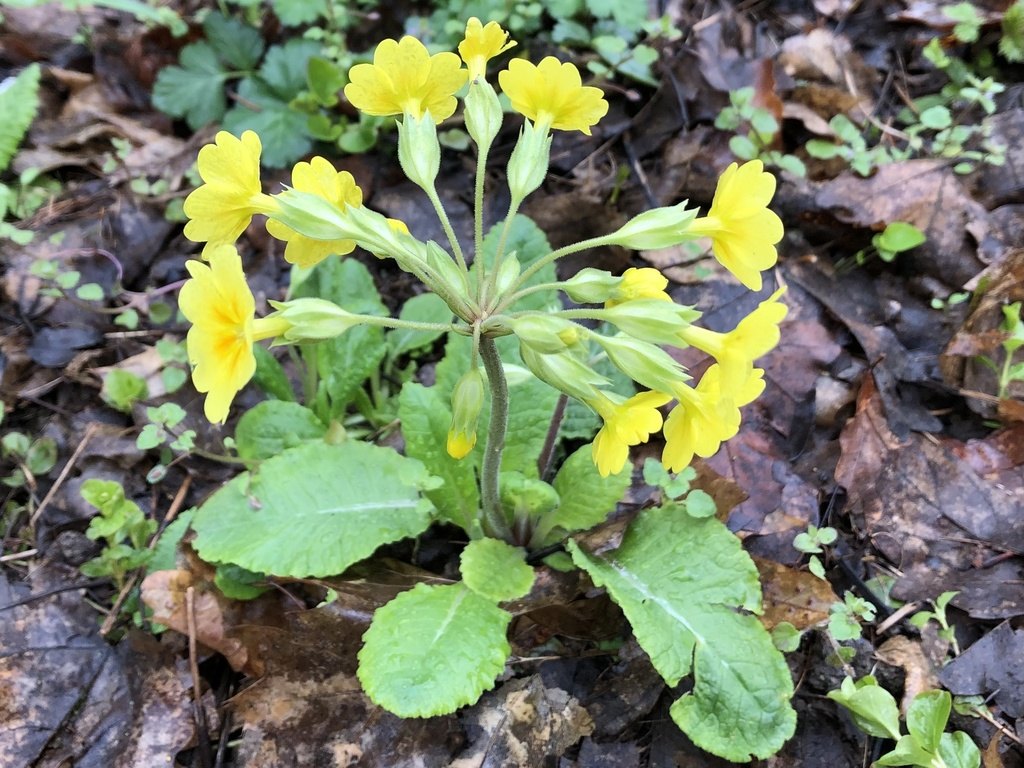
LATIN NAME: Primula veris
COMMON NAME: Cowslip
Plant Profile
Primula veris is a rosette-forming perennial of the Primulaceae, native to Europe and western Asia, where it grows in meadows, woodland edges and on banks. It is 20 to 25 cm tall, with wrinkled, spoon-shaped leaves and umbels of nodding, bell-shaped flowers in deep yellow.
Each flower has five petals with an orange spot at the base of each lobe, and the whole umbel nods to one side, which gives the plant its distinctive look. The flowers are fragrant, with a scent that is sweet and slightly spicy, and they appear in early spring, before the leaves have fully expanded.
The plant is one of the classic wildflowers of European meadows, and it has been celebrated in poetry and in folklore for centuries. It was once so common that it was picked by the armful, and it has declined sharply with the loss of hay meadows and the intensification of agriculture.
It is now mostly a garden plant, and it ranks among the best primulas for a meadow or a wild garden. It is also one of the few primulas that tolerates dry soil, which makes it easier to grow than the moisture-loving species. Three more Primulaceae sit in the same catalogue: Primula vulgaris, Primula elatior and Primula alpicola.
Science & Biotechnology
Primula veris is one of the classic examples of heterostyly, along with P. vulgaris and the flax, Linum. The species has two flower forms, pin-eyed and thrum-eyed, with different style lengths, and a flower can only be fertilised by pollen from the other form.
That system, described by Charles Darwin in 1862, is one of the best-known examples of a genetic mechanism that prevents self-pollination. It is controlled by a supergene, a cluster of linked genes that are inherited together, and it has evolved independently in several plant families. The genus has a base chromosome number of x = 11, and P. veris is a diploid with 2n = 22. The species hybridises with P. vulgaris where they meet, producing intermediate forms that are often confused with either parent.
The yellow colour is produced by carotenoids, and the orange spot at the base of each petal is a nectar guide. The scent is produced by volatile oils, and it is strongest in the morning, which is when the main pollinators, bumblebees, are most active.
Uses & Benefits
It is used in meadows, wild gardens, woodland borders and containers, where its early flowers are a sign of spring. It is also a good cut flower, and the flowers can be crystallised and used to decorate cakes, which is a traditional use in Britain.
The flowers are visited by bees, and the plant is an important early source of nectar. The leaves and flowers have been used medicinally as a sedative and a diuretic, and the root was used for coughs, though none of these uses is well supported by modern evidence.
The plant is not toxic, and the flowers are edible, so they are used in syrups and in crystallised form. The leaves are also edible in small quantities, and they have been used in salads and in soups. Country wine was made from them, and the flowers were once gathered in quantity for that purpose.
In a garden it is grown for its flowers and its early season, and it ranks among the best plants for a spring meadow. It self-sows where it is happy, and a colony will persist for decades if the grass is not cut too early.
Growing from Seed
Sow in autumn or early spring at 15 to 18 °C, on the surface and only just covered, since the seed needs light. Three or four weeks to germinate, and better after a month of cold; the refrigerator is the usual place to give it.
Prick out into small pots and grow on at 12 °C. Plant out in spring or early autumn, 20 cm apart, in sun or partial shade. The plant tolerates dry soil better than most primulas, but it flowers best in soil that stays moist in spring.
In a meadow, sow in autumn and do not cut the grass until the seed has set, which is usually in July. In a border, water in the first season and mulch with leaf mould in spring. Divide clumps every three or four years, and replant the young outer pieces. The plant self-sows freely where it is happy, and seedlings can be moved while they are small. In a container, use a soil-based compost and water regularly in spring, then less in summer when the plant is dormant.
Our Take
Cowslip is one of the loveliest of the wild primulas, and one of the easiest to grow in a meadow or a border. It is early, fragrant and generous, and it is a sign that spring has arrived. Grow it in grass, let it seed, and do not cut the meadow until July. It will reward you with a colony that gets bigger every year, and with the first bees of the season.
Related Reading
Continue exploring with these related plants: