


Melothria scabra Seeds | Mouse Melon
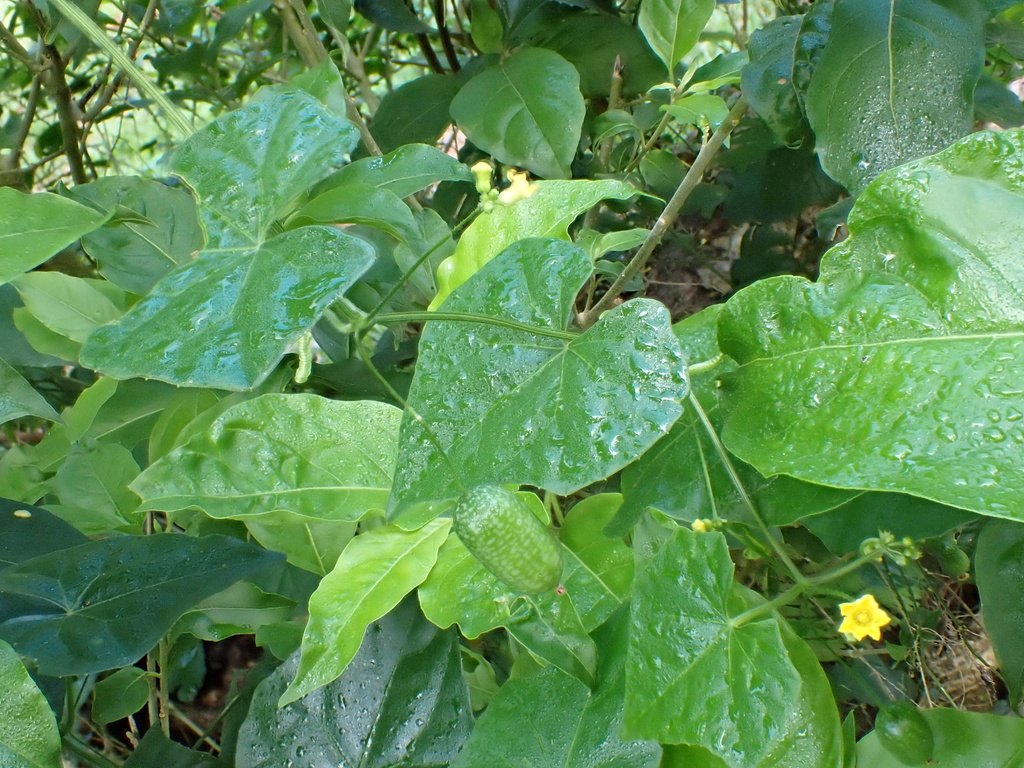
LATIN NAME: Melothria scabra
COMMON NAME: Mouse Melon
Plant Profile
Melothria scabra is a climbing vine of the Cucurbitaceae, described by Naudin in 1866 from Mexican material. It grows in scrub and along forest edges from Mexico into Central America, and the local name sandita, little watermelon, describes the fruit better than any English name. The fruit is 2.5 to 3 cm long, striped, and weighs 5 to 8 g.
The plant climbs by tendrils to 3 m in a season, with palmate leaves in three to seven shallow lobes and small yellow flowers in the axils. It is monoecious, and the female flowers open before the males, which is unusual in a cucurbit. The first flower sits at the eleventh to fourteenth node, and picking starts 70 to 75 days after sowing.
The fruit is edible and has a fresh, cucumber-like flavour with a sharp, lime-like acidity, which makes it useful in salads and as a garnish. It is eaten raw, pickled or in salsa, and it ranks among the few cucurbits picked at grape size rather than left to mature. The seed is about 3 mm long, pale and flat, and ready to save when the fruit falls.
The plant is a perennial in the tropics, with a tuberous root that allows it to survive the dry season, and an annual in temperate climates. In a cold garden it is grown as an annual from seed, and it will produce fruit within twelve weeks of sowing if it has enough heat.
Science & Biotechnology
Melothria is a genus of about 20 species in the Cucurbitaceae, the gourd family, and it is closely related to the cucumber and to the bitter melon. The family is characterised by climbing habit, tendrils and separate male and female flowers, and it includes most of the cultivated vines of the tropics.
The fruit is picked at grape size because that is when the flesh is crisp and the seed is still soft; left to ripen it turns paler, the rind toughens and the flavour goes flat. Seed from fallen fruit germinates in about a week at 22 to 30 °C. The vine dies at the first frost, but a tuberous rootstock can be kept dry indoors and will resprout.
The genus is one of the few in the family that has a tuberous root, which allows it to survive drought and to regrow after the tops die back. That adaptation is why the plant is a perennial in its native range and why it can be overwintered in a frost-free greenhouse, where the tuber will produce new shoots in spring.
Uses & Benefits
The fruit is high in water and low in calories, like most cucurbits, and it contains small amounts of vitamin C and potassium. It is not a significant source of nutrition, but it is a useful crop for a small garden, since a single vine can produce dozens of fruit over a season.
Its main use is as a novelty vegetable, and it has become popular in the last twenty years as a crop for children and for restaurants. The fruit is attractive, the flavour is good, and the plant is productive, which is a rare combination in a novelty crop.
It is also a useful ornamental, since the vine is light and the fruit is decorative, and it can be grown on a trellis, an arch or a fence, where it provides both food and cover. In a container it needs a large pot and a support, and it will crop well if it is watered and fed.
Growing from Seed
The fruit is best eaten fresh, since it loses its crunch within a few days of picking, and it does not freeze well. It can be pickled whole in brine or vinegar, and it is sometimes sold as a substitute for gherkins, though the flavour is sharper and more aromatic.
The plant is not used medicinally, and the foliage is not edible. The root is tuberous and edible in Mexico, where it is sometimes cooked, but it is not a significant food crop and it is not grown for that purpose in temperate gardens.
Sow indoors four to six weeks before the last frost at 21 to 24 °C, in individual pots, since the seedlings resent disturbance. Germination takes 7 to 14 days. Plant out after the last frost, when the soil is warm, against a trellis or a fence.
Our Take
Water regularly and feed every two weeks with a liquid fertiliser once the flowers appear. The plant needs heat to crop well, and in a cool summer it will grow but produce little fruit. A south-facing wall or a polytunnel is the best position in a marginal climate. Provide a strong support, since the vine is vigorous and the fruit is heavy for the size of the stem. Pinch out the growing tip if the plant becomes too tall, and remove the lower side shoots to keep the fruit within reach.
Mouse melon is a novelty that earns its place, because it tastes good and crops well. It is not a substitute for a cucumber, but it is a better snack, and it ranks among the few vegetables that children will eat straight from the vine. Grow it on a trellis in the warmest corner you have, pick it small, and eat it in the garden. It is not a crop for a cold climate, but it is worth trying in a good summer.
Related Reading
Continue exploring with these related plants: