


Aster tataricus Seeds | Tatarian Aster
LATIN NAME: Aster tataricus
COMMON NAME: Tatarian Aster
Plant Profile
The Tatarian aster is a perennial that reaches 2 m in flower and spreads 1.2 m wide, on stems that are scabrous, rough to the touch. The basal leaves are the distinctive part: large, lanceolate to egg-shaped, deeply serrated except at the apex and base, and tapering down the petiole. They look more like a dock than an aster.
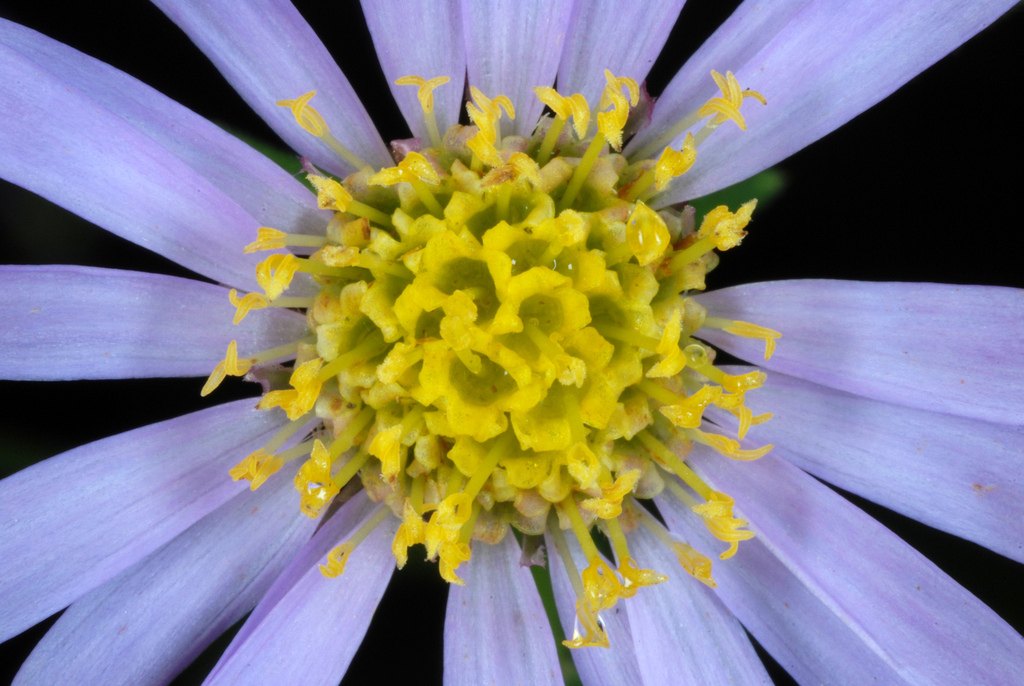
The flowers come late, in September and October, and there are five to eight in each inflorescence, each large for an aster. The ray florets are a strong blue-violet, the disc yellow, and the heads are carried in wide, flat-topped sprays near the top of the plant, where they hover above everything else in the border.
It is native from southern Siberia through China and Mongolia to Korea and Japan, growing in subalpine meadows and wet places. It has been introduced into Germany and into a number of eastern United States, and it is the parent of several of the tall, late border asters in the trade. Elsewhere in Asteraceae, the list holds Aster alpinus, Ismelia carinata and Craspedia globosa.
Science & Biotechnology
The plant’s name travels with it. In Korean it is gaemichwi, one of the chwinamul, the edible asters gathered and eaten as a spring vegetable. In Chinese medicine it is zǐwǎn, one of the fifty fundamental herbs, where the dried root is used for coughs; reported laboratory work credits it with antibacterial action against a range of organisms including Staphylococcus aureus and E. coli, though a laboratory result is not a prescription.
In Japan it is shion, and in hanakotoba, the language of flowers, it means “I won’t forget you”, which is as good a reason as any for a flower that appears when the garden is being wound down and refuses to be overlooked.
The late flowering is not an accident. Autumn asters flower when day length and temperature fall together, and the pollinators that matter to them are the late butterflies and hoverflies of September. A stand of this plant in October is one of the busiest places in the garden, and the seeds that follow ripen in a cold month and feed the finches.
Uses & Benefits
Its use is the back of the border in autumn, where height is wanted and colour is scarce. Nothing else at 2 m flowers this late, and the mass of blue-violet carries a border through October. It also earns its place in a wildlife garden as the last serious nectar source of the year.
It spreads by rhizomes, and that is the caveat. In good soil it will travel, and a clump left for five years becomes a patch. The fix is division every second or third spring, which the plant accepts readily, and a spade through the mass in March. In poor dry soil it is better behaved but half the size.
The basal leaves are large and a little coarse, and they sit heavily on smaller neighbours in spring. Give it room at the feet, or plant something sturdy beneath it, and it will not need managing again until the division.
Growing from Seed
The seed is a light achene with a small pappus, and it germinates without pretreatment. Sow in spring on the surface or barely covered, at 15 to 20 °C, and expect germination in two to four weeks. The seedlings are ordinary and quick, and they can be potted on and planted out at 30 cm in early summer.
Seed-raised plants vary in height and colour, and the named cultivars do not come true, so seed is for the species and cuttings or division for a cultivar. Fresh seed is better than stored, but the species germinates well enough from a packet to make this a low-risk first aster from seed.
Plant in full sun or very light shade, in any soil that is not bone dry, and water the first season. Pinching the young plants once in May keeps them shorter and bushier; the unpiched plants are taller and airier, and in a wild garden that is the better look.
Our Take
It is a big plant and it needs a big garden, or at least a big corner. In the right place it ranks among the most valuable perennials there is: tall, hardy, late, and covered in butterflies when everything else has finished.
Divide it when it tells you to, which is when the clump starts to thin in the middle, and give the spare pieces away. A plant this generous is a gift that keeps circulating, and that is the honest way to grow an aster that spread across three countries by being useful.
Related Reading
Gardeners who grow Tatarian Aster often pair it with these related subjects: