


Astilbe Seeds | False Goat’s Beard
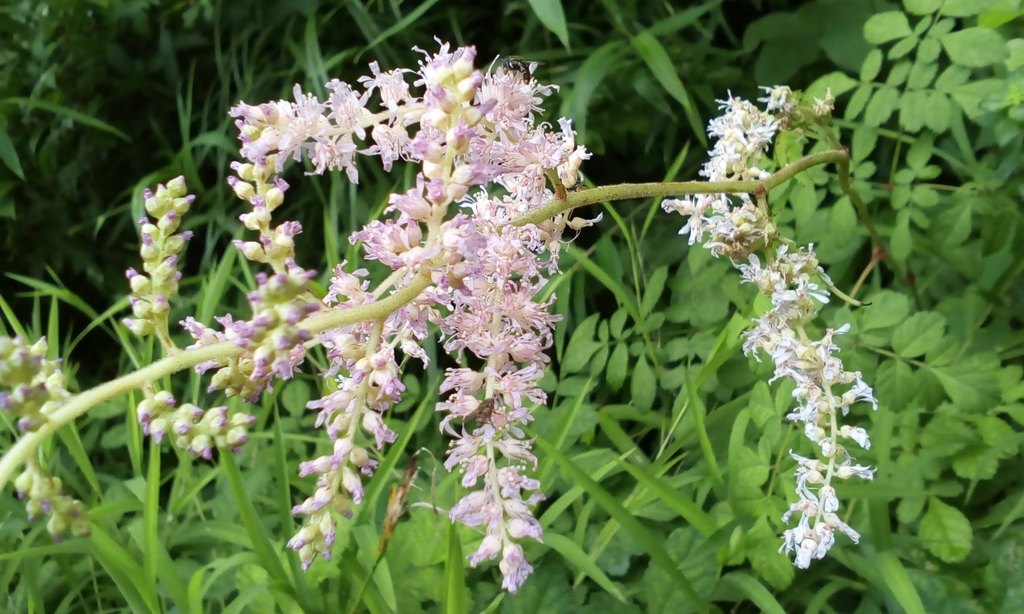
LATIN NAME: Astilbe
COMMON NAME: False Goat’s Beard
Plant Profile
Astilbe is a genus of 18 species of rhizomatous perennials in the Saxifragaceae, native to mountain ravines and woodlands in Asia and North America. Most of the plants in gardens are complex hybrids grouped under the Arendsii Group, raised in Germany in the early twentieth century by Georg Arends, who crossed a handful of Asian species and selected the seedlings for plume shape, colour and vigour over several decades.
They make clumps of twice- or thrice-divided, fern-like leaves 30 to 60 cm high, with toothed leaflets that are bronze when young and green at maturity. The flowers are tiny, four or five petals around eight to ten stamens, and they are packed into dense, feathery plumes on upright stems in midsummer. The plumes last weeks on the plant, a week in water, and they dry well if cut before the seed sets.
The foliage emerges late in spring, which leaves a gap in a border where the plant is expected to cover ground early, and it collapses after the first frost. Plant it behind something that fills the gap in April, such as a hardy geranium or an early paeony.
Between those two events it is handsome, and the dried plumes stand through much of the winter if they are left uncut. Showstar is a seed-raised strain with soft pink plumes and a compact, uniform habit, and one of the few astilbes that comes reasonably true from seed. Related entries here include Astilbe arendsii, Heuchera hybrida and Sedum selskianum.
Science & Biotechnology
The Saxifragaceae is a family of about 600 species, mostly northern temperate, and it includes saxifrages, heucheras and astilbes. The family is characterised by flowers with four or five petals, a superior ovary and a capsular fruit, and by leaves that are often lobed or divided. Astilbe is one of the few members of the family that is grown for its inflorescence rather than its foliage.
The plume is a compound raceme, hundreds of small flowers presented at once, and it is pollinated by bees and hoverflies that work from the bottom upwards. That arrangement is why the plume is so effective at attracting pollinators and so useful as a cut flower: it offers a large visual target and a long succession of small rewards, which keeps a bee working the same plant for several minutes.
Uses & Benefits
Astilbe is one of the few perennials that flowers well in shade, so it is so widely planted. It combines with hostas, ferns, rodgersias and primulas in a woodland border, and it ranks among the best plants for the edge of a pond or a stream, where its roots can reach constant moisture. In a mixed border it sits at the middle of the planting, where its ferny foliage contrasts with broad leaves.
The colour range is wider than it looks at first: pinks from shell to deep rose, reds from scarlet to wine, whites from cream to pure white, and forms with purple and coral. The plume shape varies too, some dense and finger-like, others loose and arching. Bridal Veil is the best of the whites, Fanal the deepest red, and the choice between them is a matter of taste as much as design.
Growing from Seed
Astilbe seed is almost dust and needs light to germinate. Sow on the surface of a fine, moist compost at 15 to 18 °C, press the seed down without covering it, and cover the tray with glass until germination, which takes 21 to 30 days and is often uneven. A period of cold stratification improves the result: mix the seed with damp compost, seal it in a bag and refrigerate for four weeks before sowing.
Prick out the seedlings when they are large enough to handle, into a compost with leaf mould and grit, and grow on at 15 °C in bright, indirect light. Seed-raised plants may vary in colour and height, so named cultivars are propagated by division rather than by seed, and why a packet of mixed astilbe is a gamble rather than a guarantee.
Plant out in spring or early autumn, 45 cm apart, in a spot that stays moist and gets dappled shade. Improve the soil with compost and leaf mould before planting, and mulch every spring, keeping the mulch away from the crown to avoid rot. Divide clumps every three or four years in early spring, discarding the woody centre and replanting the young outer pieces.
Our Take
Astilbe is the best shade perennial for a wet garden, and one of the most useful plants for the edge of a pond or a stream. Its plumes are beautiful in flower, useful in a vase and structural in winter, and it asks for only two things: shade and water. If you have a damp, shady corner that defeats everything else, plant it there and mulch every spring.
If you have a dry, sunny border, plant something else, because no amount of care will make this plant happy in the wrong place. That is not a fault in the plant; it is a fault in the matching, and the matching is the gardener’s job.
Related Reading
Continue exploring with these related plants: