


Begonia tuberousrooted Seeds | Tuberous-rooted Begonia
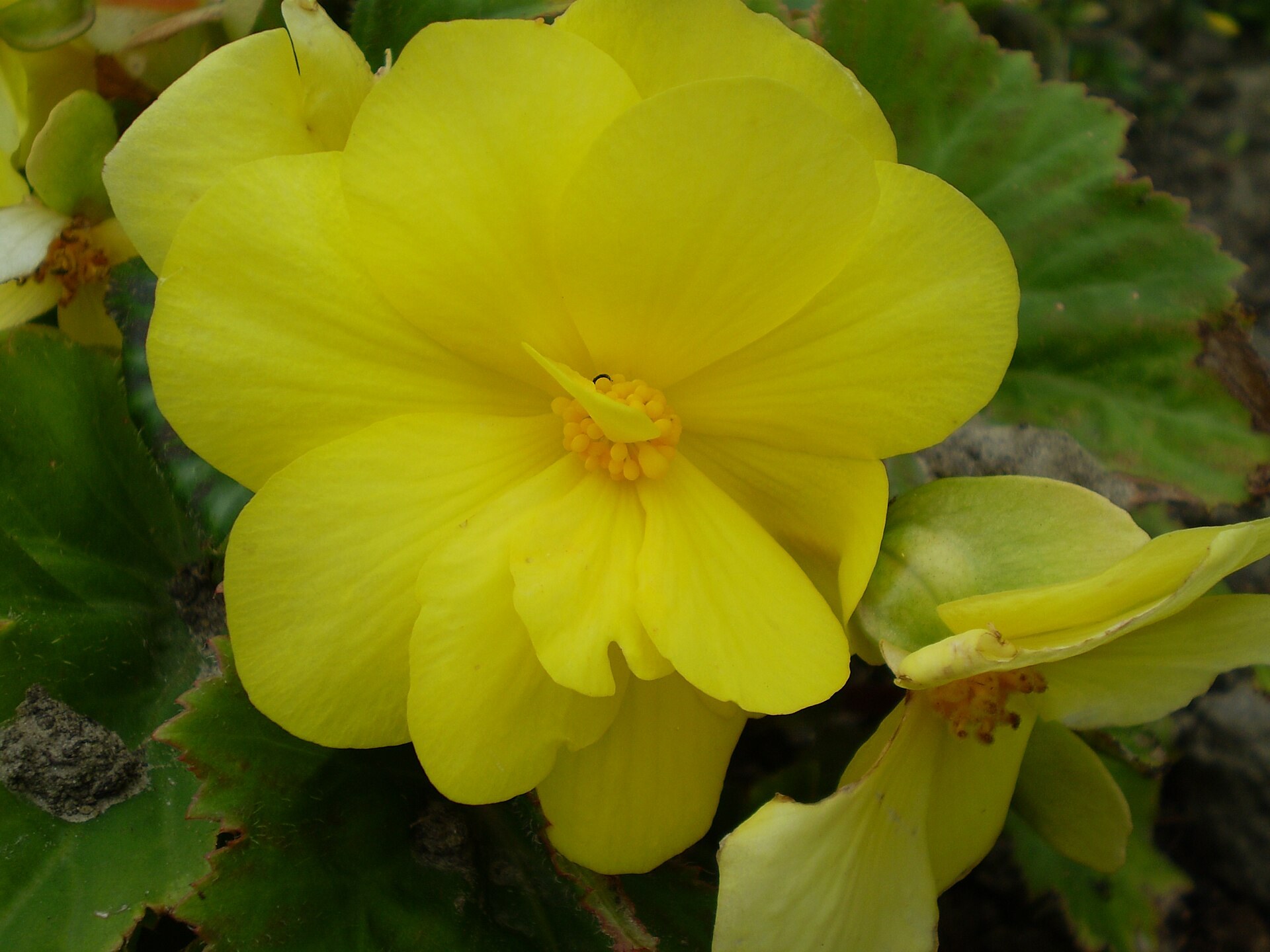
LATIN NAME: Begonia tuberousrooted
COMMON NAME: Tuberous-rooted Begonia
Plant Profile
Tuberous begonias are the ones with the fat brown tuber, the doubled flowers and the habit of collapsing at the first frost. They are a garden group rather than a species, bred in the 1860s and 1870s from a handful of Andean species, and they are sold as Begonia × tuberhybrida. The catalogue entry is descriptive, not botanical.
The plants grow from a flattened tuber that sits half above the compost, with a hollow on top where the new shoots emerge. Stems are thick and succulent, thirty to forty-five centimetres tall, with asymmetric leaves and flowers in single and double forms. The doubles are mostly male, and they can be fifteen centimetres across.
The parents came from cool, wet cloud forest: Begonia boliviensis, B. veitchii, B. davisii and B. pearcei among others. They were crossed in England, France and Belgium within a few decades, and the result was a plant that wants what its parents wanted. That means fifteen to twenty degrees, bright filtered light, and constant moisture.
The group is divided by habit into upright, pendulous and multiflora classes, and the last of these carries smaller, more numerous flowers on compact plants. The naming is loose. A tuberous begonia sold as multiflora is not the same as the bedding multiflora begonia of the semperflorens group, and the two are often confused. Three other Begoniaceae are catalogued alongside it: Begonia grandis, Begonia tuberhybrida and Begonia multiflora.
Science & Biotechnology
The double flower is a homeotic effect: stamens develop as petals, so the centre of a male flower becomes a dense ball of petaloid tissue. That is why doubles have no pollen and why they must be propagated from tubers or cuttings. Single forms set seed freely and are the source of the seed strains sold to gardeners who cannot afford tubers.
The tuber is a swollen hypocotyl, not a root, and it stores water and starch through the dormant season. It has a distinct top and bottom, and planting it upside down is a common cause of failure. The shoots come from the hollowed upper surface, and the roots from the sides and base. Orientation matters more than depth.
Flowering responds to day length and to temperature. Long days and moderate warmth promote stem growth, and shorter days with cool nights promote flower development in many cultivars. That is why plants grown under lights in winter produce leaves and few flowers, and why a cool August produces the best display of the year in a British garden.
Uses & Benefits
They are container plants above all, for a shaded patio, a cool conservatory or a summer bedding scheme in a wet climate. In a border they need a position that is bright but not scorched, and soil that drains. They are also cut flowers, though the stems are brittle and the vase life short. The pendulous forms go in hanging baskets.
The season is the point. Tuberous begonias flower in July and August, when many shade plants are over, and they hold colour into October. They are among the few plants that give that quality of flower in shade. The cost is the winter routine: lift the tubers, dry them, store them cool and replant in spring.
Nothing about them is edible, and the tuber is mildly toxic. They are also the most demanding plants in this catalogue, in the sense that they fail if watered carelessly. A plant that is dry for a week in summer drops its buds; a plant that is wet for a week rots at the base. The margin is narrow.
Growing from Seed
Start tubers in March in a shallow tray of moist compost, hollow side up, at eighteen degrees, and cover with a centimetre of mix. Shoots appear in three to four weeks. Pot them when the shoots are five centimetres tall, setting the tuber half above the surface. Water sparingly until the leaves unfold, then freely.
Seed is possible and it is how new strains are made. Sow in January on the surface of a fine mix at twenty-one degrees, in light, and expect three to five weeks. The seed is dust and the seedlings are slow. Most gardeners buy tubers instead, which is cheaper in time and gives a known colour. Seed strains are variable by design.
Feed with a high-potash liquid from June, and remove the small female flowers on double cultivars to concentrate the plant’s resources. Stop watering in September and let the foliage die down. Lift the tubers before the first frost, cut the stems to a stub, dry them for a week and store them in dry compost at five to ten degrees.
Our Take
Tuberous begonias are expensive, fussy and entirely worth it if you have the right place. That place is a cool, shaded, humid one, which most gardens do not have and most conservatories do. Where they work, nothing else in the catalogue produces that weight of flower in shade in high summer.
Buy tubers rather than seed unless you are breeding, start them early, and keep water out of the crown. Lift them in autumn and store them dry. Do that and a single tuber will flower for five years, which makes the price look reasonable after the second season.
Related Reading
If Tuberous-rooted Begonia appeals to you, these related plants are worth a look: