


Oxalis corymbosa Seeds | Pink Woodsorrel
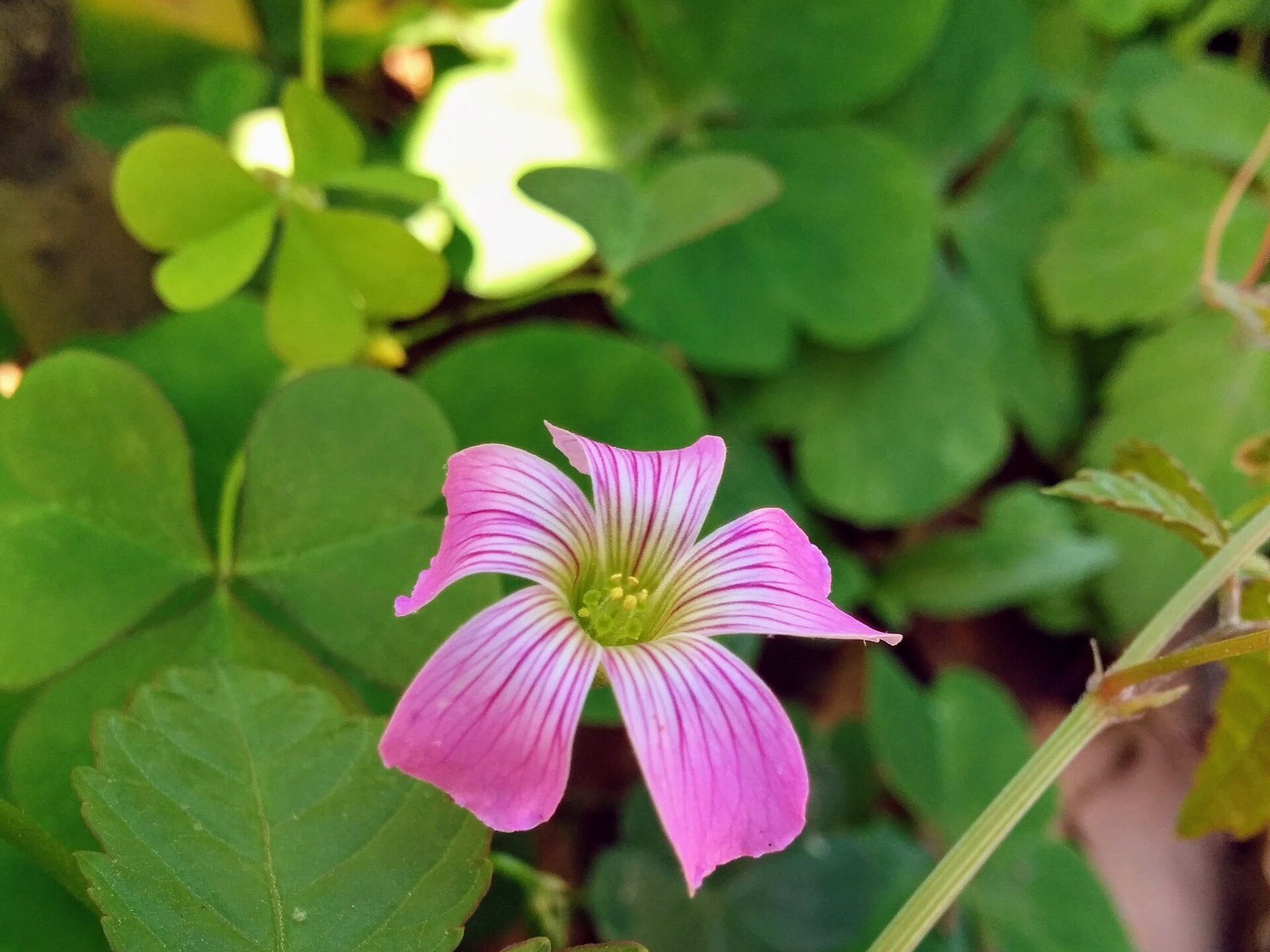
LATIN NAME: Oxalis corymbosa
COMMON NAME: Pink Woodsorrel
Plant Profile
Pink sorrel is an escapee that no longer needs an introduction anywhere warm. Oxalis debilis, long sold and grown as Oxalis corymbosa, is a bulbous perennial from southern South America that pushes up three-part leaves and, directly from the bare soil, heads of rose-pink flowers in flushes through the warm months.
The flowers sit on leafless stalks fifteen to thirty centimetres tall, a corymb of funnel-shaped blooms each two centimetres or so across, opening in sun and closing by evening or in dull weather. The leaves are trifoliate like a clover but heart-leaved, often faintly patterned, and the whole plant springs from a cluster of scaly underground bulbs that multiply steadily.
Augustin Pyramus de Candolle described the species in the 1820s. Native populations record from Brazil through Paraguay, Uruguay and Argentina, but the plant’s real biography is dispersal: it now records from more than a hundred territories, across the Caribbean, the tropics of both hemispheres, the Mediterranean, Japan and the American South, almost always through garden waste carrying bulbs.
Field records make the success plain: tens of thousands of observations, peaking from March to May in the Northern Hemisphere and with the rains in the tropics. In many places it is a weed of flowerbeds and nurseries; in others it remains a beloved dooryard flower that came with the last generation’s garden.
Science & Biotechnology
The bulb cluster is the engine of its spread. Each plant builds bulbs around itself season by season, and any soil moved between gardens moves the plant with it; seed plays a minor role, as many strains set little. This is why eradication advice everywhere is the same: lift the whole cluster, or it returns, because fragments as small as one scale regenerate.
The flower movements are thigmonastic and phototropic by turn: blooms track the sun through the day, fold at dusk, and the leaflets collapse when handled, a family trait shared with the sensitive plants. The mechanism is cell turgor at the joint thickenings, fast enough to watch, and its function is protection of pollen from rain and nocturnal moisture.
Chemistry is where charm ends. All parts carry oxalic acid crystals at concentrations high enough to make large helpings of the leaves genuinely hazardous to livestock and kidneys, and records of animal poisoning exist. Small tastes of sour leaves are harmless and traditional; the plant is a seasoning at most, never a vegetable, and children should be taught the difference early.
Uses & Benefits
In warm gardens it is a free source of months of pink, filling bare beds, edging walks and naturalising under thin trees where mowing is irregular. The flowers cut well for small posies, and the plant asks nothing after establishment. In the tropics it flowers on and off all year, keyed to rain.
Its edible story is a cautionary one rather than a recipe: sorrel-flavoured leaves were nibbled in folk practice across its range, and the plant is listed as edible in small quantity in the standard references, but the oxalate load forbids any real use. The sensible framing is ornament with a sour surprise, not food.
The honest limitation is that it is a plant you must outrun. In beds and pots it elbows out slower neighbours, and in mild climates it naturalises beyond recall once bulbs reach the ground. Grow it deliberately in a confined bed or container, deadhead before bulbs ripen, and it stays a pleasure; let it roam and the decision stops being yours. Its nearest neighbours on the list are Oxalis corniculata, Rinorea anguifera and Viola wittrockiana.
Growing from Seed
Seed is the least practical route, set erratically and best when fresh, sown on the surface at twenty degrees with light; germination takes two to four weeks when it happens at all. Bulbs are the real currency: offsets from a single plant will stock a border within two seasons, and they are usually shared rather than bought.
Plant bulbs five centimetres deep in any soil that drains, in sun or part shade, and water to start. After that the plant manages itself, dying back in dry or cold spells and resprouting from the cluster. No feeding, no staking, and pests ignore it; its chemistry is its own pesticide.
For bulbs, lift a clump after flowering, separate the scales and offsets, and replant where wanted or pot them for sharing. To limit spread, remove flower stalks as they fade and rake up every bulb at clearance, sieving the soil, because anything left becomes next spring’s patch.
Our Take
Our take: pink sorrel is the most beautiful liability in the seed trade. Where winters or dry seasons check it, it is a cheerful, honest filler with months of colour and zero cost. Where it never stops growing, it is a landlord that never leaves.
The honest advice is geographic honesty with yourself. Grow it in pots in warm-wet climates; grow it in beds where a real winter prunes it; never introduce it near reserves or farmland. Treat the bulb as the plant, not the flower, and the relationship stays on your terms.
Related Reading
More species in the same orbit as Pink Woodsorrel: