


Viola wittrockiana Seeds | Garden Pansy
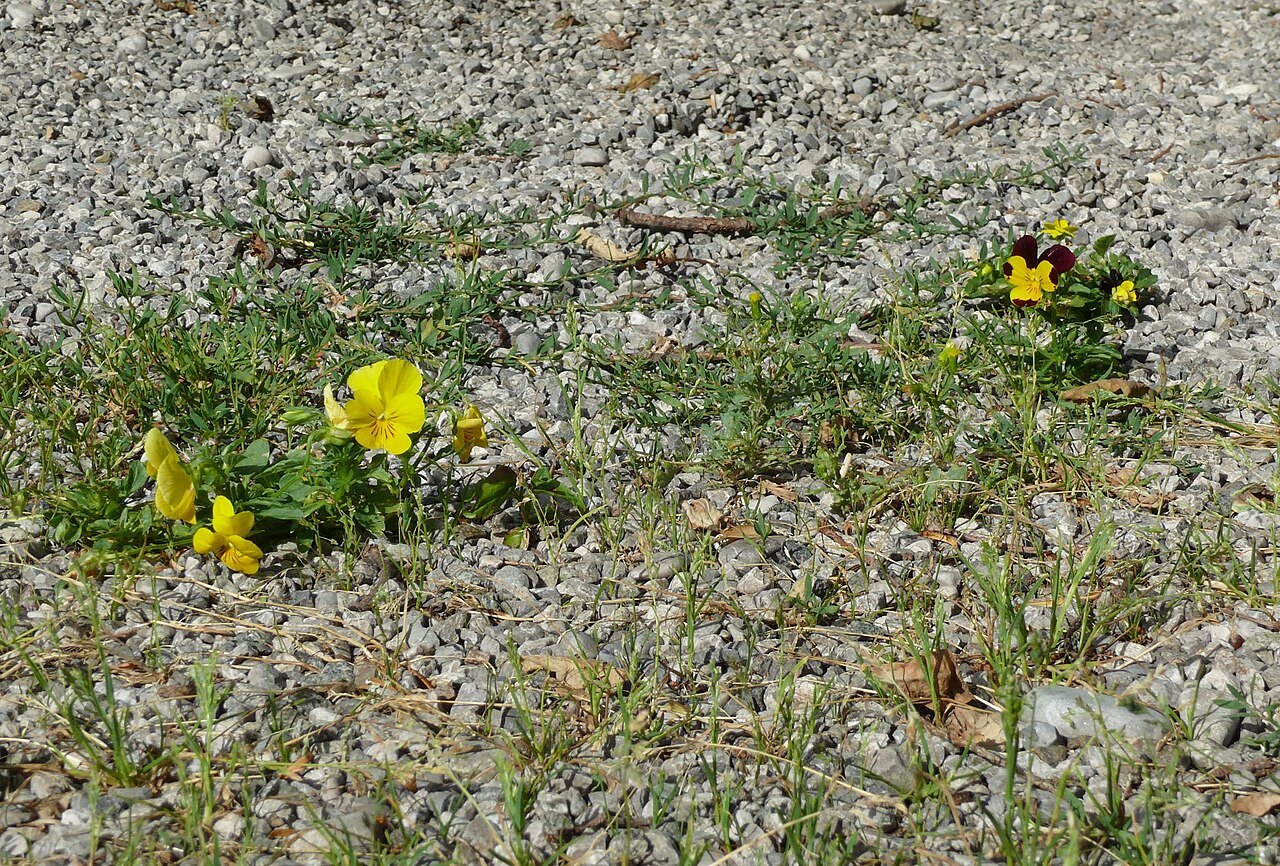
LATIN NAME: Viola wittrockiana
COMMON NAME: Garden Pansy
Plant Profile
The garden pansy is a hybrid, and botanists write it with a multiplication sign for that reason. It was assembled from several species in Viola section Melanium, the group gardeners call pansies, and the largest single contribution came from V. tricolor, the European and western Asian wildflower known as heartsease.
A plant grows to about 23 cm and carries flowers 5 to 8 cm across, which is enormous for a violet. Each flower has two upper petals that overlap slightly, two side petals, and one lower petal with a small beard at the throat. Colours run through white, yellow, apricot, blue, purple and near-black, usually with a dark blotch at the centre.
The naming is a mess, and it is worth knowing why. The plant is sometimes called V. tricolor var. hortensis, but that name is suspect. The combination published by Groenland and Rümpler is a synonym of the hybrid, while the same combination published by de Candolle refers to a purely horticultural form of wild V. tricolor, illustrated in Flora Danica in 1777, before the hybrid existed at all.
The name is older than the flower. Pansy comes from the French pensée, thought, and entered late Middle English in the mid-fifteenth century as a name for violets in general, centuries before anyone crossed two species to make this one.
Science & Biotechnology
Chromosome counts in cultivated pansies come out at 2n = 44 to 52, and most modern cultivars sit at 2n = 48. That spread is a fingerprint of the plant’s origin: it is a hybrid between species with different chromosome numbers, and the surplus chromosomes have been sorted out differently in different lines.
Flower colour depends on anthocyanins and flavonols, and temperature does much of the work. Plants that open in cool autumn weather come out deeper and more saturated than the same cultivar flowering in mild spring heat. This is why seed companies sell pansies for autumn planting as much as for spring.
Breeding has concentrated on two things that sound dull and matter enormously: holding flower size at low temperature, and flowering on short days. Northern European and Japanese programmes pushed both, so a modern pansy will open in February in an unheated greenhouse when the light is barely there.
Uses & Benefits
Pansies are the standard answer to the question of what to plant in a window box in November. They flower through mild winters in all but the coldest continental climates, take a hard frost and come back, and they do it in containers that would starve most plants. Hardy in zones 4 to 8, they take light freezes and short spells under snow; in zones 9 to 11 they flower straight through the winter instead of stopping.
The petals are edible and mildly sweet, and they are used to finish salads, cold soups and desserts. Use only flowers grown without pesticide, and remove the green calyx and the white heel at the base of each petal, which is bitter.
In bedding schemes they are planted by the thousand for municipal displays, a use that has done the plant no favours in the eyes of gardeners who associate it with roundabouts. Grown in a pot on a doorstep, at close range where the blotched faces are visible, it is a different plant altogether. Nearby in the classification: Viola yedoensis, Rinorea anguifera and Euphorbia polychroma.
Growing from Seed
Sow in late summer for autumn planting, or in midwinter under glass for spring. Surface-sow and cover the tray with black polythene: pansy seed germinates better in darkness. Hold at 18 to 21 °C and seedlings appear in ten to fourteen days, though fresh seed can come up in a week.
The critical stage is the month after pricking out. Keep seedlings at 10 to 15 °C in good light. Warmth at this point produces soft, stretched plants that flower late and collapse at the first cold spell, and it is the single most common reason home-raised pansies disappoint.
Plant out at 20 to 25 cm apart into soil that has been firmed, and water in. Deadhead regularly or flowering stops; a pansy left to set seed will shut down within a fortnight. In containers, feed every two weeks with a high-potassium liquid feed once flowering begins.
Our Take
The pansy is easy to dismiss and hard to replace. Nothing else gives you colour in February from a pot by a door, and the seed is cheap enough to treat as an annual luxury rather than an investment. Grow it cool, keep it deadheaded, and buy fresh seed each year: pansy seed loses vigour quickly, and last year’s packet is a false economy.
Related Reading
Continue exploring with these related plants: