


Doronicum orientale Seeds | Leopard’s Bane
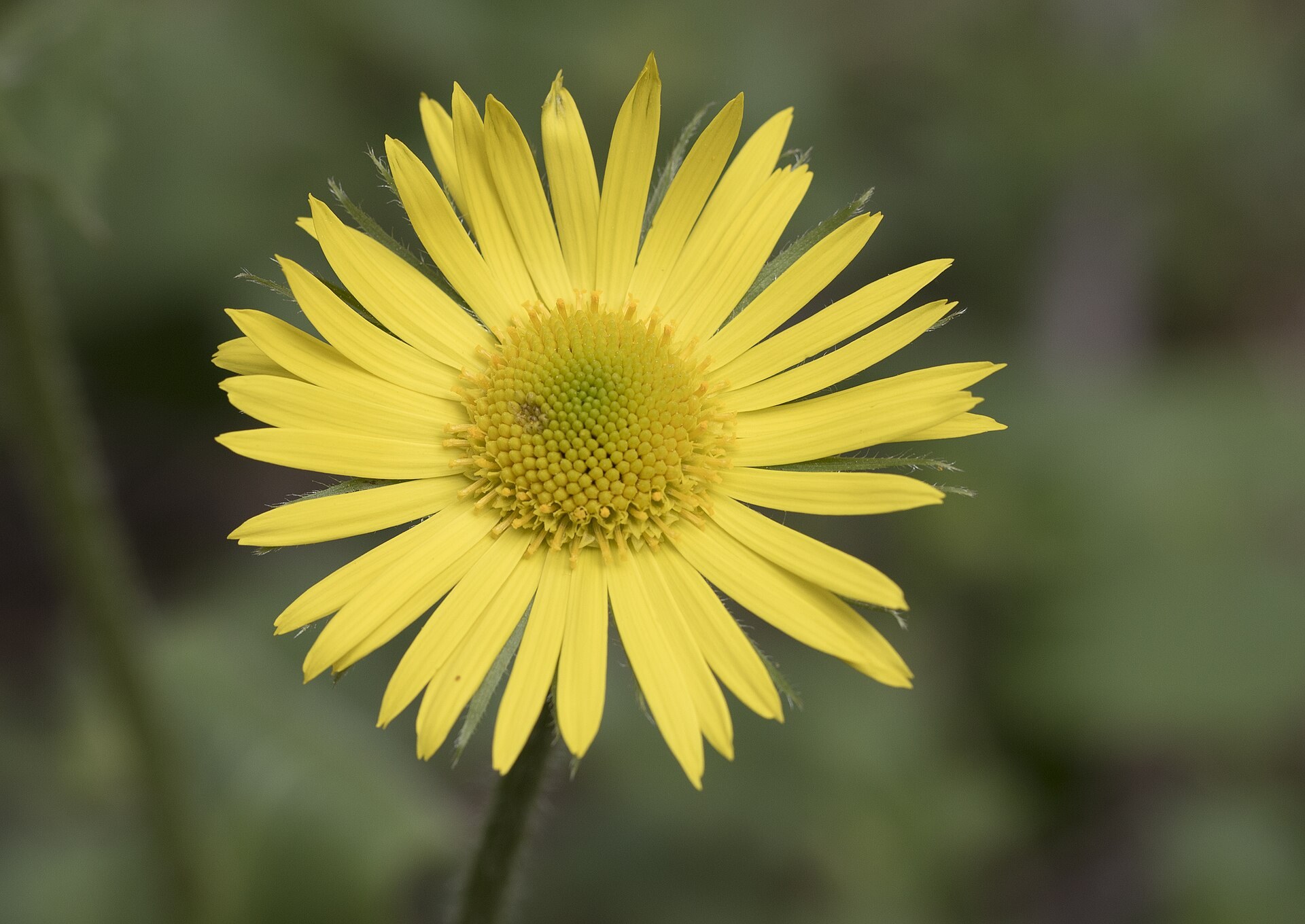
LATIN NAME: Doronicum orientale
COMMON NAME: Leopard’s Bane
Plant Profile
Leopard’s bane is the yellow daisy that opens while the border is still waking: bright heads on long, straight stems in early spring, above a mound of heart-shaped leaves with scalloped edges. A mature clump stands about sixty centimetres and reads, from a distance, like a promise the rest of the garden has not yet kept.
The basal foliage is the plant’s second act. Bright green, cordate and softly textured, it builds through autumn and winter so that the flower stems rise out of an established cushion, not bare ground. After bloom the foliage fades quietly, so thoughtful gardeners plan something to follow it rather than lament its exit.
The name carries a small geography lesson. The epithet orientale means eastern, but the east in question is eastern Europe, not Asia: the species is native from Italy and Greece across the Balkans, Hungary, Moldova and Ukraine into southern European Russia, with outposts in Turkey and the Caucasus. Botanical directions are always relative to somewhere.
In the wild it grows in moist, rocky places and open woodland, on outcrops and forest edges where spring light reaches the ground before the canopy closes. That habitat explains the garden character at once: a plant for damp, humusy soil that is content in the shifting shade of deciduous trees.
Science & Biotechnology
Systematically it sits in a small Eurasian genus of spring-flowering daisies, and its early season is no accident: blooming before canopy closure is the woodland strategy, timed to pollinators that emerge with the first warm days. The heads are engineered for that window, offering a broad yellow target visible in the low, angled light of April.
Garden genetics have left a mark. The semi-double cultivar ‘Little Leo’ has dominated the trade for decades, and selected forms vary in height and in the fullness of the head. Because the species is variable and promiscuous in cultivation, seed-raised plants differ from the clones, and buyers who want an exact look must buy a division, not a packet.
Escapes have been recorded in parts of Canada, where plants from gardens turned up wild but failed to establish self-sustaining colonies. The episode is a useful calibration: a vigorous garden plant is not automatically an invasive one, and in this case the climate and ecology simply refused the species permanent residency.
Uses & Benefits
In the garden it is the classic answer to the spring shade problem. Under deciduous trees, along a north-facing wall, in front of evergreens that hide their knees, the yellow heads lift the darkest April corner and tolerate a range from full sun in cool climates to honest half shade.
The flowers earn their keep with pollinators: early bees work the open heads, and butterflies arrive as the season warms. Cut stems last respectably in water, and a small patch supplies enough for spring posies without weakening the clump, provided the plants are grown moist and divided every few years.
One caution belongs in every description: all parts of the plant are poisonous to humans. That has never made it a garden danger in any real sense, since nothing about it invites nibbling, but households with very young children and a habit of tasting the border should place it accordingly. The Asteraceae thread continues with Anthemis arvensis, Aster novi-belgii and Ageratum conyzoides.
Growing from Seed
Seed is viable but variable. Sow fresh seed in summer or autumn on the surface of a moist, humusy mix, and give a cold period for the most even germination; a winter outdoors in a cold frame does the job without ceremony. Expect the first true leaves within weeks of the chill ending.
Seedlings build slowly the first year and flower the second. Keep them moist through summer, because the one reliable way to lose a young doronicum is drought at the roots during its dormant slide. Space plants thirty to forty centimetres apart and let the clumps close into a drift by the third spring.
Division every three or four years keeps the clump young and is the surest way to multiply a good form. Lift after flowering or in autumn, pull the rhizomes apart with fingers, and replant the vigorous outer pieces. The species is hardy to zone 3, and winter asks nothing of it.
Our Take
Leopard’s bane is a specialist in one moment, the earliest weeks of the spring border, and it performs that moment without vanity. Give it damp, fertile soil and shifting shade, and it returns each April with a display that costs a morning’s division every few years.
Plan for the foliage exit as part of the design: hostas, hardy geraniums or late-emerging perennials can cover the gap the leaves leave in June. The plant’s only real demands are moisture and honesty about its poisonous parts, and neither is a burden in a considered border.
Related Reading
If Leopard’s Bane appeals to you, these related plants are worth a look: