


Anemone coronaria Seeds | Poppy Anemone
LATIN NAME: Anemone coronaria
COMMON NAME: Poppy Anemone
Plant Profile
Poppy anemone comes from the Mediterranean basin, and it grows from a hard, black, irregular tuber rather than a bulb. The plant reaches 20 to 40 cm, occasionally 60 cm, and carries a basal rosette of a few leaves divided into three leaflets, each one deeply lobed and slightly hairy.
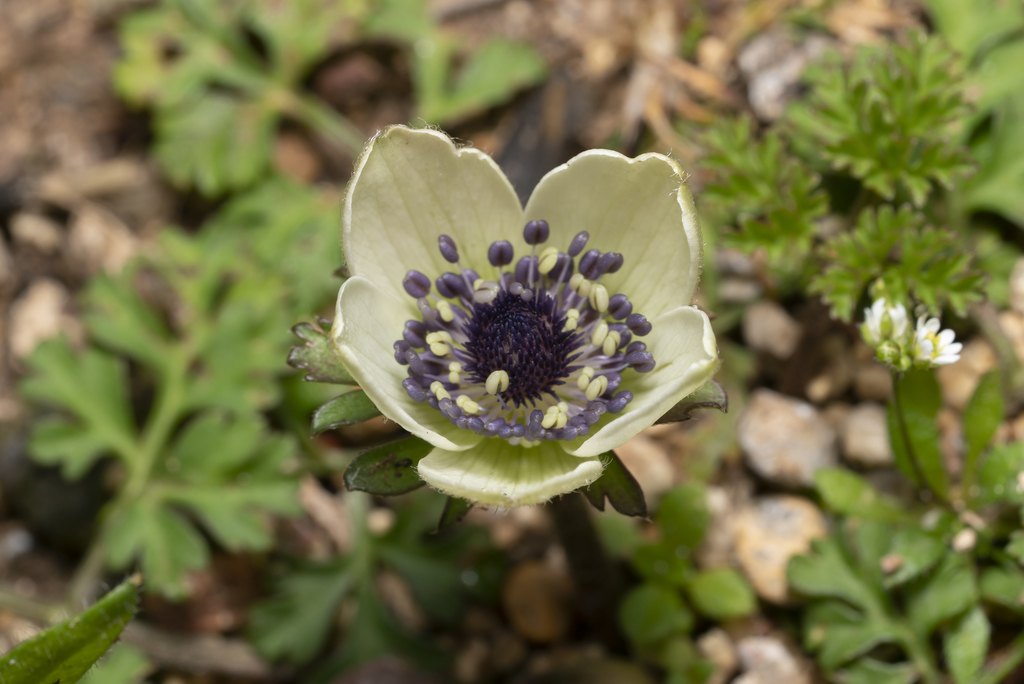
Flowers open from April to June, one per stem, with a whorl of small leaves just below the head. Each is 3 to 8 cm across with five to eight showy tepals, usually scarlet but sometimes white or blue, and a dense black centre. The tepals are what most people call petals; botanically they are undifferentiated, so the colour runs all the way to the base without a separate corolla.
The specific epithet coronaria refers to that centre, where tightly packed pistils sit inside a crown-like ring of stamens. A single flower produces 200 to 300 seeds, and the plant stores its reserves in the tuber through the summer dormancy that follows. The leaves die back within weeks of flowering, and the plant sits out the summer underground, which is how it survives a climate of wet winters and baking summers.
Science & Biotechnology
The pollen is unusual and worth knowing about. It is dry rather than sticky, the outer wall carries no sculpturing, individual grains are under 40 micrometres across, and most of it is deposited within 1.5 m of the parent plant. Everything about that description points to insect pollination in a sheltered habitat rather than wind dispersal across open ground.
The tuber runs on a strict cycle: winter growth, spring flowering, summer dormancy, and a requirement for cool temperatures to break that dormancy. Lift and store dry tubers over summer and they will start into growth again as soon as autumn rain arrives, which is how the cut-flower trade schedules crops for a specific week.
Breeding has concentrated on stem length, vase life and colour uniformity. The De Caen strain, selected in France in the nineteenth century, is still the standard for seed-raised cut flowers, and the Mona Lisa series is the modern commercial version with taller stems and a tighter flowering window. Dry tubers are graded by size, and the largest flower first. A tuber stored warm breaks dormancy late and blooms in May rather than April, which is how commercial growers hit a date. The Ranunculaceae list also carries Consolida regalis, Nigella orientalis and Adonis amurensis.
Uses & Benefits
This is a cut flower before it is a garden plant, and the trade treats it as one. Stems are harvested in bud, when the colour has just begun to show, and they open in the bucket. A bunch bought in March will last a week in a cool room.
In the garden it suits the front of a border, a raised bed, or a pot in a cold greenhouse. The plants are small enough to fit between other things, and they flower at a moment when the spring display is thinning out and the summer perennials have not started.
Leave the seed heads to ripen on the plant. A cluster of anemone seed heads in June, each one a small woolly ball, is more interesting than the gap it leaves behind, and if you leave them long enough you will get seedlings the following year without doing anything.
Growing from Seed
Sow in autumn in a cold frame, or in late winter under glass at 15 to 18 °C. Seed germinates unevenly over four to six weeks, and a period of cold improves both the percentage and the uniformity. Do not discard a tray that looks empty after a month.
Prick out into deep cells, because the tuber forms early and resents disturbance. Grow on cool and bright, and plant out in autumn in mild climates or early spring where winters are hard. Space them 15 to 20 cm apart, with the tuber just below the surface.
Soak tubers for a few hours before planting if you are starting from dry ones, and plant them claw-down, which is obvious once you look at them. Water through the growing season and then stop completely once the foliage yellows: summer water on a dormant tuber is the fastest way to rot it.
Our Take
If you have ever bought anemones as cut flowers and wondered why they cost what they do, grow a row and find out. They are not difficult, they are cheap from seed, and the colour is a red that photographs badly and looks right in a room. The only real requirement is drainage, and the discipline to leave the tubers dry in summer when everything else in the garden is being watered.
Related Reading
Readers interested in Poppy Anemone frequently explore these as well: