


Begonia tuberhybrida Seeds | Tuberous Begonia
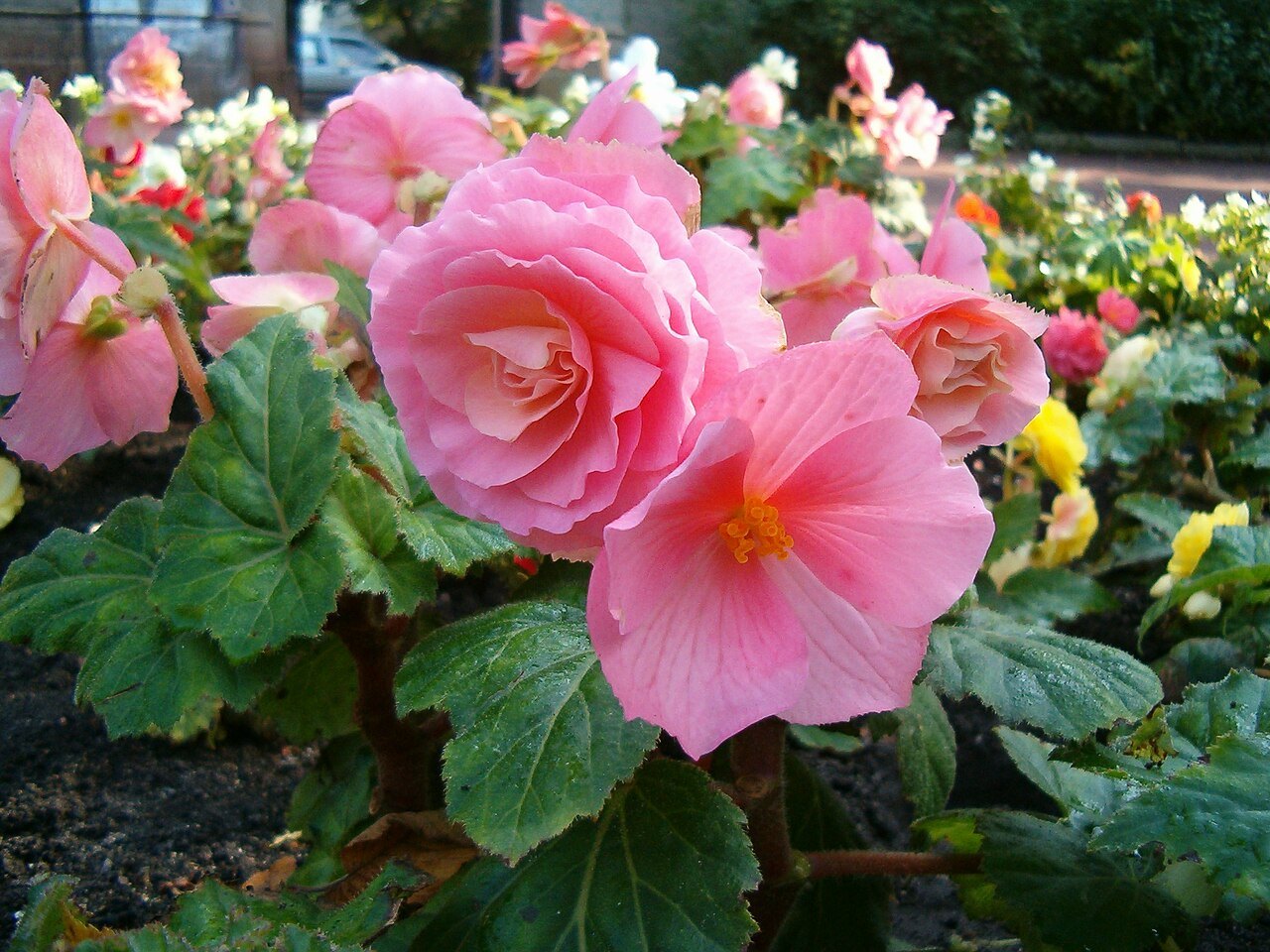
LATIN NAME: Begonia tuberhybrida
COMMON NAME: Tuberous Begonia
Plant Profile
Tuberous begonia is not a species but a group: Begonia × tuberhybrida is a swarm of cultivars raised over a century and a half from high-altitude Andean species, held together by the tuber that carries them through dormancy. Plants die back in autumn, the tuber rests, and new growth comes in spring.
The flowers are the point and they are absurd: singles half an inch across, doubles the size of a dinner plate, in every shade except blue. Some are picotee, with a different colour on the margin, some are crested, some are scented, and the trailing forms hang over a basket in a cascade.
The trade classifies them by flower form with a set of letters: S for single, C for camellia-flowered, R for rosebud, Fr for frilled, N for narcissiflora, P for picotee, and HB for the hanging-basket types. It is a system worth learning if you buy tubers by name, and meaningless if you buy a tray of mixed seed.
Science & Biotechnology
The group began in the 1870s. Begonia × sedenii, raised in 1870 from B. boliviensis, collected by Richard Pearce in the Andes, and another Andean species, was among the first hybrids, and B. davisii, from Peru and named for Walter Davis, went into the mix soon after. Almost every ancestor is a mountain plant from cool, humid, high-altitude forest.
That ancestry explains the cultivation. They want cool roots, humid air, bright light without scorching, and a night temperature well below the day. In a hot greenhouse they collapse; in a cool one they are easy. The tuber is a storage organ, not a bulb, and it has no protective tunic, so it dries out and bruises if it is handled roughly.
The seed is like dust. A capsule holds thousands of them, each smaller than a grain of salt, and they are sown on the surface of sterilised compost and never covered. That is why begonia seed is sold in a foil packet with the warning not to sneeze, and why one packet can produce three hundred plants. Other Begoniaceae on the list: Begonia grandis, Begonia cucullata and Begonia multiflora.
Uses & Benefits
They are the best flower for shade. A north-facing porch, a shaded step, a pot under a tree, a window that gets two hours of morning sun: these are begonia conditions, and nothing else gives that size of flower in that light. In full sun they burn; in deep gloom they stretch and sulk.
The trailing forms are the standard for hanging baskets, and they are better than most of what is sold for the purpose because they flower continuously rather than in one flush. Pinch out the first flowers on a young plant and it will carry more later.
The upright forms need staking, and the doubles are heavy enough to snap a stem in wind or rain. A single cane per plant, tied with soft twine, is enough. Remove the female flowers on the doubles if you want size; the seed capsules take energy that would otherwise go into petals.
Growing from Seed
Sow in January or February, on the surface of fine, moist seed compost, at 21 to 24 °C, in a propagator with the lid on. Do not cover the seed and do not water from above; mist, and keep the light bright. Germination takes two to four weeks, and the seedlings are almost invisible at first.
Prick out when they are large enough to handle, which is later than you think, and grow them on at 18 °C in good light. Pot up twice before planting out after the last frost. Plants raised from January seed will flower from July; plants from March seed will flower in September and run out of season.
In autumn, stop watering when the foliage yellows, lift the tuber, cut the stem to 2 cm, and dry it upside down in a cool airy place for a fortnight. Store in dry peat or vermiculite at 5 to 8 °C, and start it into growth in February on a tray of damp compost, hollow side up.
Our Take
For a shaded patio there is nothing to beat them, and the cost of a packet of seed against a tray of flowering plants is absurd. They are also fussy in a way that is entirely predictable: cool roots, no sun, no drought, no waterlogging. Meet those four conditions and they do the rest.
The tuber is the weak point. Most failures happen in storage, not in growth: too warm, too dry, or knocked about so the growing point is damaged. Label the tubers, store them cool, and check them in January. Do that, and a plant bought for one summer becomes a fixture for ten.
Related Reading
More species in the same orbit as Tuberous Begonia: