


Abelmoschus sagittifolius Seeds | Arrowleaf Okra
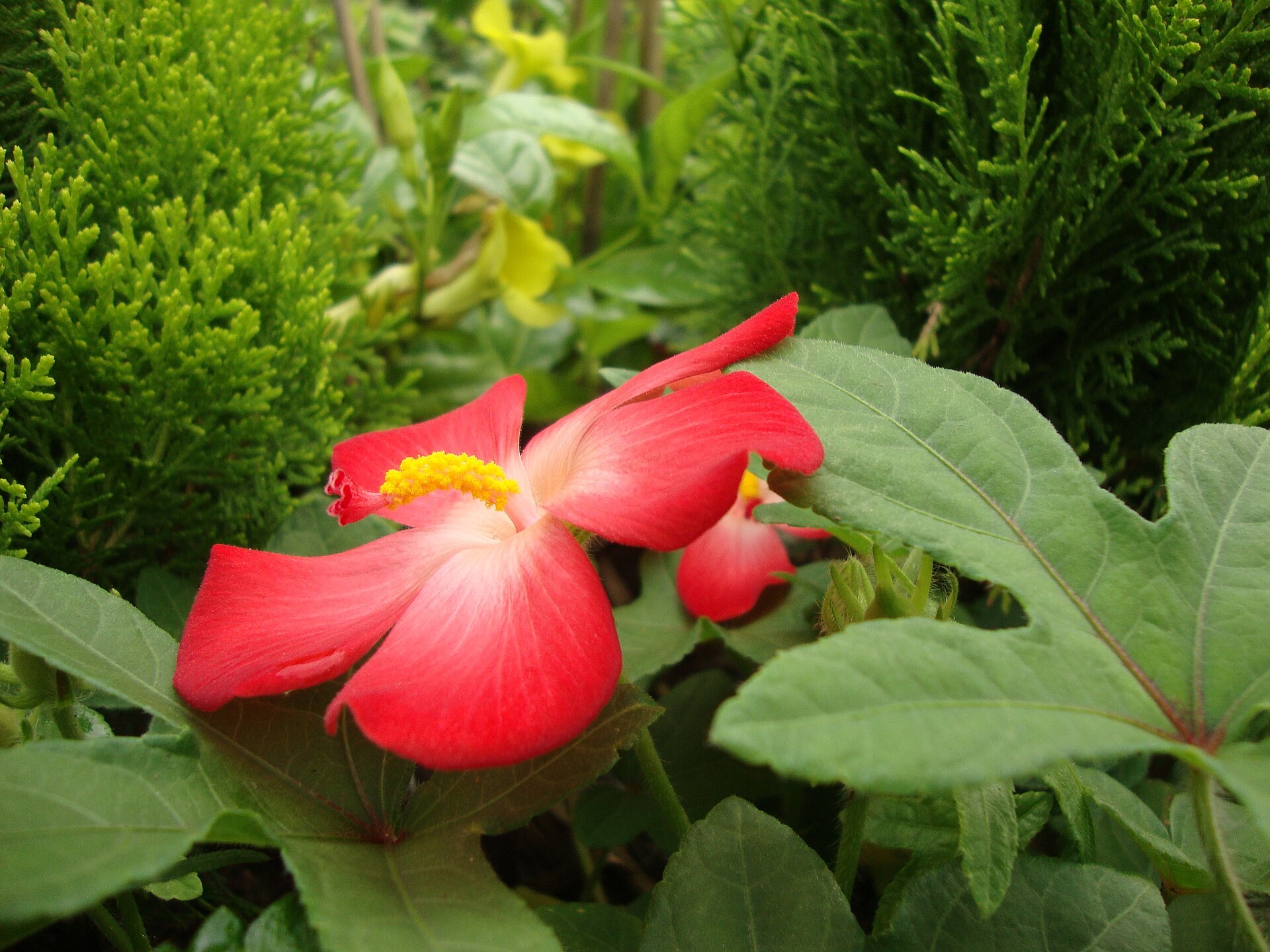
LATIN NAME: Abelmoschus sagittifolius
COMMON NAME: Arrowleaf Okra
Plant Profile
Abelmoschus sagittifolius is the wild cousin of okra that never needed a kitchen to stay popular. The Scottish botanist Wilhelm Kurz described it in the 1870s, Elmer Merrill moved it into Abelmoschus in the 1920s, and its range runs from Guangdong, Guangxi and Yunnan through all of mainland Southeast Asia and the Malay archipelago to northern Australia.
The plant is a perennial herb with the family’s architecture: stout stems, arrow-shaped sagittate leaves that give the species its name, and in season large yellow flowers with a deep maroon eye, five petals spread wide, built on the hibiscus plan and opening in the morning like their cultivated relatives.
Underground is where the plant departs from okra. It builds a cluster of fleshy, elongated roots, and in Hainan, Guangxi and Yunnan these are dug as a tonic herb known as Wuzhishan ginseng, after the Hainan mountains, sold in markets and decocted as a strengthening medicine.
The flowering season flips the temperate calendar. Field records peak from November through February and taper off in spring, the dry-season schedule of the monsoon tropics, when the plants have their moisture budget to themselves and the pollinators are working the open ground.
Science & Biotechnology
The genus Abelmoschus is small, six or seven species against okra’s hundred-million-dollar crop, and this one matters to breeders as a gene pool relative. It crosses within the genus with difficulty but productively, carrying resistances and drought traits that the cultivated species lacks, and it shares the crop’s mucilage chemistry throughout its tissues.
Some field records and regional floras split the species, treating populations under the name Abelmoschus rhodopetalus, and the split-versus-lump argument is not fully settled. The plants involved share the arrow leaves, the maroon-eyed yellow flowers and the fleshy root, and for practical purposes the names travel together in the literature.
The dry-season flowering is a botanical statement about allocation. In monsoon climates the plant spends the wet season building roots and shoots, then commits to reproduction when rain is scarce but sunshine is reliable, a schedule that suits its large, bee-pollinated flowers, which would rot in the peak of the wet season. The rest of the Malvaceae here runs to Hibiscus moscheutos, Hibiscus manihot and Hibiscus aculeatus.
Uses & Benefits
The root trade is the headline use. In the far south of China the dug and dried roots are a recognised folk tonic, prescribed for fatigue and weakness in the same register as ginseng, though pharmacology has examined the plant far less than the market suggests. Demand has led to cultivation in Hainan to spare wild stands.
The plant is edible like its relative: young leaves and shoots cook up with the family’s pleasant slippery mucilage, and the immature pods can be eaten like slender okra. In its native villages the plant tends to grow near settlements precisely because it is half-managed, a tolerated volunteer with a use for every part.
Ornamentally it is a lush, large-flowered perennial for the warm garden, blooming when many tropical plants rest, and its tuberous roots make it surprisingly forgiving of dry spells. In temperate climates it behaves as a vigorous summer annual, flowering from a spring sowing if the season is long and hot.
Growing from Seed
The seeds carry the mallow family’s hard coat and need help to absorb water. Nick the seed coat with a file or pour hot water over them and soak for twenty-four hours, then sow at twenty-five to thirty degrees, barely covered, and seedlings emerge within one to two weeks.
Seedlings grow with tropical speed once running. Plant out after all danger of cool nights, in full sun and rich, free-draining soil, a metre apart, because the plants become substantial. In frost-free country they persist as perennials from the rootstock; in temperate gardens the first autumn frost ends them, so save seed.
For root harvest, wait until the plant has flowered and the tops begin to die back, then lift the root cluster with a fork. In the tropics this is the end of the second year; as an annual crop elsewhere, a long hot season gives usable young roots, though market-grade tonnage belongs to the real tropics.
Our Take
This is okra with a second life underground and a flowering schedule borrowed from the dry season. Northern gardeners can grow it as a big, cheerful summer annual; growers in the tropics have a market crop and a medicinal root in the same plant.
Scarify or hot-soak the seed, sow hot in spring, and give each plant a metre of room. Where winters are kind the roots resprout for years; where they are not, save the seed and treat it as the boldest annual in the plot.
Related Reading
Readers interested in Arrowleaf Okra frequently explore these as well: