


Lagurus Seeds | Hare’s-tail Grass
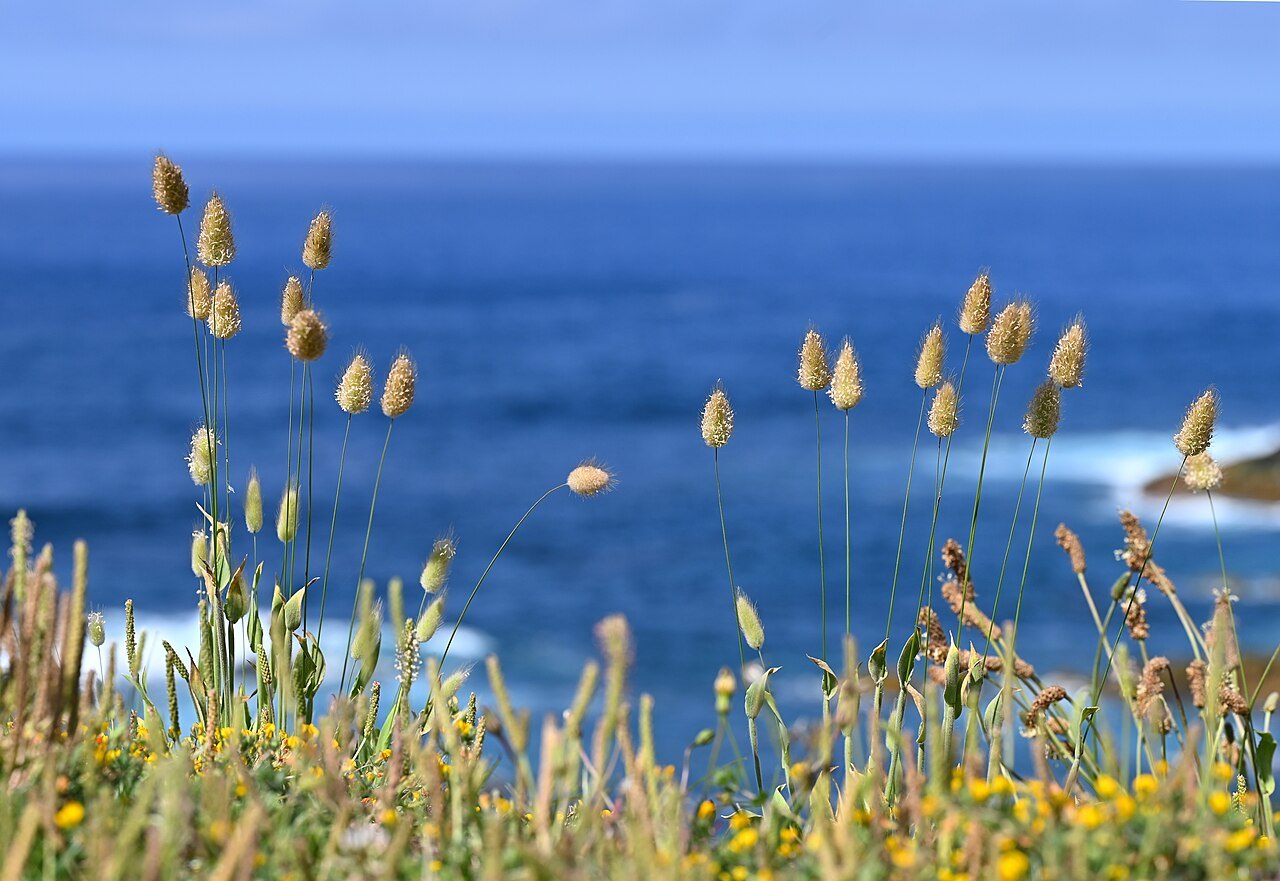
LATIN NAME: Lagurus
COMMON NAME: Hare’s-tail Grass
Plant Profile
Lagurus is a genus of annual grasses from the Mediterranean, the Canary Islands and North Africa, and it holds a single species, Lagurus ovatus, grown wherever gardeners want a soft, pale seed head for drying. The genus once took in plants now placed in Cymbopogon and Imperata, and 18 synonyms have been attached to the one species. In the wild it grows on sand dunes and disturbed ground.
The name is straightforward Greek: lagos for hare and oura for tail, which describes the head exactly. The English common name says the same thing. It ranks among the few botanical names that a child can decode without help. Most of them need a dictionary and a classical education.
A winter annual in mild climates and a summer annual in cold ones, it forms a tuft of flat, softly hairy leaves and sends up stems to 60 cm that end in a dense, egg-shaped panicle 1 to 7 cm long and 0.5 to 2 cm wide. The spikelets are 7 to 10 mm, the awns 8 to 20 mm, and the chromosome number is 14. The whole head is soft to the touch, which is the point.
The spikelets carry long awns with minute barbs, and the barbs make the head cling to fur and clothing. The awns are also hygroscopic, twisting with humidity and working the seed into the ground like a drill. That explains the grass along paths and in gravel where nobody planted it, and the difficulty of combing the heads out of a dog.
Science & Biotechnology
The awns are hygroscopic, twisting and untwisting with changes in humidity, and that movement works the seed into the ground after it falls. It is the same mechanism that makes the genus Achnatherum a self-planting drill. The grass does not need to be buried by anything but weather. A single head can carry a hundred seeds.
Lagurus sits in the Poeae, near the fescues and the bent grasses, and its relationships have been stable. The genus is small enough that nobody has argued about it for a century, which is unusual in grass taxonomy, where genera have been moved wholesale. The tribe around it has been reorganised repeatedly.
An outcrosser in the wild, it sets seed freely in gardens, and the heads that follow the flowers are the reason it is grown. The grass dies after setting seed, as an annual does, and seedlings replace it without help. In a gravel garden the cycle becomes permanent. Fellow Poaceae members here: Lagurus ovatus, Chasmanthium latifolium and Hordeum murinum.
Uses & Benefits
The heads are cut for drying just as they colour, before the seed begins to shed, and they keep their shape for years in a dry room. They also go fresh into small arrangements. Florists call them bunny tails, and few dried flowers look better than plastic. A low bar, but they clear it.
In the garden the grass goes at the front of a border, along a path or in a container, where the heads can be touched. It also works in a meadow mix, filling the gap between spring bulbs and summer grasses. Deep shade will not do. Nor will wet ground.
No food use and no medicinal use worth recording. The plant is grown for its form and for the way it moves in wind, and that is the whole case. English gardens have grown it since the sixteenth century without needing a better reason. Shape was enough.
Growing from Seed
Sow direct in autumn in mild climates, or in early spring where winters are cold, on ground that has been raked fine. The seed needs light and a firm surface, and it germinates within two weeks in warmth. Do not bury it, and do not let the surface dry out while it is coming.
Thin the seedlings to fifteen centimetres apart, and do not feed them, because rich soil produces soft leaves and fewer heads. Full sun is essential; in shade the plants go floppy and pale. Poor, sandy, stony ground suits them better than kindness. Useful in a dry garden, and rare.
Cut the heads for drying when they are fully open and before any seed falls, and hang them upside down in a dark, airy room. For seed, leave a few heads on the plant until they shatter, then collect the seed from the ground beneath. It keeps for several years in a cool, dry packet.
Our Take
Hare’s-tail grass has one idea, and it executes that idea perfectly. The head is soft, pale, portable and permanent, and none of those qualities is an accident. It also ranks among the easiest plants in this catalogue to grow. Sun, poor soil and nothing else.
Sow a row for cutting, and leave a few heads standing for the winter. The grass will not last, but the dried bunches will, and that is the trade it offers. A fair trade, and a generous one. Take it, and sow more than you need.
Related Reading
Readers interested in Hare’s-tail Grass frequently explore these as well: