


Radermachera sinica Seeds | China Doll
LATIN NAME: Radermachera sinica
COMMON NAME: China Doll
Plant Profile
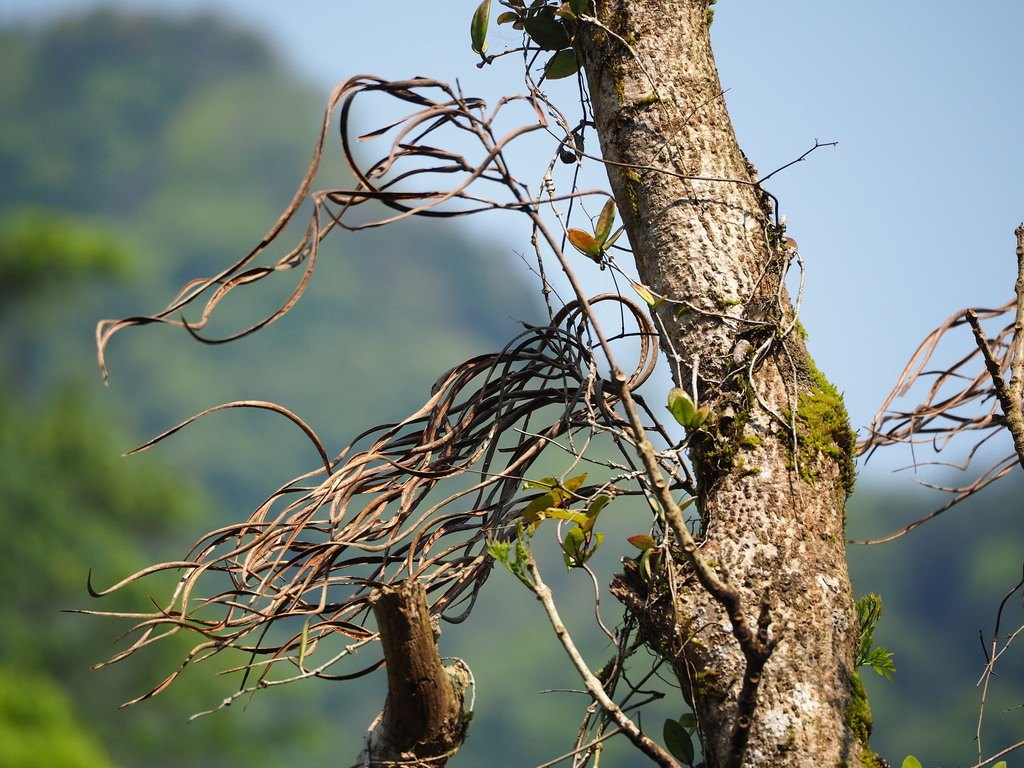
China doll, serpent tree, emerald tree: the first name is the trade’s, the second comes from the seed pods, which are long, twisted and hang like something that has already struck. In the wild it is a tree of 30 m with a trunk up to a metre across, native to the subtropical mountains of southern China and Taiwan, and also recorded from Bhutan, Assam, Myanmar and Vietnam.
The leaves are bipinnate, 20 to 70 cm long and 15 to 25 cm wide, divided into many small glossy leaflets 2 to 4 cm long. That division is what makes the plant look like parsley at a distance and like a fern in a pot, and it is the reason it became a houseplant: the foliage is fine enough to read as texture rather than as leaves.
The flowers are the part almost nobody sees. They are white, trumpet-shaped, about 7 cm long, produced in spring and early summer, and they open at dusk and wilt in the morning sun. A single flower lasts one night, and the scent is strong enough to justify the effort of flowering at all.
Science & Biotechnology
Night flowering with a one-night life is a strategy with a narrow audience. The flower is built for a moth: white for visibility in low light, long-tubed for a long tongue, heavily scented for detection at distance, and timed to open when the moth is flying. By mid-morning the flower is finished, which saves the plant the cost of maintaining tissue that has already been visited.
The seed is wind-dispersed. The pods split to release papery winged seeds, and the wings do the work that the flower’s scent did for the pollen: they buy distance. A tree of this size produces a great many seeds, most of which land within a few tens of metres, and the ones that travel are the ones that colonise new gaps.
The plant’s tolerance is wide but not unlimited. It grows in rich, well-drained soil in sun to part shade, in tropical, subtropical and Mediterranean climates, and it will not take frost. Indoors it needs light and consistent moisture, and it responds to a change of position by dropping leaflets, which is the commonest complaint about it.
Uses & Benefits
As a houseplant it is sold small and grows fast, which is an unusual combination and the source of most of its problems. A plant bought at 30 cm will reach a metre in a year, then hit the ceiling, then lose its lower leaves in the shade beneath its own canopy. The dwarf forms sold as Asian Bell Tree stay near 3 m and are easier to live with.
It does not flower indoors. A plant in a pot under a ceiling never accumulates the wood or the light to produce a 7 cm trumpet, and the buds it makes, if any, abort. The flowers belong to the tree in the ground in Yunnan, and the houseplant is grown for its leaves alone.
Outdoors in a frost-free climate it is a good small shade tree, fast enough to be useful and fine enough in leaf to cast a light shadow rather than a heavy one. It wants shelter from drying wind, which shreds the leaflets, and it wants water in the first two summers. After that it is largely independent. The list carries allies in Radermachera hainanensis, Campsis radicans and Tecoma stans.
Growing from Seed
Sow in spring at 21 to 24 °C on a free-draining mix, barely covered, and keep humid. The seed is short-lived and germinates best when fresh; a packet a year old may give ten per cent. Germination takes two to four weeks, and the seedlings are fast once they start, with true leaves within a month.
Pot on early, because the roots fill a small pot quickly, and grow on in bright indirect light. Pinch the growing tip when the plant is 20 cm to get a branched specimen rather than a single stem with a mop on top, which is what an unpinched seedling becomes and what most of the plants in the shops are.
The problem with the plant is not propagation but maintenance. It drops leaflets at the slightest check, and a plant that has been allowed to dry out once will look thin for six months. Water when the surface is dry, keep it out of draughts, and move it as little as possible; a settled plant is a full one.
Our Take
It is sold as an easy houseplant and it is not quite one. The leaf drop is not a disease, it is a response, and the response is triggered by change: a new room, a cold night, a missed watering, a radiator. Learn to read it as a signal and the plant is straightforward; treat it as decoration and it will be bare by March.
The tree behind the houseplant is worth knowing about. Thirty metres in a Chinese mountain forest, flowering for a single night in June, is a different organism from the thing on the windowsill, and both are the same species. That gap is the most interesting fact about it.
Related Reading
If China Doll appeals to you, these related plants are worth a look: