


Sedum kamtschaticum Seeds | Orange Stonecrop
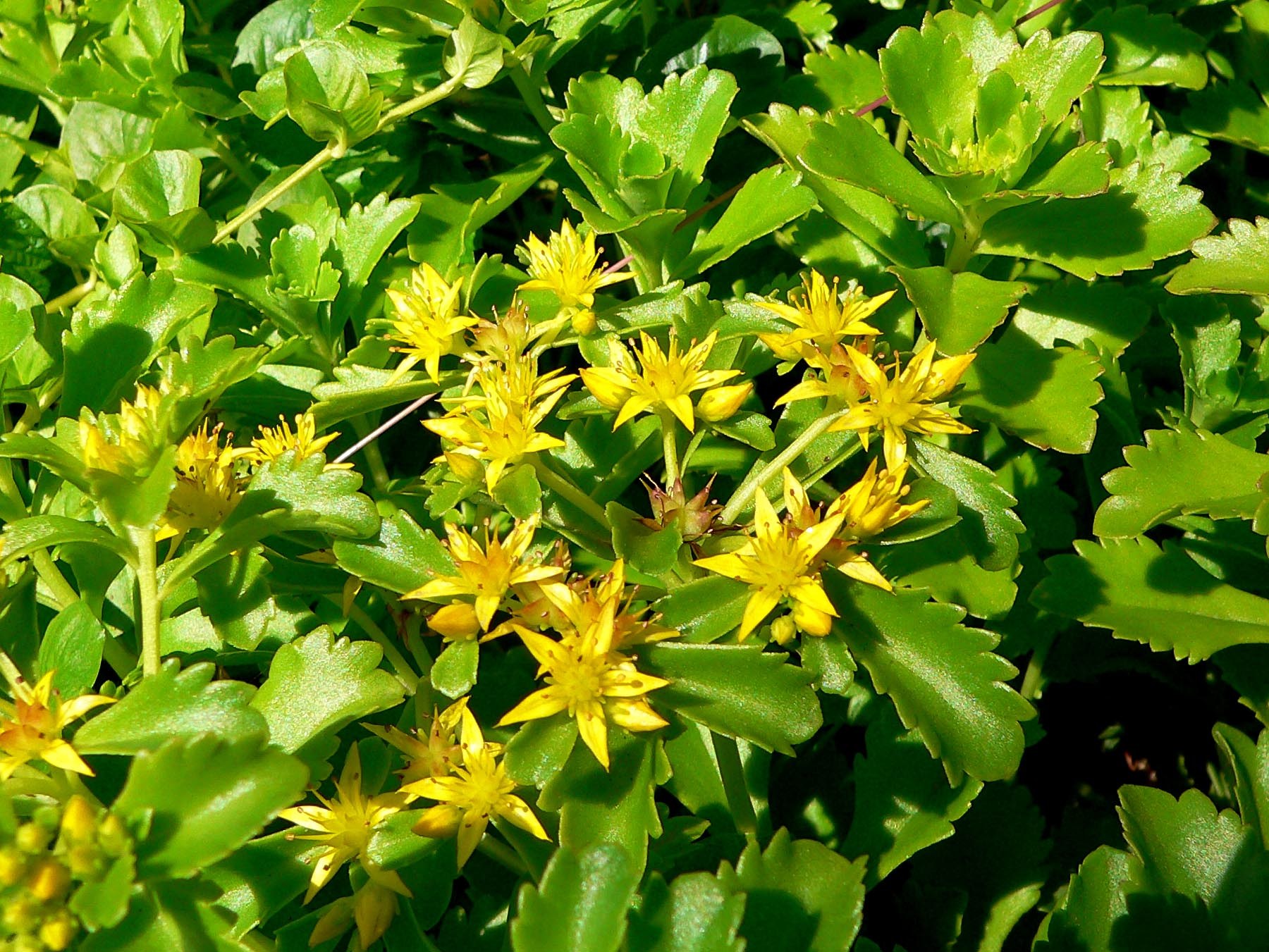
LATIN NAME: Sedum kamtschaticum
COMMON NAME: Orange Stonecrop
Plant Profile
Orange stonecrop is a low, clump-forming succulent from the rock slopes of eastern Russia, north-eastern China, Korea and Japan, and it has been in gardens so long that most people assume it is European. It grows 15 to 40 cm tall on stems that are mostly straight and sometimes carry tiny wart-like bumps.
The leaves are 2.5 to 7 cm long and 0.5 to 3 cm wide, narrow and spoon-shaped or broad and oval, narrowing to the base and blunt or rounded at the tip. The edges near the tip may carry small teeth. The foliage is semi-evergreen: it mostly disappears in winter and returns in March.
The flowers are stars, five-parted and uneven, with sepals 3 to 4 mm and yellow petals 6 to 8 mm carrying a noticeable ridge along the underside. Ten stamens, slightly shorter than the petals, end in orange anthers. In late summer the follicles spread out horizontally like a star and turn russet red.
Science & Biotechnology
The plant is built for drought twice over. The leaves are succulent and store water, and the rootstock is thick, woody and branched, which lets it survive being baked in a thin soil over rock. In the garden that same rootstock makes it hard to lift and easy to break into pieces.
The name changed. It was Sedum kamtschaticum for two centuries and is now Phedimus kamtschaticus, a split that separated the Asian stonecrops from the European ones. The trade still sells the old name, and the plant on the bench has not changed at all, which is the ordinary fate of botanical revisions.
It has escaped cultivation in Europe and the United States, mostly as a discarded garden plant that persists on roadsides, walls and gravel. It is not a serious invader, but it is a survivor, and a fragment of stem left on a gravel path will root and grow without any help from anyone.
Uses & Benefits
It is a groundcover for dry places: a wall top, a gravel bed, the edge of a path, a green roof. It spreads steadily without being aggressive, roots where the stems touch soil, and covers a square metre in two seasons in full sun. In shade it opens up in the middle and the flowers are poor.
The autumn colour is the second reason to grow it. The follicles turn russet red and stand through the first frosts, and the foliage takes on a bronze tinge before it goes. That late colour is worth more than the flowers in a small garden, where August is the emptiest month of the year.
It is not edible and has no medicinal record worth the space. Stonecrops in general have a folk reputation, and this one shares it by association rather than by evidence. Treat it as an ornamental and as a plant for bees in dry weather, and it will not disappoint. Fellow Crassulaceae members here: Sedum aizoon, Sedum lineare and Hylotelephium spectabile.
Growing from Seed
Sow in spring at 15 to 18 °C on the surface, since the seed is fine and needs light. Germination takes fourteen to twenty days at that temperature, and the tray should not be covered. The seedlings are tiny and slow for a month, then suddenly make rosettes. Prick them out when they are big enough to handle and grow them on in gritty compost.
Cuttings are far quicker. Break off a stem, let it dry for a day, and press it into gravel; it will root in a fortnight without any care at all. Division in spring works too, and a clump can be pulled apart by hand, which is the fastest way to cover a bank.
Full sun and sharp drainage. It grows on rock in the wild at 600 to 1,800 m and resents rich soil and summer water, which produce soft growth that rots in winter. A gravel mulch keeps the collar dry and stops the stems from rooting where you do not want them. Lift and replant the outer pieces every few years rather than the old centre.
Our Take
It is the plant to put where the soil is thin and the sun is fierce, and it will do the job without any of the fuss that alpines usually demand. The yellow stars in June are bright and brief; the red follicles in September are the part I would grow it for.
Divide it every few years, or it dies out in the middle and leaves a ring. That is the only maintenance it needs, and it is worth doing in spring rather than autumn, when the plant is already closing down for the year.
Related Reading
More species in the same orbit as Orange Stonecrop: