


Fallopia convolvulus Seeds | Black Bindweed
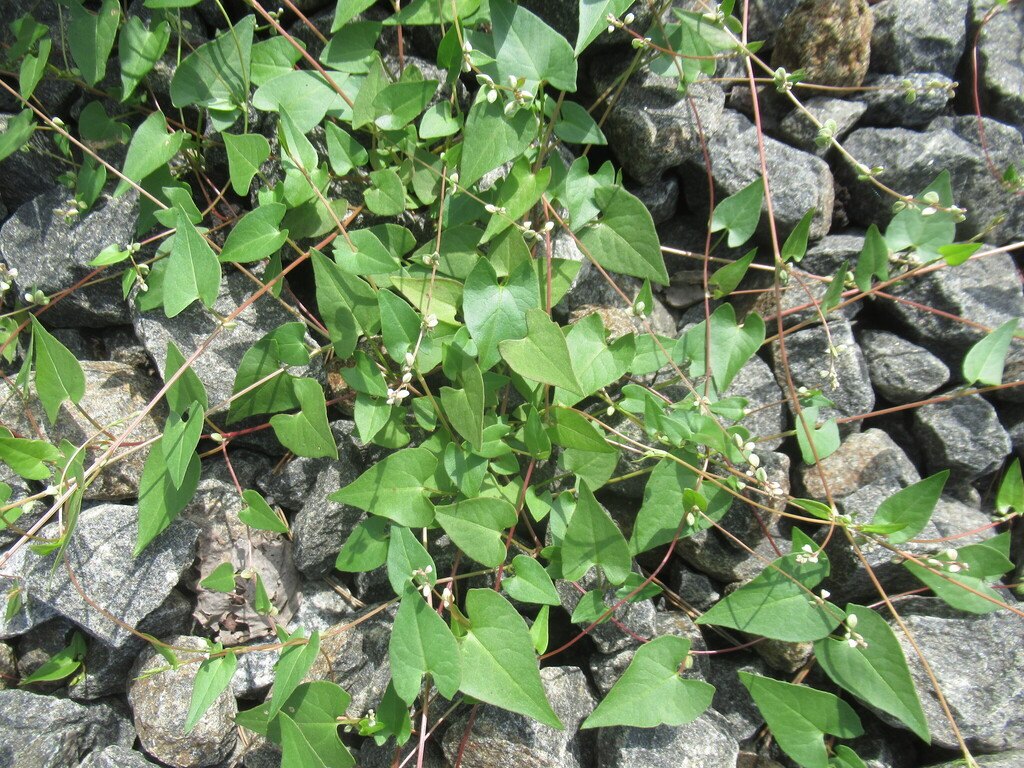
LATIN NAME: Fallopia convolvulus
COMMON NAME: Black Bindweed
Plant Profile
Black bindweed is a herbaceous annual vine, 1 to 1.5 m long, with stems that twine clockwise around whatever is beside them. The leaves are alternate and triangular, 1.5 to 6 cm long and 0.7 to 3 cm broad, on petioles of 6 to 15 mm, with the basal lobes pointed at the point where the stalk joins the blade.
The flowers are small, greenish-pink to greenish-white, in short racemes, and about 4 mm long, with five sepals of which the three outer are larger and keeled. They give way to small triangular achenes, 4 mm long, each with one seed. Nothing about the flower is meant to be noticed.
The name is the problem. It looks like a bindweed, it climbs like a bindweed, and it is not one: it belongs to the Polygonaceae, the knotweeds, not to the Convolvulaceae. The plant yields a field mark that settles it — an ocrea, the sheath of fused stipules at each node, which true bindweeds do not have.
Science & Biotechnology
Linnaeus named it Polygonum convolvulus in 1753, and it has been moved repeatedly since; in 1970 Áskell Löve placed it in Fallopia, which is where the major databases now put it, though the USDA plants database still lists it as Polygonum convolvulus. It has 25 synonyms, eight of them homotypic, which is a measure of how often it has been reclassified.
Its range is enormous: throughout Europe and Asia to northern Africa, from sea level in the north to 3,600 m in the Himalaya, on disturbed and cultivated ground. In northern Europe it prefers warm, sunny, well-drained sandy or limestone soils; in hotter and drier places such as Pakistan it moves to moist, shady sites. That flexibility is why it is a weed of almost every crop.
The seed is edible and was once a food crop. Remains turn up in archaeological deposits alongside the grains it infested, and the line between a weed and a crop in those assemblages is thinner than the modern word suggests. A plant that ripens with the barley and can be ground with it is a plant that gets eaten.
Uses & Benefits
There is no ornamental case for it. It is a weed of gardens, allotments and field margins, and it does real damage by twining through peas and beans and pulling them down. A patch in a hedge is tolerable; a patch in the vegetable row is not.
The one thing it does well is cover ground, and fast. It germinates in spring, grows away in May and sets seed by August, and in a bad year it will smother a young hedge or a newly planted shrub before either has got away. That is a warning rather than a use.
The old names are worth recording because they describe the behaviour: bind-corn, corn-bind, climbing buckwheat, devil’s tether, bear-bind. Every one of them is about the same habit, and the fact that it has a dozen names in English alone tells you how long people have been pulling it off their crops. It shares the family with Fallopia multiflora, Persicaria capitata and Persicaria orientalis.
Growing from Seed
It germinates in spring from seed buried in the top few centimetres, at 10 to 20 °C, and it does not need light. That is why it appears in a bed that has been dug, and why it appears in the row you sowed rather than the one beside it. The seed can persist in the soil for years.
Control is by pulling before the achenes set, which means late June rather than August. The stems twine, so pulling is easy if you follow the stem to the base; cutting at ground level simply encourages regrowth from the base, so strimming does not work.
Mulch helps, because the seed needs disturbance to come up, and a stale seedbed in spring will clear a flush before the crop goes in. Do not put the plants in the compost once the seed has formed; the heap does not get hot enough to kill it, and you will spread it back onto the bed next year.
Our Take
It is a weed, and the honest thing to say is that it is a weed with an interesting history and no garden merit. The archaeology is genuine: people ate it, ground it with their grain, and probably cursed it then as now.
Learn the ocrea. It takes two seconds to check, and it stops you confusing this with hedge bindweed, which needs a completely different approach and a great deal more patience. Everything else about the plant is a matter of pulling it early.
Related Reading
More species in the same orbit as Black Bindweed: