


Geum aleppicum Seeds | Yellow Avens
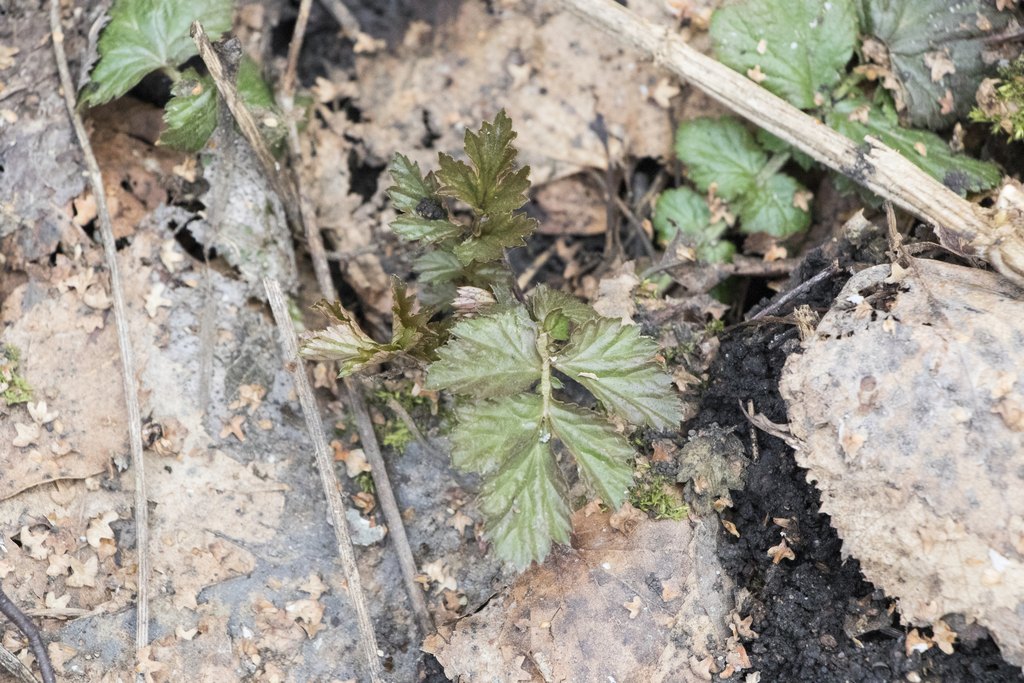
LATIN NAME: Geum aleppicum
COMMON NAME: Yellow Avens
Plant Profile
Geum aleppicum is a herbaceous perennial of the rose family, native across the temperate Northern Hemisphere from eastern Europe through Asia to North America, where it grows in damp meadows, woodland edges and along streams. It ranks among the most widespread plants in the genus, and it varies considerably across its range.
It makes a clump of pinnate, wrinkled leaves 60 to 80 cm tall, with upright stems carrying small yellow flowers 1.5 to 2 cm across in early summer. The flowers are simple and not showy by the standards of the garden geums, but they are produced over a long period and they are followed by a seed head that is the plant’s most distinctive feature.
Each seed is a small achene with a hooked style that lengthens as the seed ripens, forming a burr that catches in fur and clothing. The whole head looks like a small mop, and it is the reason the plant spreads along paths and grazing land, and the reason it is a nuisance in wool country. The leaves are pinnate with three to five leaflets, the terminal one much larger than the rest, and they are covered with soft hairs that give the plant a grey-green cast.
Science & Biotechnology
Geum is a genus of about 50 species, most of them northern temperate, and it sits in the Rosaceae in the tribe Colurieae, alongside the herb bennets and the dryads. The genus is known for its hybrid swarms, and many of the garden geums are complex hybrids between G. chiloense, G. coccineum and G. reptans.
The burr-like seed head is a dispersal mechanism that works by adhesion, the same principle as the burdock burr that inspired Velcro. The hooked style is hygroscopic: it curls and uncurls with changes in humidity, which helps the seed work its way into the soil once it has been dropped.
The plant contains tannins, flavonoids and a small amount of volatile oil, and the astringency of the root is due to the tannin content. The medicinal uses recorded in Europe and China are consistent with that chemistry, though none of them has been validated in controlled trials. Other Rosaceae on the list: Geum montanum, Prunus dulcis and Prunus cerasifera.
Uses & Benefits
In a garden it is a plant for a meadow, a wild corner or a damp border, where its modest flowers and its seed heads can be appreciated for what they are. It is not a plant for a formal bed, and it will not compete with the large-flowered garden geums.
It has a long history of medicinal use in China, where the whole plant is used as a febrifuge and astringent, and in Europe it was used for the same purposes under the name avens. The root contains tannins and was chewed for toothache, and an infusion was used for diarrhoea and for sore throat.
The young leaves are edible in small quantities and are used in soups in some regions, though the plant is bitter and the root is not palatable. The seed heads are attractive in dried arrangements, and the plant is a useful source of early-summer forage for small bees and hoverflies. The flowers are followed by a rounded head of achenes, each with a hooked style that catches in fur, which is how the plant travels.
Growing from Seed
Sow in autumn or early spring at 15 to 20 °C, covering the seed lightly. Germination takes 21 to 30 days and is improved by cold stratification; a packet sown in spring may not germinate until the following year. Pot on into 7 cm pots at 15 °C. Plant out 30 to 40 cm apart in full sun or light shade, in soil that stays moist. The plant tolerates wet ground better than most geums, which is one reason it is useful in a damp meadow.
Cut the plants back after the first flush of flower to encourage a second, and remove the seed heads if you do not want self-sowing. Divide clumps every three or four years in spring or autumn. The plant is short-lived in hot, dry conditions, and it benefits from a mulch in summer.
Our Take
Yellow avens is a plant for the wild garden rather than the border, and it is worth growing for its seed heads as much as its flowers. It is not a plant that will impress a visitor, but it is one that belongs in a meadow, and it earns its place by being there.
Grow it in a damp corner, let it seed, and do not expect it to stay where you put it. It is a plant that moves with the wind and the wool, and that is part of its character. Leave a few heads to ripen and it will turn up in the next bed.
Related Reading
Readers interested in Yellow Avens frequently explore these as well: