


Oenothera lindheimeri Seeds | White Gaura
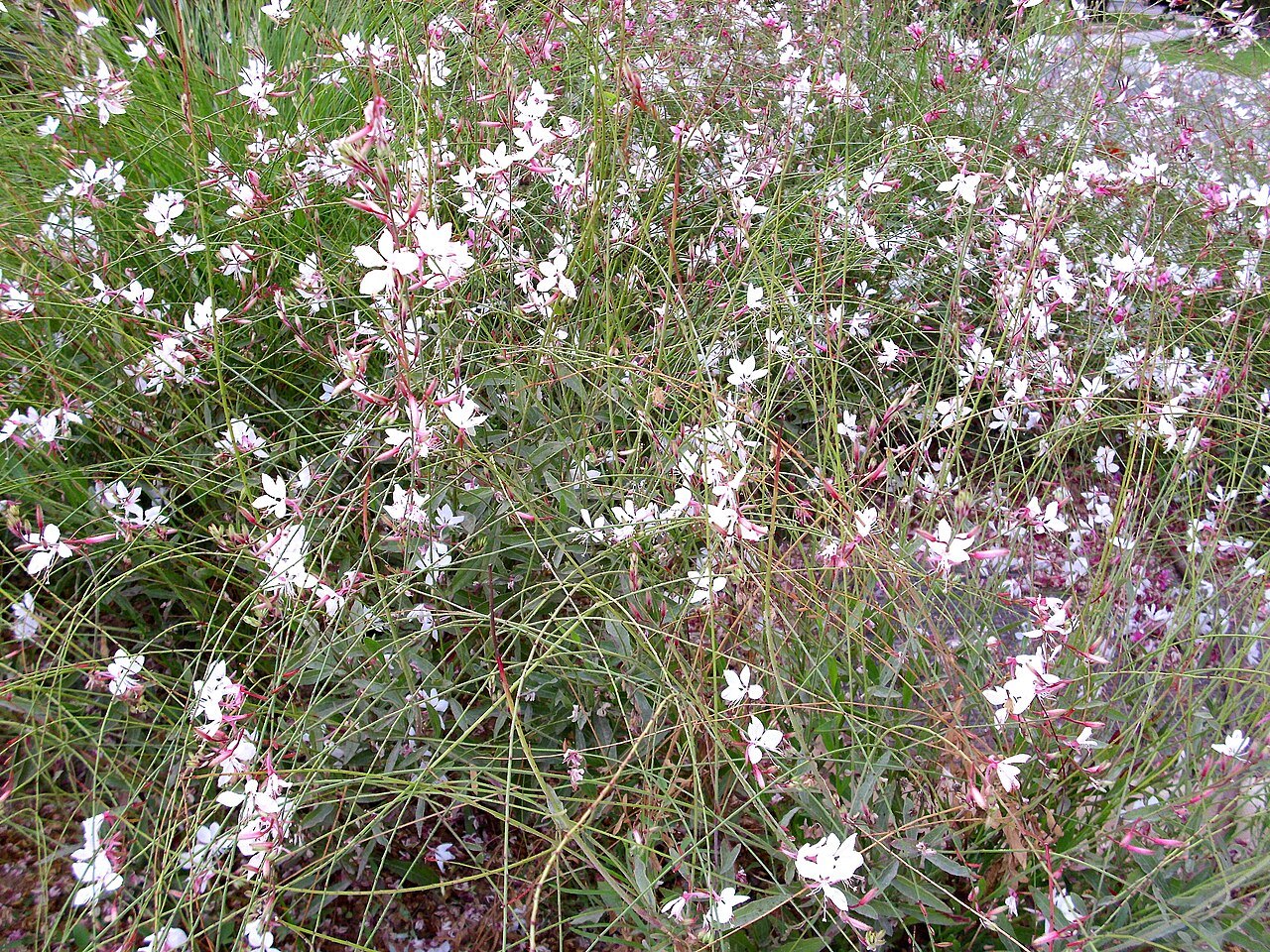
LATIN NAME: Oenothera lindheimeri
COMMON NAME: White Gaura
Plant Profile
Oenothera lindheimeri comes from southern Louisiana and Texas, where it grows in sandy prairie and open woodland on ground that is wet in winter and dry in summer. It is a clump-forming perennial 90 to 150 cm tall, with slender stems, narrow leaves and a mass of small white flowers that open a few at a time from early summer until frost.
The flowers are 2 to 3 cm across, with four petals that turn pink as they age, and long stamens that project well beyond the petals. The buds are pink and open in the morning, and each flower lasts a day, but the plant produces so many over such a long season that it never looks out of flower.
The plant was long known as Gaura lindheimeri, and the old name is still used by many growers and in many catalogues. Molecular work in 2007 moved it into Oenothera, the evening primroses, so the plant now sits in a genus famous for flowers that open at dusk, even though this one opens in the morning. Three other Onagraceae are catalogued alongside it: Oenothera speciosa, Oenothera longissima and Clarkia elegans.
Science & Biotechnology
Oenothera is a genus of about 145 species, most of them North American, and it is famous in genetics for its permanent translocation heterozygotes, a chromosomal arrangement in which the genes are passed on in linked blocks rather than assorting freely. That discovery, made in the early twentieth century, was one of the foundations of cytogenetics.
The move from Gaura to Oenothera was based on molecular phylogenetics and on the structure of the fruit and seed, which in Gaura are indistinguishable from those of Oenothera. The two genera had been separated on flower shape, a character that turned out to be misleading, which is a common story in plant taxonomy.
The pink fading of the petals is a senescence response: as the flower ages, the pH of the vacuole rises and the anthocyanins change colour, so a white flower turns pink before it drops. The same mechanism produces the colour change in roses and in some hibiscus, and it is a useful signal to pollinators that the flower is past its best.
Uses & Benefits
It is used at the middle or back of a border, where its height and its airy habit give movement without weight. The stems are so slender that the plant seems to float, and it combines beautifully with grasses, with dark foliage and with late-summer perennials such as rudbeckia and helenium.
The cultivar Whirling Butterflies is the most widely grown, with white flowers and a compact habit to 90 cm; Siskiyou Pink has pink flowers and darker foliage; Karalee Petite Pink is a dwarf form for the front of a border. All of them are more compact than the wild plant, which can reach 1.5 m and flop in rich soil.
It is drought-tolerant once established, and it is one of the few tall perennials that does not need staking in a windy site. The flowers are visited by bees and by hummingbird moths, and the plant is a larval host for several species of hawk moth.
Growing from Seed
Give them a heated start six to eight weeks before the frost date, at 18 to 21 °C, barely covered. Germination takes 14 to 30 days and can be uneven. The seed has a hard coat, and a period of cold stratification improves the result if germination is poor.
The plant has a taproot and resents disturbance, so sow into deep cells and move it while small, or sow direct in late spring. Plant out 45 cm apart in full sun. It tolerates poor, sandy soil and needs no feeding; rich soil produces tall, floppy growth.
Water while establishing, then only in severe drought. Deadhead to prolong flowering, though the plant is generous even without it. In a cold climate the top growth dies in winter and the crown needs a mulch; in a mild one it stays semi-evergreen. Divide clumps every three or four years in spring.
Our Take
Gaura is one of the best plants for movement in a border, and one of the few tall perennials that looks good in wind rather than battered by it. Its season is long, its colour is soft, and it asks for nothing except sun and drainage. Plant it where the wind can move it, and it will do the rest.
Grow it with grasses, where the two together make a planting that moves all summer, and cut it back in spring rather than autumn, so that the stems stand through winter and catch the frost. It is a plant that earns its space in every month of the year.
Related Reading
Continue exploring with these related plants: