


Hibiscus manihot Seeds | Aibika
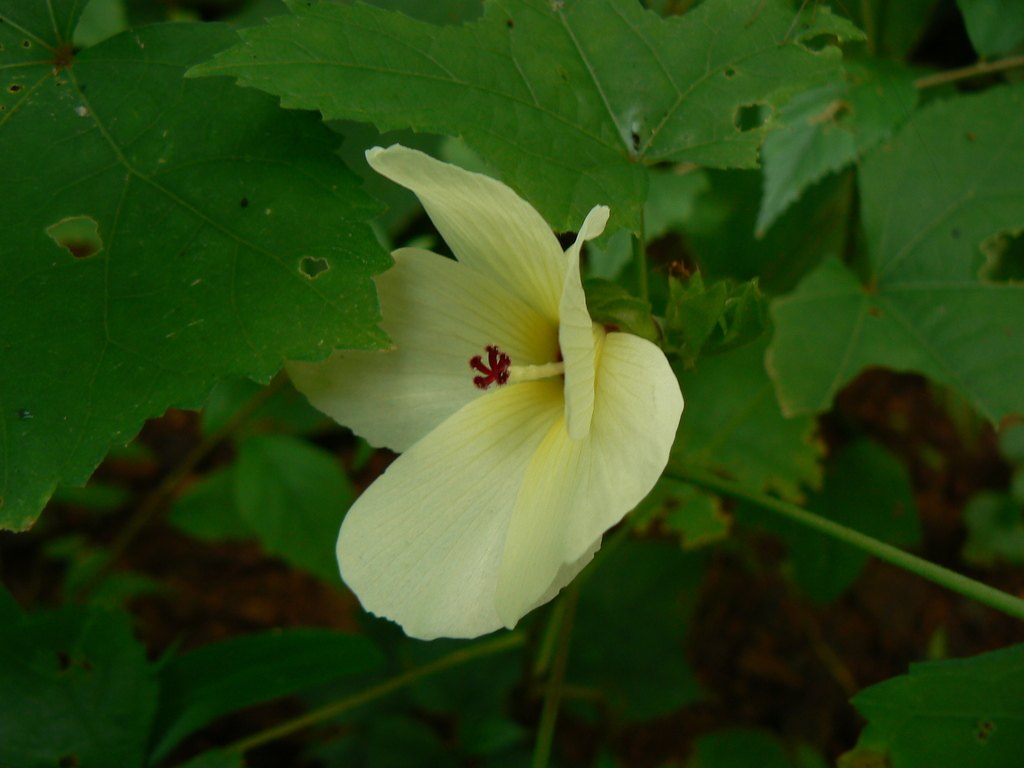
LATIN NAME: Hibiscus manihot
COMMON NAME: Aibika
Plant Profile
Aibika is a tropical subshrub or shrub that reaches 3 m under good conditions, with palmately lobed leaves up to 30 cm across and a stem that goes woody at the base. It is grown, in most of its range, for the leaves rather than the flowers, which is unusual for a hibiscus and is the first thing to understand about it.
The flowers are the reason it was named: pale yellow, 15 to 20 cm across, with a deep maroon eye, opening in the evening and lasting a day. They are handsome and completely incidental to the crop. A plant that is being picked for the pot is usually kept short and never flowers at all.
Linnaeus described it in 1753 as Hibiscus manihot, from a specimen collected in India, and Medikus moved it to Abelmoschus in 1787. Both names are in use, and the seed trade has settled on the older one. It is native from the Indian subcontinent through Indochina and central and southern China to Malesia, New Guinea and Queensland. Fellow Malvaceae members here: Hibiscus tiliaceus, Hibiscus aculeatus and Abelmoschus sagittifolius.
Science & Biotechnology
The leaf is the crop and the analysis is unusually good for a leafy green: about 12 percent protein by dry weight, high in vitamins A and C, and a useful source of iron. That is why it is the most commonly eaten indigenous green vegetable in Papua New Guinea, where it grows without input in village gardens and is picked leaf by leaf.
Its other life is as an adhesive. The leaf and stem are full of mucilage, a polysaccharide gel that thickens when the tissue is bruised in water, and that gel is the neri used in Japanese washi papermaking and the dak pul used for Korean hanji. In both traditions the mucilage is beaten into the fibre suspension so that the sheets form evenly.
The plant is easy to propagate from cuttings, which is how it is normally moved around, and it is relatively disease-resistant, so it survives as an intercrop in traditional tropical gardens rather than as a monoculture. A chromatographic study published in China identified thirteen compounds in the leaf, among them myricetin and its glycosides and beta-sitosterol.
Uses & Benefits
In the Philippines it is lagikway, and the leaves go into tinola, sinigang and pinangat, or into a salad. In Indonesia it is daun gedi, and it is the defining ingredient of bubur Manado, the vegetable porridge from North Sulawesi. In both kitchens the mucilage is the point: it thickens the broth and gives it a slippery body that other greens cannot.
Cooked, the leaves are mild and slightly viscous, closer to okra than to spinach, and they hold their shape better than most greens. Use them where you would use okra or malabar spinach, in soups and stews rather than in a hot pan, and add them late so the colour survives.
In a temperate garden it is a foliage plant and a curiosity: a hibiscus that grows to 2 m in a season from seed and produces a crop of leaves you cannot buy. It is not hardy, so treat it as an annual or overwinter a plant indoors, and take cuttings in September as insurance.
Growing from Seed
The seed coat is hard and the seed is large. Nick it or soak it for twelve hours in warm water before sowing, then sow 1 cm deep at 25 to 28 °C. Most of the seeds are up inside a fortnight, and the odd one follows later. In a short season, sow indoors in February; the plant needs a long warm run to reach any size.
Plant out after the last frost into rich, moist soil in full sun. It is a heavy feeder and a heavy drinker, and a plant that dries out stops growing and goes woody. Water daily in hot weather and mulch thickly. Space them a metre apart if you want leaves, closer if you want a hedge.
Pick the young leaves and shoot tips continuously, starting when the plant is 40 cm high. Cutting keeps it vegetative; letting it flower ends the harvest, because the plant puts everything into the capsule. Save seed from a plant left to ripen at the end of the season, and take cuttings from the best plants before the nights cool.
Our Take
It is a genuinely useful plant that the West has largely ignored, and the double life as a food and a papermaking glue is the sort of thing that makes botany worth reading. As a garden subject it is fast, generous and unfussy, provided it is warm and wet.
Grow it for the leaves if you cook Asian food, and grow it for the flowers if you have the season to spare, but do not expect both from one plant. The one caveat is water: a dry aibika is a stick with three leaves on it, and no amount of feeding will bring it back.
Related Reading
Readers interested in Aibika frequently explore these as well: