


Tilia henryana Seed
LATIN NAME: TILIA HENRYANA
COMMON NAME: Henry’s Linden, Henry’s Lime
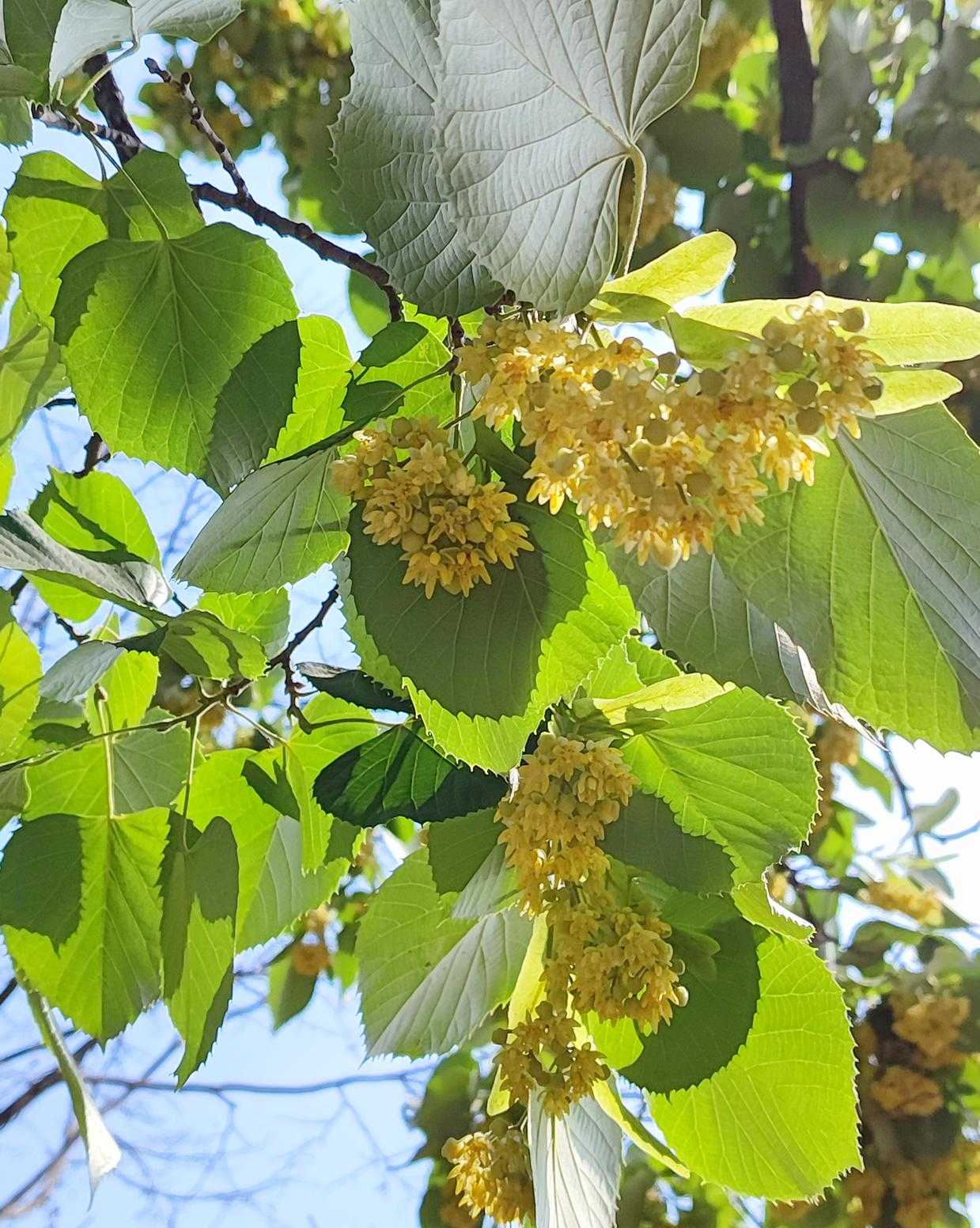
The Tilia henryana, or Henry’s linden, is one of the most elegant of the lindens, and its large, heart-shaped, silvery-backed leaves and its clusters of the small, creamy-white, fragrant flowers in the early autumn have made it a treasure of the gardens and the parks across the warm and the temperate regions. It grows as a medium-sized, deciduous tree of the linden family, reaching up to twenty metres or more, with a smooth, grey-brown bark and the spreading, layered branches, bearing alternate, large, heart-shaped, bright-green, deeply-toothed leaves with the striking silvery-white, downy undersides, and bearing, in the late summer and the early autumn, the clusters of the small, creamy-white, fragrant flowers hanging from the leaf-like bracts, followed by the small, round, woody fruits. It is a species of the flowering tree, native to the warm woodlands of the East, where it was discovered by the Western botanists and named for the Irish plant collector Augustine Henry, while it has been cultivated in the gardens for its leaves and its flowers, and it is known as the Henry’s linden or the Henry’s lime.
Scientific Research & Plant Biotechnology
The Henry’s linden has a real and distinguished place in research. It has been studied in the horticulture and the ornamental-plant science, since the Tilia henryana is prized for its elegant, silvery-backed leaves and its late-summer fragrant flowers, and the researchers have examined its cultivation, its propagation and its value in the landscape, while the study of the lindens and their varieties has drawn attention in the international horticultural press. The plant has also been studied in the ecology and the pollination, since the linden flowers are an important late-season nectar source for the bees and the other pollinators, and the researchers have examined their role in the ecosystems and their value in the honey production, while the study of the nectar-rich trees has been of continuing interest. The species has also been studied in botany, since it is a member of the linden family and a relative of the other lindens, and its relationships, its distribution and its many forms have been examined, while the large, silvery-backed leaves and the fragrant, creamy-white flowers of the Henry’s linden have been of interest to the botanists and the gardeners. For a tree of such elegance, the Tilia henryana has a rich and distinguished record of research.
Ecological & Economic Value & Wide Applications
To grow the Henry’s Linden from seed, the Henry’s linden is a medium-sized, deciduous tree of the warm woodlands, bearing the large, heart-shaped, silvery-backed leaves and the clusters of the small, creamy-white, fragrant flowers in the early autumn. Its fragrant, late-season flowers are a magnet for the bees and the other pollinators, and its spreading, layered habit gives a fine shade and a presence in the garden and the park, while its silvery-backed leaves give a striking effect in the breeze. Its economic value is real: the Henry’s linden is prized as an elegant, ornamental tree for the garden and the park, and its value has drawn attention in the international horticultural press, while the silvery-backed leaves and the fragrant flowers have made it a treasure of the gardens and the plant collections, and the tree is a fine addition to the park, the large garden and the woodland edge. To raise the Henry’s linden, sow the cleaned seeds in pots of moist, open soil in a cool, bright place, keep them gently watered, and grow the little trees on in the sun.
sow the cleaned seeds in pots of moist, open soil in a cool, bright place, keep the young linden gently watered, and grow the little trees on in the sun.
Tilia henryana Not as ubiquitous in international nursery stock as European linden cultivars, Tilia henryana is a Chinese endemic lime tree that performs reliably across temperate planting zones and serves a diverse set of landscape, ecological and traditional practical purposes. Found naturally on the shaded hillsides and valley woodlands of central and southern China, this medium-sized deciduous tree adapts well to varied growing conditions, which explains its rising uptake among municipal horticulturists and independent growers outside its native distribution. Mature trees build a wide, rounded crown over years of steady growth. Leaves stand out thanks to coarse, bristle-tipped marginal teeth that distinguish the species from other Tilia counterparts. Clusters of cream-hued blossoms emerge in mid-summer, held beneath characteristic leaf-like bracts, and small fuzzy nutlets mature through early autumn. Seed-grown specimens display minor natural variances in canopy spread, a normal genetic outcome that lends each planting a subtle uniqueness absent from cloned nursery stock. Landscape deployment accounts for the bulk of modern usage of Tilia henryana. It copes better with typical urban hardships such as roadside salt deposits, airborne dust and periodic summer heatwaves than many widely planted European lindens, which is why municipal teams frequently plant it along city avenues, within park groves, and on spacious residential lots to furnish steady shade. Its branching develops into a reasonably thick canopy through the warm months, casting pleasant cover for pedestrians and lawns. Unlike a handful of linden variants that shed countless brittle twigs after windy spells, this species leaves behind minimal yard debris and cuts down on recurring maintenance work. It integrates effortlessly into woodland border schemes, coexisting peacefully alongside other temperate hardwoods without aggressive underground root competition. Its decent wind hardiness also makes it a solid pick for elevated suburban plots prone to regular gusts. Its summer blooms bring tangible benefits to surrounding wildlife. Rich in accessible nectar, the pale blossoms attract honeybees, solitary native bees and local butterflies, which helps rebuild pollinator populations fragmented by dense urban construction. Beekeepers often place hives within reach of mature groves to collect supplementary linden honey; the finished product has a soft, delicate sweetness, even if nectar yields from individual trees are not high enough to support large-scale, monoculture honey production. Dense summer foliage forms ideal nesting spots for native songbirds, whose young feed on small leaf-dwelling insects through the breeding season. Farther out in hilly terrain, the tree’s extensive root network anchors loose topsoil, and land stewards regularly plant young specimens along mildly eroded slopes to cut down rainwater runoff during wet seasonal spells. Communities across its native Chinese growing regions have found practical domestic applications for Tilia henryana over generations. Dried flower clusters are commonly brewed into herbal infusions meant to soothe mild throat soreness and encourage restful sleep, following folk practices comparable to long-standing European linden herbal remedies. Its fine, uniform timber works well for lightweight carpentry and detailed hand carvings. The lumber dries without much warping, yet mature trunks rarely reach the girth required for heavy structural building work, so large-scale timber harvesting is uncommon. Rural residents still process fibrous inner bark harvested from younger branches to craft durable cordage suited for ordinary farm and household tasks. Those cultivating Tilia henryana should keep straightforward growth constraints in mind for best outcomes. The tree favours deep, loamy, neutral to slightly alkaline soils with decent drainage, and stagnant water around root zones frequently triggers premature leaf yellowing. Full sun brings heavier flowering, while light afternoon shade is acceptable in hotter summer locales. Pruning work is best limited to removing broken or diseased limbs during dormant winter months; heavy yearly trimming distorts its organic crown shape and lowers bloom production later on. Pests seldom create severe outbreaks when trees are situated in open air circulation, so routine chemical treatments are unnecessary for most planted specimens. Long overlooked in mainstream western landscaping catalogues, Tilia henryana fills practical niches that many imported linden selections cannot match in warmer temperate regions. Its strengths stretch from dependable urban shade provision down to subtle contributions to local pollinator networks, alongside time-tested folk applications that continue to hold relevance in its home growing areas. Planting cycles paced with natural seed propagation also preserve wider genetic resilience, helping the species stay adaptable as regional weather patterns shift over time.