


Fragaria vesca Seeds | White Alpine Strawberry
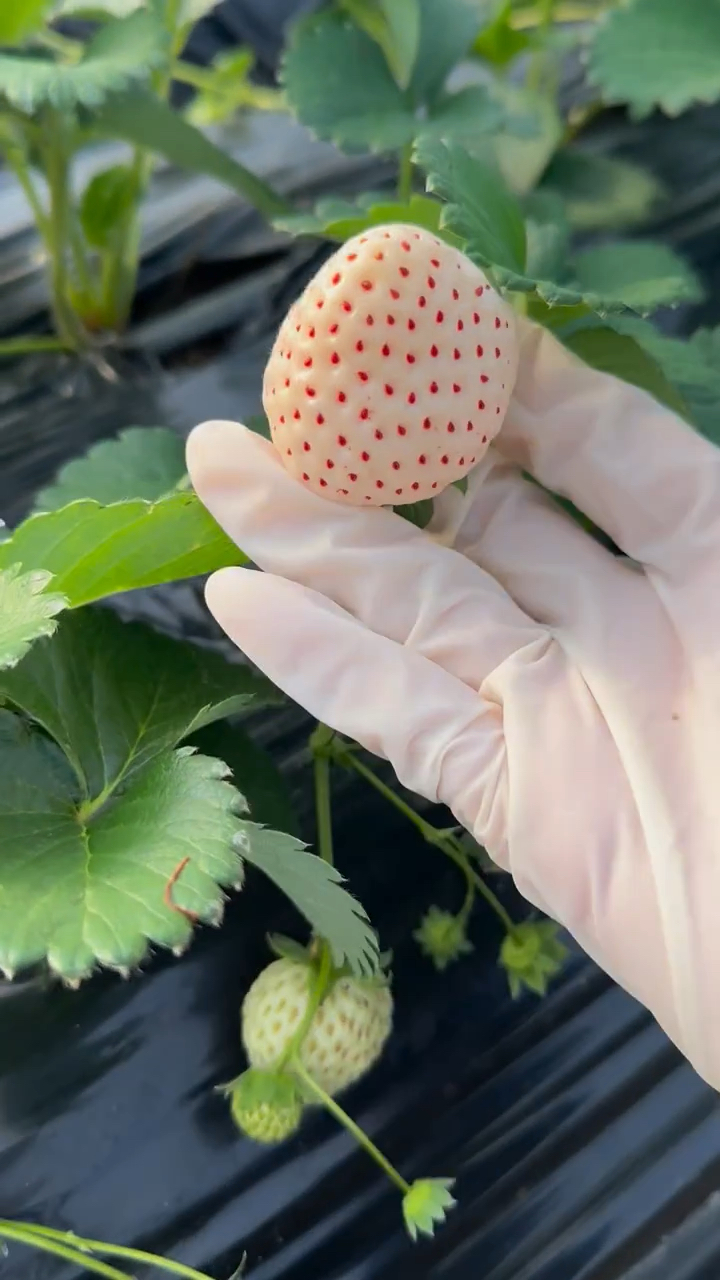
LATIN NAME: Fragaria vesca
COMMON NAME: White Alpine Strawberry, White-fruited Wood Strawberry
Plant Profile
The white alpine strawberry is a colourless form of the woodland strawberry, with pale fruit and red achenes on the surface. It is not a different species: it is Fragaria vesca with a mutation that blocks the anthocyanin pathway, so the swollen receptacle stays cream to pale yellow while the tiny true fruits on its surface ripen red. The plant grows like the wild strawberry, with trifoliate leaves, white flowers and long runners, and it reaches about 20 cm. The fruit is soft, translucent and slightly smaller than the red form, with a delicate flavour that is often described as pineapple or bubblegum, and it bruises if it is handled. It has been grown in gardens since the sixteenth century, and named selections are propagated by runners because seed does not reliably come true. In a bed it is grown as much for the look as for the crop.
Science & Biotechnology
The white form carries a recessive mutation in the anthocyanin pathway, probably in a MYB transcription factor that switches on the genes for red pigment, and the result is a fruit with no anthocyanin at all. The red achenes on the surface develop normally, so the fruit looks as though it has been sprinkled with seed, and the contrast is the reason the form is grown. Because the mutation is recessive, a white plant crossed with a red one will produce red offspring, and seed saved from a white plant may revert if it is pollinated from a red neighbour. Anthocyanins are antioxidants and are also involved in protecting fruit from light damage, so white fruit is more prone to sunburn and to rot in wet weather. The aroma compounds are unaffected, and some tasters find the white form sweeter because the acidity is lower rather than because the sugar is higher.
Uses & Benefits
The fruit is eaten fresh, and it is used by chefs as a garnish because the pale colour and red seed make a striking plate. It is also used in white jams and in eau de vie, where the absence of red pigment keeps the colour clean. In a garden it is grown as an ornamental edible, in pots, hanging baskets and the front of a border, where the fruit can be seen against the leaves. The pale fruit is less conspicuous to birds than the red form, which is a small advantage in an unfenced garden. The plant is also used in teaching genetics, since a white-fruited parent crossed with a red one demonstrates dominance in a single generation. It has the same medicinal uses as the wild strawberry, and the leaves make a mild tea.
Growing from Seed
Sow seed on the surface in late winter at 18 to 20 degrees, since light is needed for germination, and expect three to four weeks before the seedlings appear. Because the trait is recessive, raise plants from runners or from named selections if you want white fruit for certain. Plant out 25 cm apart in sun or partial shade, in soil enriched with compost, and keep the plants moist through the first season. Mulch with straw or gravel to keep the fruit off the soil, since the pale skin marks easily. Cut off runners if you want a tidy clump, or let them root to make a mat. Pick the fruit as soon as it is soft, because it does not keep, and eat it the same day.
Our Take
A ghost of a strawberry: cream fruit studded with red seed and a flavour of pineapple. Grow it from runners, not seed.
Related Reading
More species in the same orbit as White Alpine Strawberry: