


Gleditsia triacanthos Seeds | Honey Locust
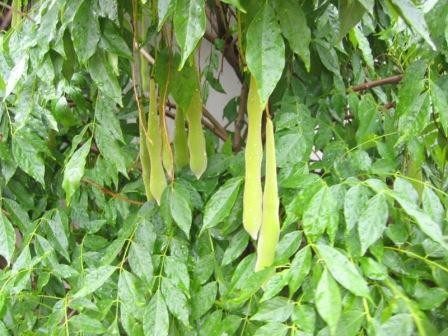
LATIN NAME: Gleditsia triacanthos
COMMON NAME: Honey Locust, Sweet Bean Tree
Plant Profile
Gleditsia triacanthos, commonly known as Honey Locust, is a deciduous tree in the pea family, native to warm plains and river valleys of north America, while it is grown for its tough, graceful growth, its fine, feathery foliage. Honey locust is a tough and graceful tree of warm plains, and it is a tree of sweet pods and long, sharp thorns. Given room and time, it reaches roughly Twenty metres. The blooms are worked steadily by bees for as long as they are open. All of this makes Honey Locust a satisfying plant to grow and to get to know.
Science & Biotechnology
Within the pea family, Gleditsia triacanthos is of continuing interest to researchers working on plant diversity, seed biology and the selection of improved garden forms. Species has also been studied for its traditional uses, since its sweet pods were once a source of food. Little about its garden performance is mysterious; it has been grown and observed for a very long time.
Uses & Benefits
Honey Locust brings genuine presence to the garden and earns its keep across the growing season. Ecologically, honey locust is a generous tree of river valley. Its flowers feed bees and other insects, its long pods feed wildlife, and its open, leafy crown gives light shade and shelter, while it is a tough and adaptable member of the American landscape. For a grower, honey locust is a fast and dependable tree, and for a gardener it brings fine, fern-like foliage and light shade. Establishment is uncomplicated, and afterwards ordinary care suffices.
Honey locust pods were a sweet wildlife and livestock food, and its formidable thorns, Zao Jiao Ci, are a classical Chinese herb for moving stagnation; the thornless forms are premier street trees.
Growing from Seed
Starting Honey Locust from seed is simple and satisfying. Sow the seed evenly over the surface and cover lightly, using a loose, well-drained seed compost, and keep it just moist in bright light until the seedlings are well up. Prick the seedlings out once they are large enough to handle, grow them on in bright light, and plant out when conditions allow.
Our Take
Among the Gleditsia group, it is one of the more distinctive species in cultivation. Careful watering early on is rewarded by toughness at maturity.
Related Reading
Continue exploring with these related plants: