


Santalum album Seeds | Sandal Tree India Sandalwood
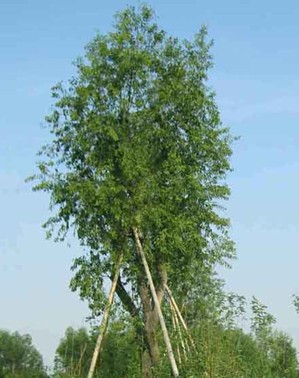
LATIN NAME: Santalum album
COMMON NAME: Sandalwood
Plant Profile
Most fragrant trees keep their scent in leaf or flower, but Santalum album stores it in the wood itself. The heartwood carries a warm, creamy, lingering odour that survives centuries after the tree is cut, which is why sandalwood has been carved into temples, ground into paste for ceremony and distilled into oil worth more than its weight in silver. The smell is not a surface perfume but a property of the timber, present even in a green branch, and that is the whole reason the species has been prized, traded and over-harvested for a thousand years.
The species is native to peninsular India, especially the dry deciduous hills of Karnataka and Tamil Nadu, and it has been planted across the tropical world. It is a small, evergreen tree with opposite, oval, pale-green leaves and tiny reddish flowers in short clusters. The crucial detail is that it is hemiparasitic: its roots tap the roots of neighbouring plants for water and nutrients through specialised structures called haustoria, so it cannot be grown in isolation from host species.
The name is shared with several unrelated trees, and the distinction matters. Red sandalwood is Pterocarpus santalinus, a true legume whose value is a red dyewood, not a scented oil, and it is not a sandal at all in chemistry. True Santalum album is the only one that yields the white, fragrant heartwood and the steam-distilled oil, a point worth checking before you buy any sandal product.
Science & Biotechnology
The scent comes from sesquiterpene alcohols, led by alpha-santalol and beta-santalol, with supporting santalenes, that accumulate in the heartwood as the tree ages. The oil is recovered by steam distillation of chipped heartwood, and the alpha-santalol fraction is the marker that defines genuine oil against adulterants. Research has studied these compounds for their calmative and skin-soothing properties, which is why sandalwood oil sits in both the perfume bench and the traditional pharmacy.
The leaves and young roots also carry smaller loads of the santalols and a range of related terpenes, and the bark stores tannins that give it an astringent quality. Screening work has looked at the woody extracts for antioxidant and antimicrobial activity, consistent with the terpene-rich profile. The tree’s parasite biology has made it a model for haustorial development, because understanding how it connects to a host is the key to growing it well.
Uses & Benefits
Because wild sandalwood was hunted to scarcity, plantations depend on clean, uniform stock, and micropropagation from shoot tips and nodal explants is now standard. Somatic embryogenesis has been reported for Santalum, and selected high-oil lines are multiplied to fix the traits that the distiller wants. This clonal route is what lets legal plantations supply the perfume trade without stripping the wild.
The uses are ancient and varied: the paste is worn in religious marking and cooling unguents, the wood is carved into icons and chests, and the oil perfumes everything from incense to high-end fragrance. In the garden, where climate allows, it is a neat, slender tree with a quiet summer flower, more valued for what it becomes than for how it looks. It also stabilises dry hillsides once established, knitting soil with its shallow root system.
A sandalwood block needs host plants within reach of its roots, typically a mix of nitrogen-fixing shrubs and grasses, so the plantation is really a small community. Get the host wrong and the sandalwood stalls, which is the single most common cause of failure for the beginner.
Growing from Seed
The seed is a hard, round drupe that benefits from soaking, so sow after a warm water soak that you let cool naturally, or after light scarification of the coat. Sow into a deep pot with the seedling destined to keep its host plant beside it, covering the seed lightly in a free-draining mix. Seedlings emerge as the warmth builds; thin them once the first true leaves appear, and move them on when they stand about fifteen centimetres with a firm stem and a healthy pair of host roots nearby.
Set the young tree in full sun with well-drained, slightly acidic soil, and plant suitable hosts such as companion shrubs or local nitrogen-fixers within a metre of its roots. Water through the first dry seasons and protect the slow trunk from browsing, because the wood is the whole prize. white sandalwood wood and India sandalwood chips are the distillers’ raw material if you want to see the end product.
Our Take
I treat sandalwood as a patient crop, not a quick tree: the scent only deepens with age, and the host is not optional. Soak the seed, pair it with a living neighbour, and resist harvesting young. The reward is a heartwood that out-smells almost anything else you can grow.
Related Reading
More species in the same orbit as Sandalwood: