


Toona sinensis Seeds | Chinese Mahogany
LATIN NAME: Toona sinensis
COMMON NAME: Chinese Mahogany, Chinese Toon, Xiang Chun
Plant Profile
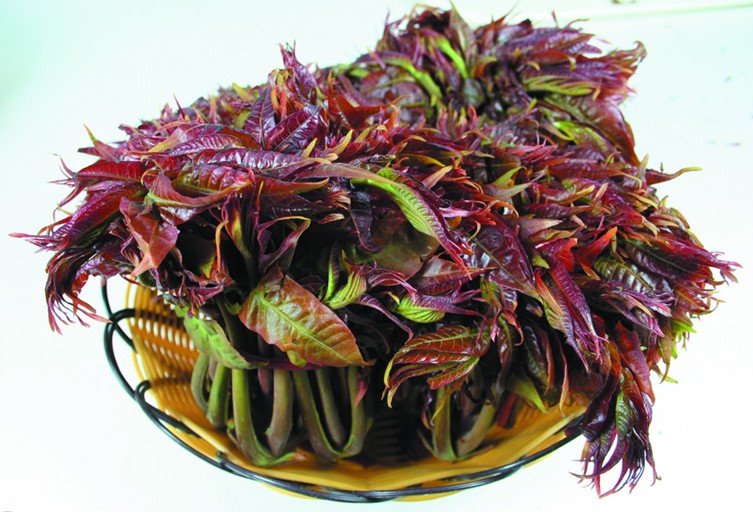
Chinese mahogany is a fast-growing deciduous tree, 15-25 m in the ground, with long pinnate leaves that are pink-bronze when they open and deep green at maturity. The young shoots are edible and strongly flavoured, and the tree is grown in China as much for food as for timber.
The leaves are up to 60 cm long, with twenty or more leaflets, and they give the tree a tropical look in a temperate garden. The flowers are small, white and scented, borne in loose panicles in midsummer, and the fruit is a woody capsule that splits into five star-shaped valves.
Toona sinensis comes from eastern and south-eastern Asia, from China through Korea to Malaysia. It is a tree of moist woodland and riverbanks, and in cultivation it is remarkably fast: a seedling can reach 2 m in a season, which is why it is also grown as a coppice crop for timber.
Science & Biotechnology
The edible shoots contain a complex mixture of sulphur compounds and terpenes that gives them an onion-and-beef flavour, which is unlike any other vegetable. Analyses have identified dozens of volatiles, and the profile changes with the age of the shoot: young spring growth is mild and sweet, older leaves are bitter and strong.
Toona is a genus in the Meliaceae, the mahogany family, and its timber is sold as Chinese mahogany. The heartwood is reddish and takes a fine finish, though the tree is not a true mahogany of the genus Swietenia. The family is characterised by limonoids, bitter compounds that are the subject of research into insect antifeedants.
The tree is dioecious or polygamomonoecious depending on the source, and seed production varies enormously from year to year. Seed is winged and germinates readily when fresh, but it loses viability within a few months in dry storage.
Uses & Benefits
The young shoots are a spring vegetable in China, eaten stir-fried with egg, blanched and dressed, or preserved in salt. They are sold in markets for a short season and are one of the most distinctive vegetables of Chinese cooking.
As a timber tree, Toona is grown in plantations for furniture and joinery, and it is one of the fastest-growing hardwoods in warm temperate regions. In the garden it is a shade tree and an ornamental, with handsome foliage and a tropical silhouette. Commercially the seed is sold to growers in warm climates and to permaculture projects.
Growing from Seed
Sow in spring at 20-25°C, 0.5 cm deep, on the surface of a free-draining mix. Germination takes two to three weeks, and fresh seed gives a high percentage. The seedlings grow fast and need a deep pot or a direct sowing position.
Plant out in full sun in deep, moist soil, and protect young trees from frost for the first two years. Water well through the first summer. For edible shoots, coppice the tree every second year to encourage young growth, cutting the trunk at 1 m in winter. For timber, leave a single leader and thin the side branches.
Our Take
A tree that gives a spring vegetable, a timber crop and a tropical look, and one that grows faster than anything else in the catalogue.
Related Reading
Continue exploring with these related plants: