


Syringa oblata Seeds | Early Lilac
LATIN NAME: Syringa oblata
COMMON NAME: Early Lilac
Plant Profile
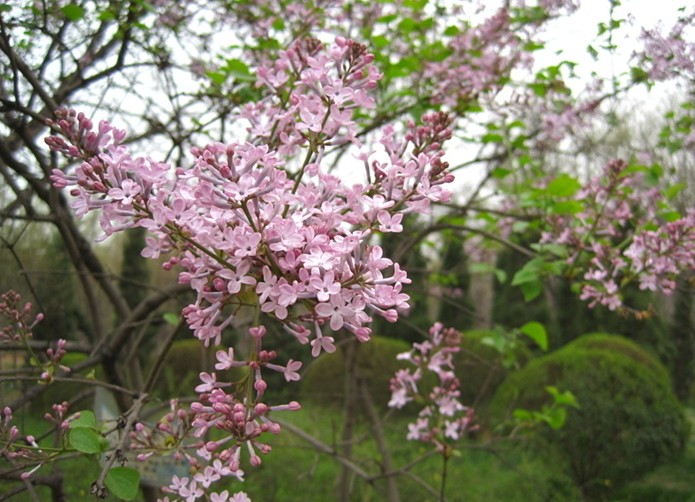
Syringa oblata is a deciduous shrub or small tree, two to four metres tall, with a rounded, spreading habit and smooth grey-brown bark. The leaves are broadly ovate, often slightly glossy above and glaucous beneath, and their cordate base gave the species its name — oblata means ‘broadly rounded’. Flowers are carried in dense terminal panicles, each bloom a four-lobed tube of lilac-purple, or pure white in var. alba, and the whole crown carries them while the leaves are still unfolding.
The species is strikingly cold-hardy, surviving continental winters that would kill the buds of most ornamentals, and its native haunts on dry northern slopes explain its distaste for soggy ground. A further curiosity lies in the nucleus: populations in northern China commonly run to a tetraploid count of 2n = 46, and polyploid forms of this kind interest botanists tracing how lilacs spread and diversified across the cold, dry interior of Asia.
Science & Biotechnology
The fragrance of the early lilac is a chemist’s bouquet: headspace analyses of lilac scent show it built from linalool, ocimene and a family of compounds aptly named the lilac alcohols and aldehydes, which together give the sweet, green, slightly woody character. Because the natural oil is impractical to extract commercially, perfumery reproduces it synthetically — yet the living shrub remains the reference point for the industry’s lilac accord, and laboratories continue to study how bloom temperature shifts the scent’s composition.
Polyploidy matters to horticulture too. Diploid and tetraploid forms within the genus differ in flower size and fertility, and chromosome knowledge guides breeders attempting crosses between the early lilac and the common lilac, aiming to push bloom dates forward without sacrificing the big clusters of S. vulgaris. Nursery propagators also multiply superior selections by softwood cuttings under mist, keeping clonal lines true while seed is reserved for breeding and for hardy rootstock.
Uses & Benefits
In China the lilac has been planted in temple and palace courtyards for centuries, and the dried flower buds of related ding-xiang species hold a place in traditional medicine and in scenting tea. In the garden, early lilac earns its place wherever spring is late and eagerly awaited: as a boundary hedge, a mixed-shrub back line, or a single specimen by a gate where the scent can be caught. It pairs naturally with early forsythia, dwarf rhododendrons and spring bulbs.
Its ecology is generous — the earliest panicles offer nectar to queen bumblebees emerging hungry from hibernation, and the dry seed capsules attract little attention but cause no litter problem. Because the shrub tolerates alkaline and stony soils, it also suits roadside and bank plantings where choicer things decline.
In northern Chinese botanic gardens, where collections of wild-collected lilacs are deepest, oblata and its variants are planted in long drifts so that the succession of forms can be compared side by side; the white-flowered trees read almost like flowering cherries at a distance, while the typical purple forms carry the scent furthest on a still morning. Gardeners in North American prairie states and central European plains, with their comparable continental winters, have taken the same lesson to heart.
Growing from Seed
Give the seeds a cold stratification in moist sand through winter, then sow about half a centimetre deep in trays of loamy compost with a little lime if your soil is acid. Keep the trays cool and just moist; even, gentle conditions suit them better than heat. Prick out seedlings once true leaves expand and grow them on in deep cells, for lilacs push a strong young root.
Plant out when saplings stand thirty to forty centimetres tall, spacing two metres apart for a hedge and three for specimens, in full sun and well-drained soil that need not be rich. Water through the first dry season only. Prune immediately after flowering, thinning old stems to the base and cutting faded panicles to a strong bud, so the shrub can ripen next year’s bloom. Lilac borer and powdery mildew are the watch items, both discouraged by an open, airy crown and avoidance of summer overhead watering.
Our Take
If lilacs mean spring to you, this is the one that starts the calendar — plant it where the morning sun reaches the buds. To stretch the season further, follow it with the classic common lilac, the late, tree-form Syringa reticulata and the dainty Syringa pubescens. One early shrub, three later ones, and your garden will carry scent from first thaw to early summer.
Related Reading
Continue exploring with these related plants: