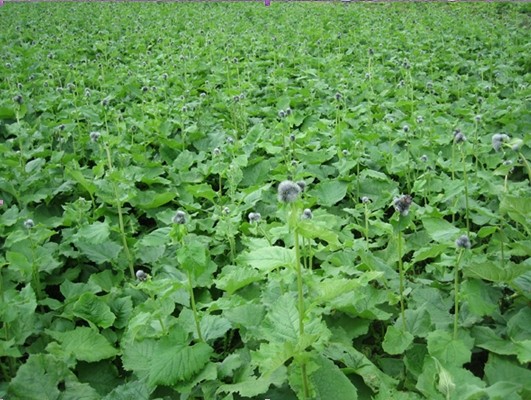
Saussurea lappa seed

LATIN NAME: DOLOMIAEA COSTUS
COMMON NAME: Costus, Indian Costus, Kuth, Putchuk
The costus is a noble and aromatic herb of the high mountain pastures of South Asia, and its large, thistle-like heads of purple bloom and its thick, aromatic roots have made it a plant of long and famous history. It grows as a robust, perennial herb of the daisy family, reaching up to two metres, with a tall, upright stem bearing large, lobed, toothed leaves and, in the warm season, large, thistle-like heads of many purple or violet flowers borne at the tops of the stems, followed by small, dry seeds, while the thick, aromatic roots, with their strong, spicily fragrant oil, are the part of the plant that has been prized since antiquity. It is a thistle relative, native to South Asia and China, and it was formerly known as Saussurea costus, and it is known as the costus, the Indian costus, the kuth or the putchuk.
Scientific Research & Plant Biotechnology
The costus has a genuine and distinguished place in both chemical and historical research. It has been studied in the chemistry of natural products, since the thick, aromatic roots yield a strong, spicily fragrant essential oil, and researchers have examined the roots, their many compounds and their potential uses, while the oil of the costus has been valued for a very long time, in perfumery, incense and traditional medicine, and the chemistry of the costus has drawn attention in the international natural-product and fragrance press as an aromatic root of the high mountains. The plant has also been studied in history and ethnobotany, since the roots have a long and famous history, valued by the mystics and the healers of Kashmir and South Asia, and researchers have examined the traditional uses and the cultural history of the plant, while the costus has drawn attention in the international botanical and cultural press as a root of ancient fame, and the plant is best appreciated as a subject of study rather than a casual home remedy. The species has also been studied in ecology and conservation, since it is a native of the high mountain pastures and has been heavily harvested for its roots, and researchers have examined its status and the pressures on it, while the protection of the plant has been of continuing concern. For a plant of such fame and such history, the costus has a rich and distinguished record of research.
Ecological & Economic Value & Wide Applications
To grow the Costus from seed, ecologically, the costus is a noble plant of the high mountain pastures. Its large, purple, thistle-like heads of bloom feed the bees and the butterflies, and its tall, leafy growth gives cover, while it is a valued presence in the meadows and the rocky slopes of South Asia and China. Its economic value is real and historic: the aromatic roots and their fragrant oil have been valued for a very long time, and their chemistry has drawn attention in the international natural-product and fragrance press as an aromatic root of the high mountains, while the cultural history of the costus has drawn attention in the international botanical and cultural press. To raise the costus, sow the seeds in pots of moist, free-draining compost in a sunny spot, keep them lightly watered, and grow the little plants on in a cool, bright place.
sow the seeds in pots of moist, free-draining compost in a sunny spot, keep the young costus lightly watered, and grow the little plants on in a cool, bright place.
LATIN NAME: Dolomiaea costus
COMMON NAME: Costus, Indian Costus, Kuth, Putchuk
The costus is a noble and aromatic herb of the high mountain pastures of South Asia, and its large, thistle-like heads of purple bloom and its thick, aromatic roots have made it a plant of long and famous history. It grows as a robust, perennial herb of the daisy family, reaching up to two metres, with a tall, upright stem bearing large, lobed, toothed leaves and, in the warm season, the large, thistle-like heads of many purple or violet flowers, borne at the tops of the stems, followed by the small, dry seeds, while the thick, aromatic roots, with their strong, spicily fragrant oil, are the part of the plant that has been prized since antiquity. It is a species of the thistle genus, native to the South Asia and the China, and it was formerly known as the Saussurea costus, and it is known as the costus, the Indian costus, the kuth or the putchuk.
The costus belongs to the daisy family, Asteraceae, and it is a species of the thistle, native to the South Asia and the China, and it was formerly known as the Saussurea costus. The essential oils extracted from the root have been valued for a very long time, and it is known as the costus, the Indian costus, the kuth or the putchuk, while it is prized for its aromatic roots.
Scientific Research & Plant Biotechnology
The costus has a genuine and distinguished place in both chemical and historical research. It has been studied in the chemistry of the natural products, since the thick, aromatic roots yield a strong, spicily fragrant essential oil, and researchers have examined the roots, their many compounds and their potential uses, while the oil of the costus has been valued for a very long time, in the perfumery, the incense and the traditional medicine, and the chemistry of the costus has drawn attention in the international natural-product and fragrance press as an aromatic root of the high mountains. The plant has also been studied in the history and the ethnobotany, since the roots have a long and famous history, valued by the mystics and the healers of the Kashmir and the South Asia, and researchers have examined the traditional uses and the cultural history of the plant, while the costus has drawn attention in the international botanical and cultural press as a root of the ancient fame. The species has also been studied in the ecology and the conservation, since it is a native of the high mountain pastures and has been heavily harvested for its roots, and researchers have examined its status and the pressures on it, while the protection of the plant has been of continuing concern. For a plant of such fame and such history, the costus has a rich and distinguished record of research.
Ecological & Economic Value & Wide Applications
Ecologically, the costus is a noble plant of the high mountain pastures. Its large, purple, thistle-like heads of bloom feed the bees and the butterflies, and its tall, leafy growth gives cover, while it is a valued presence in the meadows and the rocky slopes of the South Asia and the China.
Its economic value is real and historic. The aromatic roots and their fragrant oil have been valued for a very long time, and their chemistry has drawn attention in the international natural-product and fragrance press as an aromatic root of the high mountains, while the cultural history of the costus has drawn attention in the international botanical and cultural press. Please note that the roots are used in the traditional medicine and are best appreciated as a subject of study rather than a casual home remedy. For a grower, the costus is a rewarding and noble herb, and for a gardener it brings tall, thistle-like heads of purple bloom and a root of ancient fame. The seeds are easy to start — sow them in a pot of moist, free-draining compost in a sunny spot, keep them lightly watered, and theyll be sprouting within a few weeks, growing on into a tall, purple-flowered plant.
Uses: Medicine