


Quercus robur Seeds | Rubor
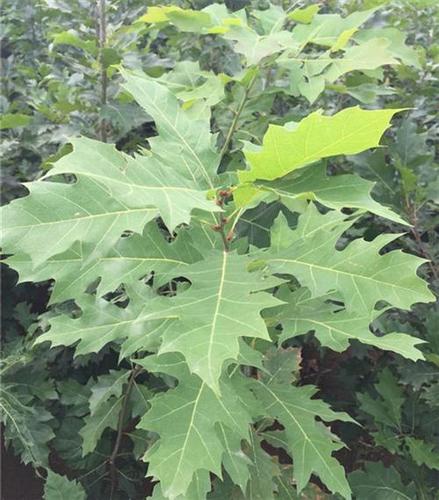
LATIN NAME: Quercus robur
COMMON NAME: English Oak
Plant Profile
English oak is the pedunculate oak of Europe, the tree of hedge banks, parkland and old pasture, with its acorns carried on long stalks. It grows from Ireland and Spain across to the Urals and the Caucasus, reaching thirty to forty metres in good soil and living for five hundred years or more, with a few individuals claimed at twice that. The leaves are short-stalked, with two small lobes, or auricles, at the base that clasp the twig, and they turn bronze before falling; young trees hold their dead leaves through winter. The acorns sit on a stalk two to six centimetres long, which separates the species from sessile oak at a glance. Trunks of old trees become massive and hollow, and the bark cracks into deep vertical ridges that hold a whole community of lichens, mosses and insects. In spring the tree flowers in catkins, and the whole crown seems to release a cloud of yellow dust.
Science & Biotechnology
Quercus robur is wind-pollinated, monoecious and almost entirely outcrossing, and its pollen travels far enough that the species maintains high genetic diversity across a huge range. It supports more insect species than any other European tree, well over three hundred, and those insects in turn feed the caterpillars that woodland birds depend on in early summer. The tree’s relationship with jays is the reason oaks spread so fast after the last glaciation: a jay carries acorns up to a kilometre and caches them in the ground, and the ones it forgets become trees. Acorns are also eaten by weevils, whose larvae develop inside them, and by the knopper gall wasp, which turns an acorn into a ridged green growth and stops it germinating. The species hybridises with sessile oak wherever the two grow together, and the offspring are fertile, which makes identification in mixed woods a matter of judgement. Sudden oak death and acute oak decline are now the two most serious threats to mature trees in Britain.
Uses & Benefits
The timber is one of the hardest and most durable in Europe, and it has been used for ship frames, house beams, mill machinery, barrels, gates and furniture; bog oak, blackened by centuries in peat, is prized for veneer. The bark was the main source of tannin for leather until imported extracts replaced it, and it is still used in small quantities by tanners. Acorns were fed to pigs in the pannage season, and in times of scarcity they were ground for flour after leaching out the tannins. The tree is the backbone of British parkland and hedgerow planting, and it is used in shelterbelts, though its deep roots and broad crown demand space. In a garden it is a tree for a large ground only, and its shade is heavy. Coppiced oaks still produce charcoal and hurdle wood in traditional management.
Growing from Seed
Gather acorns in October as soon as they fall and drop them into water; the ones that float are usually hollow with weevil larvae and should be discarded. Sow at once, two centimetres deep, in deep pots of loam and grit, and leave the pots outside through winter, since the cold is needed to break dormancy. Germination begins in February and the shoot appears in April. The taproot grows fast, so do not leave the seedling in a shallow tray. Plant out in the second or third winter, in full sun and deep soil, and protect the stem from rabbits and deer with a spiral guard. Keep grass and weeds clear for the first three years, and water only in severe drought. Prune nothing except a competing leader: an oak makes its own shape, and early pruning produces a mass of epicormic shoots.
Our Take
The great European timber tree, and one of the best things you can plant for insects and birds. Give it a lifetime of space.
Related Reading
Gardeners who grow English Oak often pair it with these related subjects: