


Pinus aristata Seeds | Bonsai Bristlecone Pine
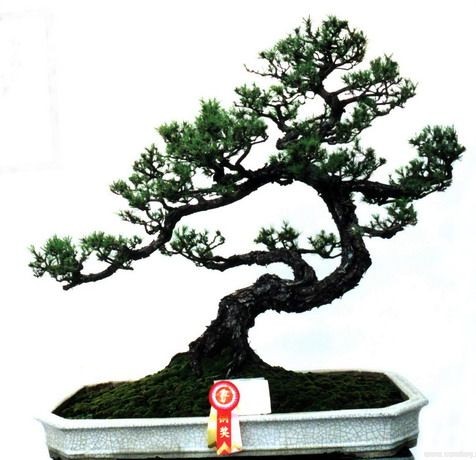
LATIN NAME: Pinus aristata
COMMON NAME: Bristlecone Pine
Plant Profile
Bristlecone pine is a slow-growing five-needle pine from the high mountains of Colorado, New Mexico and Arizona, with a rounded crown, short blue-green needles and cones whose scales carry a curved bristle. In the ground it reaches 10-15 m over centuries; as a bonsai it is trained to 20-40 cm over decades.
The needles live for ten to fifteen years, longer than almost any other pine, and they carry small white resin flecks that are a useful identification mark. The bark is grey and furrowed, and on old trees it becomes striped and sculptural.
Pinus aristata is one of three bristlecone pines, and it is the one from the Rocky Mountains. Its relatives in the Great Basin and the White Mountains of California are the longest-lived trees on earth, with individuals dated to nearly five thousand years.
Science & Biotechnology
The extreme longevity of bristlecone pines is a combination of slow growth, dense resinous wood that resists decay, and an environment with little competition and few pathogens. The oldest known individuals grow on dry dolomite at high altitude, where they add only a fraction of a millimetre of wood a year.
Dendrochronology, the science of dating wood by tree rings, was developed largely on bristlecone pine. The rings of these trees have been used to calibrate radiocarbon dating, because their wood provides an unbroken sequence stretching back thousands of years.
The white resin flecks on the needles are a diagnostic feature of Pinus aristata and distinguish it from Pinus longaeva, which lacks them. The two species were separated only in the 1970s, and seed sold in the trade is often the Rocky Mountain species.
Uses & Benefits
Bristlecone pine is grown as a bonsai subject, where its slow growth, its fine needles and its rugged bark are valued. It is also planted as a specimen in alpine and rock gardens, and in reforestation at high altitude in its native range.
The wood is dense and resinous and has been used for mine timbers and for fuel, though the tree is too slow growing for commercial forestry. Commercially the seed is sold to bonsai growers, and the species is a favourite of growers who want a tree that will outlive them.
Growing from Seed
Sow in spring at 15-20°C, 1 cm deep, after six to eight weeks of cold stratification. Germination is slow and uneven, four to eight weeks, and the seedlings are very slow for the first three years.
Grow in a deep pot in a free-draining mix with plenty of grit, in full sun. Water sparingly: the species is adapted to dry, exposed sites and rots in a wet compost. For bonsai, do not overfeed or overwater; the aim is compact, slow growth. Protect from summer humidity and from winter waterlogging, both of which kill more plants than cold does.
Our Take
A tree for the very patient, and the only one in the catalogue that could plausibly still be alive in a thousand years.
Related Reading
Readers interested in Bristlecone Pine frequently explore these as well: