


Muhlenbergia capillaris Seeds | Pink Muhly Grass
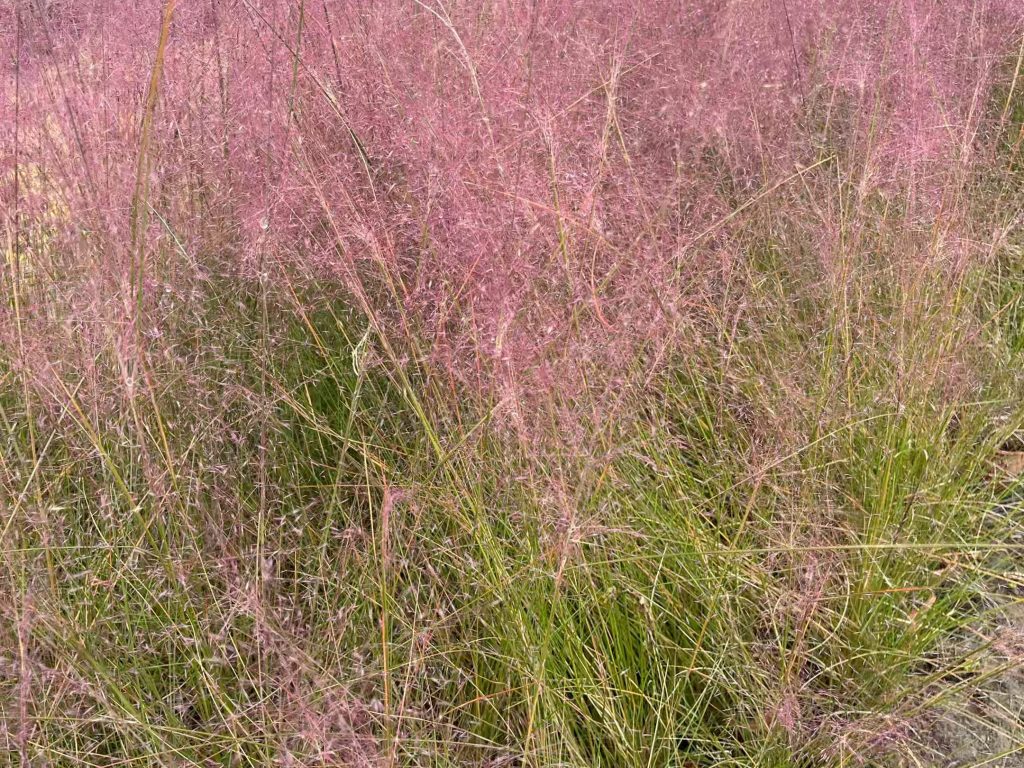
LATIN NAME: Muhlenbergia capillaris
COMMON NAME: Pink Muhly Grass, Gulf Muhly, Hair Grass
Plant Profile
Pink muhly grass is a clump-forming perennial of the pine woods and coastal prairies of the southeastern United States, growing sixty to a hundred and twenty centimetres with fine, wiry, dark green leaves. Its season is autumn, when it sends up loose, airy panicles of tiny spikelets that are covered in pink hairs and held above the foliage like a cloud of spun sugar, catching the low sun and moving in the slightest breeze. The colour deepens as the seed ripens and fades to tan by winter. It grows in sandy, acid soil in full sun, often at the edges of pine flatwoods and in wet prairies, and it tolerates salt, drought and poor fertility. It is one of the most planted ornamental grasses in the world, and a mass planting in autumn is a spectacle.
Science & Biotechnology
Muhlenbergia capillaris is a warm-season grass of the Chloridoideae, the subfamily that includes most of the drought-adapted grasses, and its pink colour comes from anthocyanin pigments in the hairs on the spikelets rather than from the glumes themselves. The species is variable across its range, with coastal plants that tolerate salt and inland plants that are taller, and some botanists recognise several varieties. It uses the C4 photosynthetic pathway, which allows it to keep growing at high temperatures, and its fine roots allow it to exploit small rain events. In cultivation it is short-lived in rich, wet soil, where it flops and rots, and it is at its best on poor, sandy ground in full sun. The seed heads persist into winter and provide cover for insects, and the clumps are used by overwintering bees.
Uses & Benefits
The grass is planted as an ornamental for its autumn colour, in mass plantings, in borders and in containers, and it is one of the best plants for a late-season display. It is also used in restoration seeding on coastal sand and in pine woodland, where it is a natural component. The dried flower heads are used in floristry, fresh and dried. It provides cover for wildlife and its seed is eaten by small birds. It has no forage value of note. In the garden it needs full sun and poor, well-drained soil, and it should be cut back to ten centimetres in late winter before the new growth appears. It is not a plant for shade, rich soil or regular irrigation.
Growing from Seed
Sow the fine seed on the surface of a sandy mix in spring, press it in and cover with a bare millimetre of grit, since light aids germination. Keep at twenty to twenty-five degrees; germination takes two to three weeks. The seedlings are small and slow at first, and they should be pricked out when they have three leaves. Finish them in an open, sunny frame where water never stands. Plant out into sandy or gravelly soil in full sun, spacing plants fifty centimetres apart. Water only in the first summer. Cut back in late winter. Divide the clumps every three years, since they die out in the centre, and replant the outer pieces.
Our Take
The pink cloud of autumn, and a grass that wants poor sand and full sun. Cut it back hard in late winter.
Related Reading
More species in the same orbit as Pink Muhly Grass: