


Prunus serrulata Seeds | Japanese Flowering Cherry Tree
LATIN NAME: Prunus serrulata
COMMON NAME: Japanese Flowering Cherry, Sakura, Hill Cherry
Plant Profile
The botanical name means ‘small-sawed’, and the leaf margin carries fine, bristle-tipped teeth that separate this cherry from smooth-edged cousins. The bark is smooth, grey-brown and ringed with horizontal lenticels, and the spreading branches build the layered, vase-like outline familiar from avenues in Tokyo and Washington alike. Wild plants reach ten to fifteen metres; old cultivars often stay lower and broader.
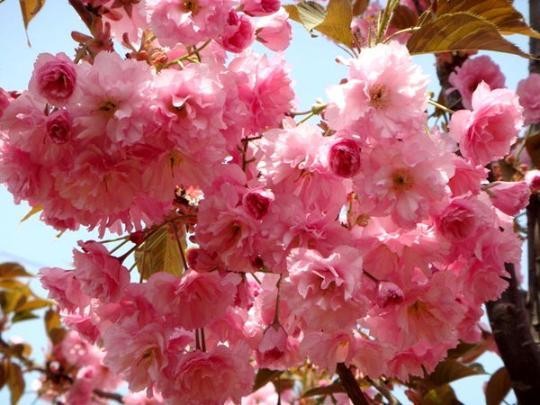
Flowers open with the young leaves in flat-topped corymbs of two to five blooms, white to pale pink, each with five petals in the wild form. The double-flowered garden cultivars — ‘Kanzan’ with its great rose-pink pompons, the rosetted ‘Fugenzo’, the late, bronzy ‘Shirofugen’ — carry dozens of petals, and in most of them the stamens have been transformed into petaloid organs, leaving the flowers sterile. Seed can therefore be raised only from single-flowered stock or from wild-collected material. Fruit from unpollinated wild trees are small black cherries, bitter to us and relished by birds.
Japanese growers group the ornamental clones under the name sato-zakura, the village cherries, a living collection assembled over centuries from P. serrulata and its close allies; Ingram himself catalogued dozens of them and campaigned for the old cultivars to be preserved before modern planting narrowed their pool. His search for lost names is why ‘Taihaku’, the great white cherry with leaves that flush copper, is with us at all, and why collections in Japan and Britain now conserve each clone separately against the day when one disease finds a weakness.
Autumn has its own reward: good specimens burn orange and crimson before leaf fall, and the smooth bark keeps its clean lines through winter. Established trees need no feeding on decent soil, and surface mulch kept clear of the trunk does more good than any fertiliser bag.
Science & Biotechnology
The seeds and bark contain amygdalin, the cyanogenic glycoside common to Prunus, so crushed seed material must never be tasted; harmless as whole kernels in the shell may look, enzyme action liberates hydrogen cyanide once tissue is broken. Meanwhile the petals have their own chemistry: cosmetic firms extract cherry-blossom preparations rich in antioxidant phenolics for skin-care lines, and food scientists study the aroma compounds that give sakura-flavoured confections their faint almond-floral note.
Breeding work is equally active. Modern Japan’s most planted cherry is ‘Somei-yoshino’ (Prunus × yedoensis), a clone propagated by grafting, and the uniformity that makes its display spectacular also leaves whole cities exposed to a single disease or pest, a worry that pushes breeders back toward the genetic diversity of P. serrulata and its relatives. Reference genomes now exist for several Prunus species, letting researchers trace how the genes governing double flowers and bloom time moved between cultivated lines.
Uses & Benefits
The cherry’s cultural weight needs little introduction: hanami parties beneath the bloom have been held in Japan since at least the Heian court, and the flower became shorthand for the passing beauty of spring. In the garden it serves as a specimen on a lawn, a short avenue tree, or a bonsai subject, where its smooth bark and ramified twigs age beautifully. It pairs well with early bulbs, evergreen pines for winter structure, and the wisteria-covered pergola a few weeks later.
The kitchen borrows the tree too: leaves of certain flowering cultivars are salt-pickled to wrap sakura-mochi, and blossoms are preserved in sugar or vinegar for teas and sweets. Wood from pruned branches is prized by turners for its fine, pink-tinged grain.
Growing from Seed
Clean the pulp from ripe fruit and give the seeds a cold stratification in moist sand over winter, since they ripen their embryos late. Sow one to two centimetres deep in modules of loamy compost with added grit, set outdoors in shade for the first summer, and guard the trays from mice, which dig cherry seed out as readily as they take bulbs.
Pot on singly once true leaves expand and plant out when saplings reach about forty centimetres, choosing full sun and deep, well-drained, slightly acid soil, spacing future avenue trees eight metres apart. Prune only after flowering and keep cuts small, because cherries are prone to silver leaf disease and bacterial canker entering fresh wounds — the standard advice is to prune in dry summer weather with sterilised tools. Aphids and the slugworm sawfly Caliroa cerasi are the usual foliage pests, both manageable by hand or with soft soap.
Our Take
Buy the cultivar you actually want, because a seed from ‘Kanzan’ will give you something quite different; for flower colour and form, grafted stock is the only certainty, and seed is the way to raise understocks or explore wild variability. For more of the family, the scented winter-blooming Prunus mume, the Himalayan Prunus cerasoides and the orchard peach each bring a different season to the same garden. Prune little and late, and your cherry will keep its clean bark for decades.
Related Reading
Continue exploring with these related plants: