


Euonymus bungeanus Seeds | Winterberry Euonymus
LATIN NAME: Euonymus bungeanus
COMMON NAME: Winterberry Euonymus, Bunge Spindle
Plant Profile
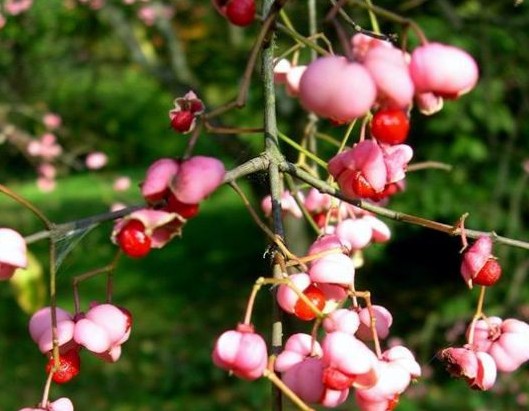
Euonymus bungeanus saves its show for late autumn, when most shrubs have gone quiet. The branches load up with four-lobed pink capsules that split open to reveal seeds wrapped in bright orange arils, a colour combination so loud it earned the plant the name winterberry. The display hangs on after the leaves have dropped, which is exactly when a grey November border needs it. The trick is the aril: a soft, fleshy orange coat that birds find irresistible and that the gardener finds impossible to ignore. Few hardy shrubs put on a brighter finale without a single flower doing the work.
Left alone, Bunge spindle grows as a deciduous shrub or a small tree, often reaching six metres or more, with upright branching stems and a clean, open crown. The leaves are opposite, oval, and pointed, turning yellow and red in autumn before they fall. The flowers are small and greenish, easy to miss in early summer, which is why the plant is grown for the fruit rather than the bloom. The bark is grey and lightly corky on older wood, and the whole habit is lighter and more refined than the blocky European spindle, its better-known cousin.
Plant it where you want a small tree that does not sulk in compacted soil, and pair it with other hardy ornamentals such as the winged euonymus for a lower, corky-winged contrast, or the cork-bark euonymus for bark interest. The European spindle and the Maack’s euonymus round out the genus for the collected garden.
Science & Biotechnology
The fruit is a capsule, not a berry, and it opens along four seams to spill the seeds. The orange aril, called a sarcotesta, is the part that colours the autumn, but it and the seed carry compounds that are mildly toxic if eaten, so the plant is one to admire and not to snack on. This is a family trait across Euonymus, and it is worth telling children and pets to leave the bright pods alone. The lesson is the same one the whole genus teaches: beauty and caution arrive together.
The spindle family is chemically interesting and chemically cautious in equal measure. Euonymus species hold sesquiterpene esters and cardenolide-like compounds in the bark and fruit that have drawn pharmacological attention for their effects on cell lines, though none are used casually at home. The leaves and wood also contain flavonoids and the bitter principles typical of Celastraceae. This chemistry is why the plant shrugs off most browsing and why it should be handled with clean hands and kept clear of the kitchen.
Uses & Benefits
Because the autumn colour varies from tree to tree, nurseries clone the best forms by softwood cuttings and by shoot-tip culture to hold the orange-ariled display true. Somatic embryogenesis has been reported in Euonymus, opening a route to uniform liners for the landscape trade. The research interest is practical: a street tree that colours without disease pressure is worth multiplying cleanly.
In northern China the tree lines avenues and fills parks, valued for tidy growth and a show that needs no deadheading. In the West it is a specimen for the late border or a small shade tree where space is limited, and its tolerance of urban air makes it a candidate for tough sites. The dry, corky capsule shells have been used in dried arrangements, though the fresh fruit is the real draw. For a pollinator edge it is less useful than a flowering shrub, but the structure it gives the winter garden is its own reward.
Growing from Seed
Selection within the species favours trees with the heaviest fruit set and the most saturated aril colour, and breeders screen seedlings for those traits over several seasons. The goal is a street-proof winterberry that performs from zone to zone, which is why a named clone often outshines a seedling you raise yourself.
The seed inside the capsule carries a tough coat and a built-in dormancy, so it rewards a cold, moist rest before sowing. Clean the aril off, mix the seed with damp grit, and hold it cool through the resting season, then sow on a free-draining medium as warmth returns. The seedling is slow to size, so pot it on by the height of the stem and grow it in full sun to build a sturdy trunk.
A light nick of the coat speeds water uptake, but the cold rest does most of the work. Keep the medium just moist and shaded until the shoot appears, then give it light. Move the young tree to its place when it stands a hand’s span, and space individuals so the crowns stay open. Avoid rich, wet ground that softens the wood; the plant is happiest on the lean side.
Our Take
I grow Euonymus bungeanus for the week in November when the capsules pop and the border goes from grey to carnival. The seeds are for the birds, never the table, and I keep that rule firm.
Related Reading
Readers interested in Winterberry Euonymus frequently explore these as well: