


Diplotaxis harra Seeds | Wild Rocket
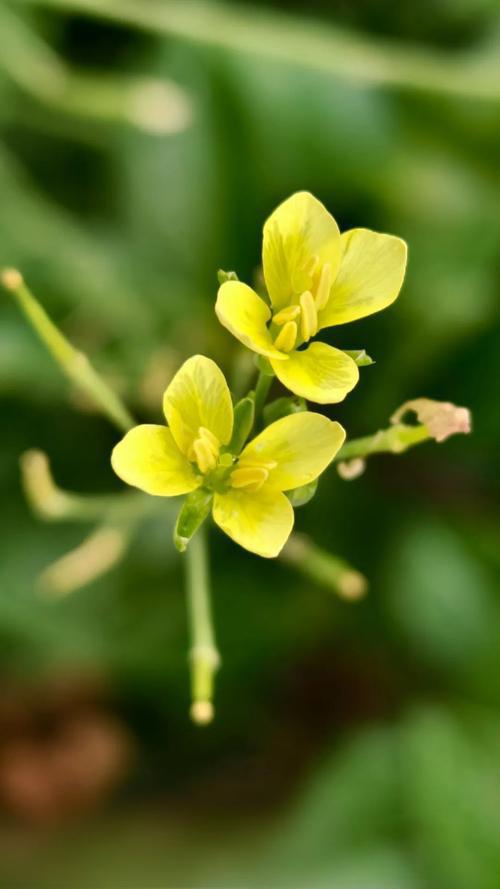
LATIN NAME: Diplotaxis harra
COMMON NAME: Wild Rocket
Plant Profile
Harra rocket is a desert brassica of North Africa and Arabia, with yellow flowers and a leaf sharper and more mustardy than salad rocket. It grows in wadis, on gravel plains and along roadsides from Morocco and the western Sahara through Egypt and Sinai to the Levant, Iraq, Iran and Pakistan, mostly below 1,200 metres, and it appears within days of rain. The plant is a short-lived annual or biennial, forming a rosette of deeply lobed, grey-green leaves covered with fine hairs, then sending up a branching stem to 60 cm with a succession of small four-petalled yellow flowers. The seed pods are long, narrow and upright, and they split from the base when ripe, twisting as they do so. In Egypt and the Levant the young leaves are gathered in spring and eaten cooked or raw, and the plant is one of the few greens available in the desert at that season. It is also a common weed of irrigated fields in oases.
Science & Biotechnology
Diplotaxis harra is a close relative of the salad rocket sold in supermarkets, and the two are easy to tell apart: Eruca vesicaria has cream flowers veined with violet, while Diplotaxis has clear yellow ones and a narrower pod with a short beak. The genus is built for deserts. The leaves are hairy and grey, which reflects light and traps a layer of still air; the taproot goes down fast after rain; and the whole life cycle can be completed in eight weeks before the soil dries. The plant tolerates salinity and has been studied as a candidate crop for irrigating with brackish water in Egypt and the Gulf, where it can produce a cut green on land that will grow little else. Like all brassicas it contains glucosinolates, the mustard oils that give it its bite, and the profile differs between populations. Seed production is enormous for the size of the plant, and a single stem can leave hundreds of seeds in the sand.
Uses & Benefits
The leaves are eaten as a cooked green, in stews and with lentils, and in spring they are sold in bundles in Egyptian and Palestinian markets; the flavour is stronger and more peppery than cultivated rocket, and older leaves need blanching. The seed yields an oil that has been pressed locally, and the pressed cake is fed to animals. In traditional medicine the plant is used as a diuretic and a digestive, and a poultice of the leaves is applied to inflamed skin, though there is little clinical work behind these uses. It is also a fodder plant in dry years, grazed by camels and goats where it grows thickly after rain. For a gardener in a dry climate it is a useful cut-and-come-again green that needs no irrigation once established, and it self-sows reliably in gravel. It is a weed in the wrong place, and it can carry flea beetles into a vegetable bed.
Growing from Seed
Sow directly where the plants are to grow, in autumn or early spring, one centimetre deep in sandy soil; light is not required and germination is fast at 15 to 20 degrees. Thin to 20 cm apart and keep the bed weeded while the seedlings are small, since they are easily swamped. Water to establish, then only when the leaves begin to wilt; too much water produces soft growth and little flavour. Cut the outer leaves rather than the crown, and the plant will keep producing for weeks. Let a few plants run to seed if you want a supply in following years, since self-sowing is reliable in open ground. In humid climates, grow it as a winter crop and expect it to rot in summer. Watch for flea beetle on young seedlings, and cover with fleece if the damage is severe.
Our Take
A desert rocket with yellow flowers and a fierce, mustardy leaf, useful where water is short. Let it seed itself and it will keep coming.
Related Reading
More species in the same orbit as Wild Rocket: