


Cercis canadensis Seeds | Bonsai Garden Forest Pansy
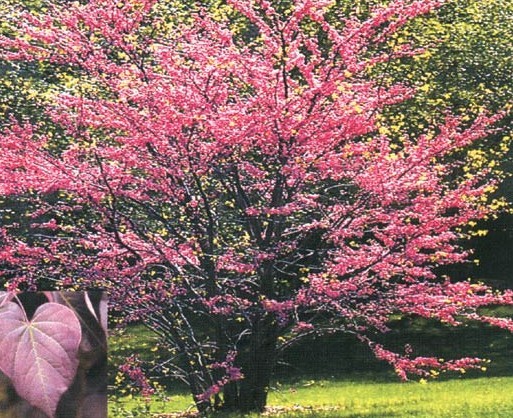
LATIN NAME: Cercis canadensis
COMMON NAME: Eastern Redbud
Plant Profile
Eastern redbud is a small deciduous tree, 6-9 m, with heart-shaped leaves and, in early spring, clusters of pink-purple pea flowers borne directly on the branches and even on the trunk. The flowers open before the leaves, and a mature tree in April is covered in colour from the ground up.
The flowering habit is called cauliflory, and it is rare in temperate trees. The leaves follow and turn yellow in autumn, and the fruit is a flat pod that hangs through winter. There is a white-flowered form and several purple-leaved cultivars.
Cercis canadensis comes from eastern North America, from Ontario south to Florida and west to Texas. In the wild it grows as an understorey tree at woodland edges, which is why it flowers best in sun but tolerates light shade.
Science & Biotechnology
Cauliflory is an adaptation that allows pollination by insects that walk up the trunk rather than fly to the canopy, and in redbud the flowers are visited by early bees, which use the tree as a first source of nectar in spring. The strategy is more common in tropical forests than in temperate ones, which is why redbud stands out.
Redbud is a legume, but it does not fix nitrogen. Unlike clovers and lupins, it lacks the root nodules that host rhizobia, and it relies on mycorrhizal fungi for nutrient uptake instead. That is a common misconception about the family, and it matters when the tree is used in a fertility-building scheme.
The species is one of the first trees to flower in its native range, and its bloom date has been used in phenology studies as an indicator of spring warming. Records from across North America show the date advancing by several days per decade in recent years.
Uses & Benefits
Redbud is a small ornamental tree for a garden, a courtyard or a woodland edge, valued for its early flowers and its autumn colour. The flowers are edible and can be added to salads, and the young pods can be eaten like snow peas.
The tree is used in native plantings and in pollinator gardens, and it is a host for several butterflies. Commercially the species is a nursery staple in North America, and the purple-leaved cultivars are sold as specimen trees. The wood is too small and soft for timber.
Growing from Seed
Soak the seed for 24 hours, then stratify for eight to ten weeks at 3-5°C. Sow 1 cm deep and germinate at 18-22°C. Scarifying the coat before stratification improves the result, since the seed coat is hard.
Plant out in full sun or light shade, in soil that drains but does not dry out completely. Water through the first two summers. Prune only to remove crossing branches, in late winter, since the tree bleeds if cut in spring. Protect young trees from deer, which browse the soft shoots. In a lawn, keep a clear circle of mulch around the trunk for the first three years, since grass competes hard with young roots.
Our Take
The best small tree for early spring colour, and one that feeds the first bees of the year before anything else is open.
Related Reading
Gardeners who grow Eastern Redbud often pair it with these related subjects: