


Campanula medium Seeds | Canterbury Bells
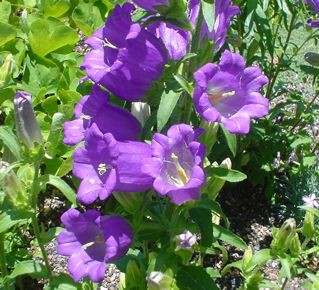
LATIN NAME: Campanula medium
COMMON NAME: Canterbury Bells
Plant Profile
The English name Canterbury Bells comes from the flower’s shape, not from the city. Each bloom is a cup that flares into a ruffled bell, and the story goes that medieval pilgrims bound for Canterbury carried small hand bells of just this form, so the plant became the bell of the road. Unlike most bellflowers that open upright, Campanula medium hangs its bells outward and downward along a tall stem, a posture that makes the border read as if it is hung with little cups.
In the first year the plant is only a low rosette of softly hairy, oval leaves. It spends that season building a stout taproot and a crown, then over the cold months it vernalises and the next summer sends up a branching spike of bells. Gardeners who want bloom in the first season must sow a full year ahead, which is the single fact that most often surprises newcomers to this campanula. The showiest garden form, the cup-and-saucer or Calycanthema type, carries an enlarged, lobed calyx beneath the bell that looks like a saucer holding the cup, a mutation that growers have kept by selection for two centuries.
The stem leaves are heart-shaped at the base and narrower up the stem, all covered in short hairs that give the plant a matte, grey-green look. The flowering stem can carry many bells in shades of blue, violet, pink, and white, and the inflated calyx behind each bell is itself a decorative feature.
Science & Biotechnology
The first-year taproot stores carbohydrate as inulin rather than starch, a trait shared with many aster-family and bellflower relatives. This reserve fuels the explosive second-year growth, and it is one reason the rosette year matters so much. The inulin is not extracted commercially from this species, but it marks the plant as a member of the inulin-storing cohort of hardy perennials.
Uses & Benefits
The Campanulaceae are noted for mucilaginous compounds in the roots and leaves, and Campanula medium is no exception. Crush a root and it releases a slimy sap rich in polysaccharides, the same family of soothing compounds found in related medicinal campanulas. The leaves also carry saponins, the soapy-tasting triterpene glycosides that defend the plant against browsing.
Growing from Seed
Because it is a true biennial, Campanula medium is best thought of as two crops in one. The rosette year is quiet; the bloom year is dramatic and then the plant weakens. Many growers treat it as an annual by sowing in summer for bloom the following year, which keeps a fresh patch coming without lean, woody leftovers.
Close relatives such as Campanula glomerata form clumps and bloom from established crowns every year, whereas medium makes its show once and then fades. The bell shape also separates it: glomerata carries its flowers in tight terminal clusters, while medium spaces them along the stem. Both are bee-pollinated and share the characteristic bell, but only medium runs to a single tall spike in its second year. Knowing which campanula you have changes how you sow and how long you wait.
Tap the fine seed out over the surface of a moist, free-draining mix and keep it bright; the seed needs light to start. Because the plants are slow to make the flowering stem, give them a long runway. Move seedlings to individual pots once they can be handled, and harden them before setting them out.
Press the seed into the surface rather than covering it, then mist to settle. The seedlings are small at first and easily lost under weeds or moss, so keep the medium weed-free and just damp. Thin or prick out so each young plant has room to form a full rosette.
When seedlings show four true leaves, move them to a richer bed or to final spacing of about thirty centimetres. Campanula medium resents root disturbance, so lift with a good ball of soil and water in well. A site with sun to light shade and deep, cool ground gives the tallest, cleanest spikes.
Our Take
Canterbury Bells reward patience, and the wait is the whole point. Sow one year, enjoy the next, and always keep a fresh row coming. For other bellflowers and border companions, see Campanula glomerata, the mountain knapweed Centaurea montana, and Sweet William.
Related Reading
Readers interested in Canterbury Bells frequently explore these as well: