


Allium tuberosum Seeds | Garlic Chives
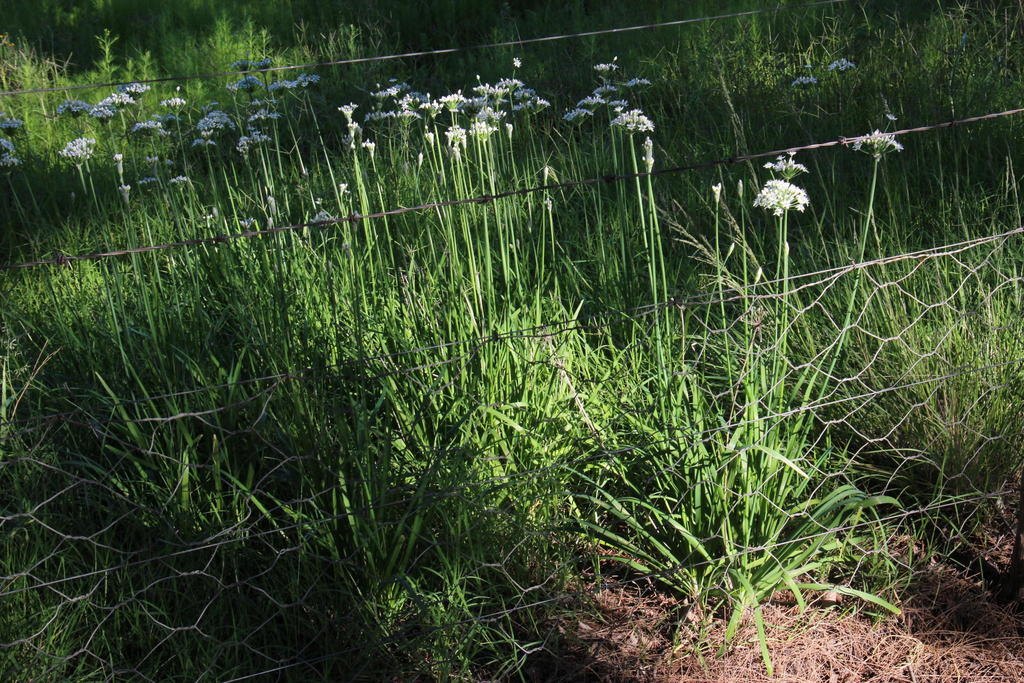
LATIN NAME: Allium tuberosum
COMMON NAME: Garlic Chives
Plant Profile
Garlic chives is a clump-forming perennial of the Amaryllidaceae from Shanxi in northern China, cultivated across Asia for so long that wild populations are hard to tell from escapes. It grows 30 to 40 cm, with flat, solid leaves rather than the hollow tubes of ordinary chives, and a rhizomatous base that spreads into a dense patch.
The wild-type flower head is a flat-topped umbel of white, starry flowers in late summer and autumn, held on a triangular stem. The Mauve selection carries the same heads in rosy lilac, so it is grown as much for the border as for the kitchen. The whole plant smells of garlic at a touch, and the smell stays on the fingers for an hour.
It is one of the last things to flower in the year, and one of the busiest: a clump in September is covered in bees, hoverflies and small wasps at a time when the asters are going over and the garden is running out of nectar.
Science & Biotechnology
Garlic chives belongs to the onion genus, and it makes the same defensive chemistry as garlic: an odourless sulphur compound in the cell, an enzyme in a separate compartment, and a violent reaction when the two meet after an insect bites or a knife cuts. The result is a suite of thiosulfinates, including allicin, which is antibacterial, antifungal and irritating to the eyes.
The difference from ordinary chives is in the proportions. Garlic chives produce the garlic-type volatiles in quantity and the onion-type ones hardly at all, so the smell and the taste are garlic rather than onion, and why the leaves stand up to a hot wok where true chives would vanish.
The flat leaf is a useful diagnostic. Chives, A. schoenoprasum, have hollow cylindrical leaves and pink flowers in early summer; garlic chives have solid flat leaves and white or mauve flowers in late summer. The two are sold side by side as seedlings and are constantly confused.
Uses & Benefits
The leaves are cut repeatedly through the season for the kitchen: stir-fries, dumplings, omelettes and the chive pancakes of northern China. The young flower buds are a vegetable in their own right, salted or pickled as jiu cai hua, and they are one of the few parts of a garden plant that is better pickled than fresh.
In Chinese medicine the seed is used as a tonic, and the plant appears in older herbals under several names, though the culinary use has always been the important one. The blanched yellow leaves, grown under cover to exclude light, are a delicacy and a completely different vegetable from the green ones.
In the garden the late umbels are a major nectar source, the clump is neat enough for a border edge, and the plant is hardy, long-lived and easy to divide. It will seed itself modestly, which is either useful or a nuisance depending on where you put it.
It is also one of the easiest plants to force for a winter crop. Lift a clump in autumn, pot it, keep it warm and in the dark, and the blanched leaves will be ready in a month. That is how jiu huang, the yellow chives sold in Chinese markets, are produced, and it is a trick worth knowing if you have a greenhouse going spare in January. Related plants on the list: Allium giganteum, Nepeta × faassenii and Mentha requienii.
Growing from Seed
Sow in spring, thinly, on the surface of a seed tray and cover lightly. Germination takes two to three weeks at 18 °C, and the seedlings are grass-like and slow for the first month. Pot them on when they are big enough to handle and plant out in summer.
Space the plants 25 cm apart in a row, or in a clump of five or six for the border, and water them through the first season. A row established from seed will be cuttable in the second year, and it will last a decade if it is divided every three or four years. Lift and divide in spring, when the new shoots are just showing, and replant the outer pieces. Discard the woody centre. Seed is short-lived, so buy it fresh each year rather than keeping half a packet in a drawer.
Our Take
Mauve garlic chives are a rare thing: a plant that is genuinely useful in the kitchen and genuinely good in the border, without either role being a compromise. Plant a clump by the back door and another in the herbaceous border. Cut one, leave the other to flower, and you have both the crop and the bees.
Related Reading
Gardeners who grow Garlic Chives often pair it with these related subjects: