


Machilus chienkweiensis Seeds | Chienkwei Machilus
LATIN NAME: Machilus chienkweiensis
COMMON NAME: Chienkwei Machilus
Plant Profile
Machilus chienkweiensis is an evergreen tree of the laurel family, described from the hills where Guizhou and Guangxi meet, and named for those two provinces: chien and kwei are the old romanisations of their one-character abbreviations. It is a tree of the limestone country, and it is known to few people outside Chinese forestry.
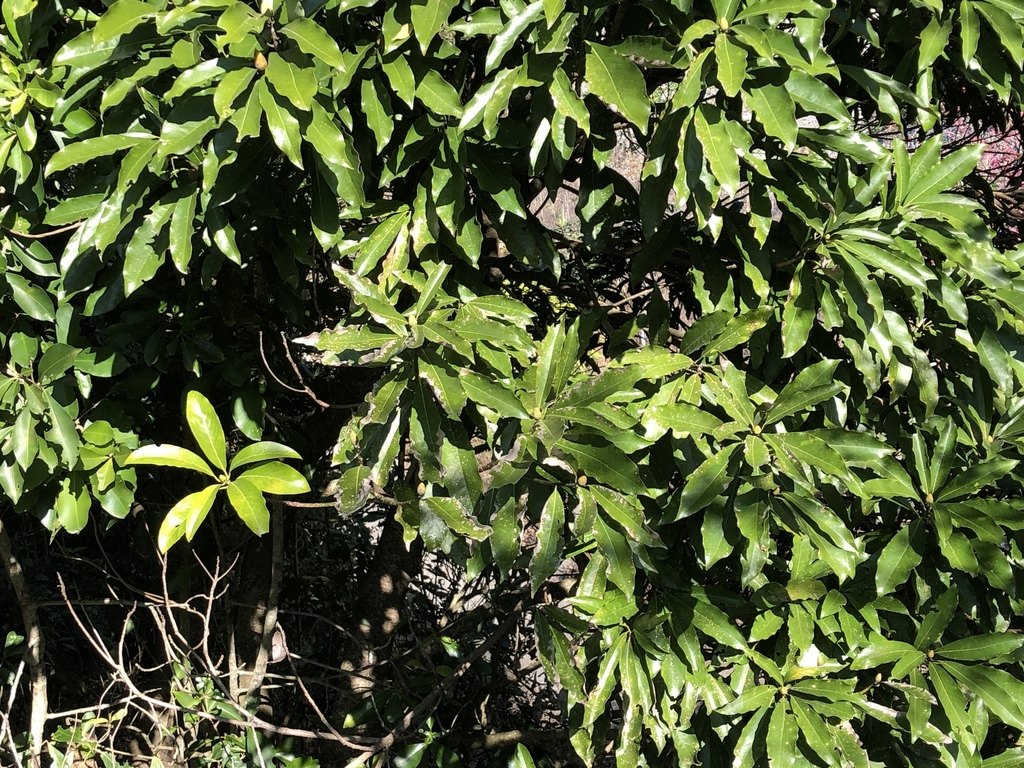
It is a medium tree with a dense crown, leathery elliptic leaves, small yellowish flowers in axillary panicles, and globose black fruit seated in the enlarged cup of the perianth tube. The leaves are the usual laurel equipment: dark above, paler beneath, with a scent of oil cells when crushed.
The karst of Guizhou and Guangxi is one of the great centres of woody plant endemism in China, a landscape of towers and gorges where soils are thin, calcareous and seasonally dry. Trees that live there are usually slow, deep-rooted and tolerant of drought, and this species is no exception.
The genus Machilus holds several hundred species in tropical and subtropical Asia, with the greatest concentration in southern China. The Chinese species were worked over in the twentieth century by a small group of taxonomists, and new ones are still being described from the limestone hills of the south.
Science & Biotechnology
The family’s oil cells are the reason a crushed leaf smells. They are single large idioblasts, scattered through the mesophyll and the bark, holding a mixture of terpenes and phenylpropanoids, and they are visible under a hand lens as translucent dots. In this species the scent is mild and resinous rather than sharp.
The flower is built on the laurel plan: six tepals in two whorls, nine fertile stamens in three whorls with a fourth whorl of staminodes, and glands at the base of the inner stamens. The glands are easy to miss and they are the character that separates the genera, so laurel taxonomy is a business for specialists.
The fruit is a berry with a single seed, and the cup beneath it is formed from the persistent perianth tube, which enlarges as the fruit ripens. Birds take the fruit and pass the seed, and the cup is the handle by which the whole genus can be recognised in the field in autumn.
Uses & Benefits
The wood is light, even-grained and easy to work, and it goes into furniture, veneer, plywood and the boxes used for tea and instruments. It is grouped with the nanmu timbers in the Chinese trade, though the true nanmu is Phoebe, and the two are separated by the wood anatomists rather than by the buyer.
The bark and leaves of several Machilus species yield an aromatic oil, and the bark is used locally as an astringent and for stomach complaints. The fruit of some species is eaten, mostly by children, and the timber is the crop that matters. Extraction of the oil has never become more than a village industry.
In the landscape it is a tree of the evergreen broad-leaved forest that survives in fragments on the karst and in temple woods, and those fragments hold a large share of the region’s endemic trees. Planting it is a small act of restoration, and it is also a way of keeping a species in cultivation that has almost no ornamental presence. For more of the Lauraceae, the list offers Machilus yunnanensis, Machilus gongshanensis and Machilus wangchiana.
Growing from Seed
Seed should be sown fresh, cleaned of the flesh and kept moist, because it loses viability quickly. Germination is reliable at warm temperatures in a free-draining mix, and the seedlings are steady rather than fast, making a woody stem in the second year and a shapely crown by the fifth.
Young trees want light shade, shelter from wind and a deep, humus-rich soil that holds moisture without waterlogging. On limestone the plant will need organic matter worked into the planting hole, and it will need watering through the first two dry seasons; after that it is surprisingly tough.
Little pruning is needed beyond taking out a competing leader and shortening the lowest branches. The tree makes a dense, rounded crown on its own, and the best specimens are the ones that were left alone. Expect the first flowers after six or seven years, and fruit a year or two after that.
Our Take
This is a tree for the collector and the restoration planter, not for the show border. It is slow, it is not easy to buy, and it will never stop traffic; what it will do is make a proper evergreen canopy in a warm, limy garden, and hold it for a century.
The name is a small monument to two provinces and to the botanists who worked them. Grow it if you have the ground, and give it the shade and the moisture it wants while it is young; after that it asks for nothing at all.
Related Reading
More species in the same orbit as Chienkwei Machilus: