


Machilus multinervia Seeds | Many-veined Machilus
LATIN NAME: Machilus multinervia
COMMON NAME: Many-veined Machilus
Plant Profile
Machilus multinervia is an evergreen tree of the laurel family, known from the hills of Guizhou and Guangxi, with leathery leaves that carry an unusual number of side veins and a set of small, globose black fruits sitting in a persistent cup. It is one of those Chinese trees that is well known to foresters and almost unknown to gardeners.
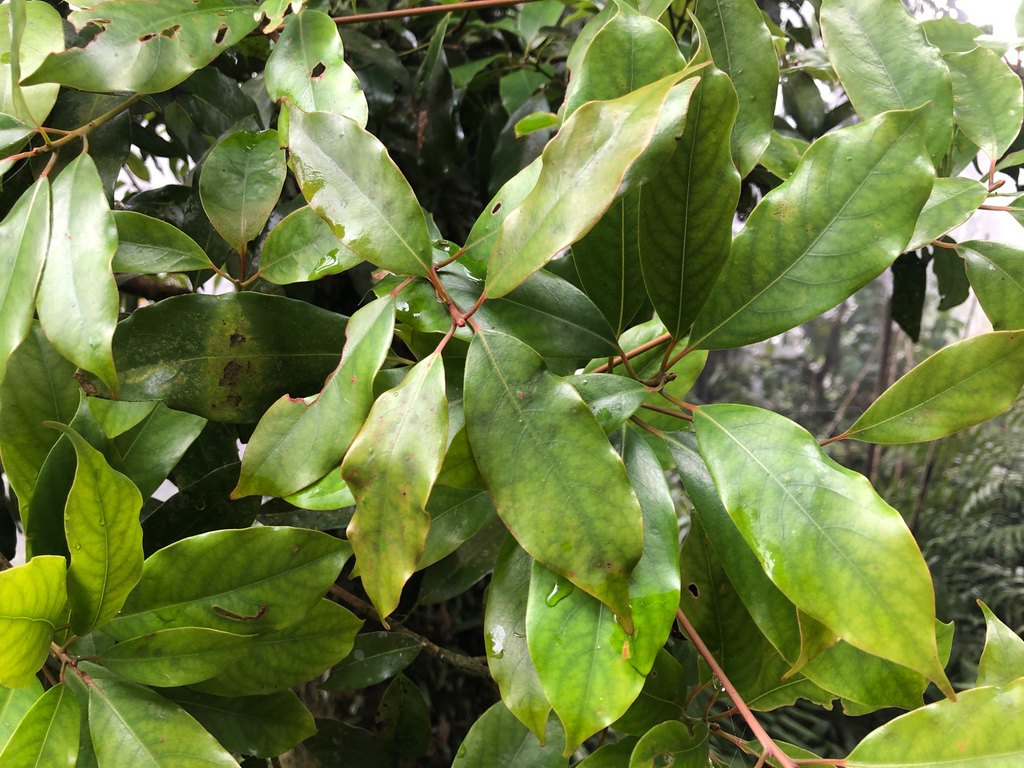
The leaves are the diagnostic feature: elliptic to lance-shaped, ten to twenty centimetres long, dark and glossy above, paler and slightly glaucous beneath, with fifteen to twenty pairs of veins running out to the margin. Crushed, they smell of the family, a green, resinous, slightly camphoraceous scent from the oil cells scattered through the tissue.
The genus is named from a local name used in India and Sri Lanka, where the first species were described, and it holds some hundreds of species in tropical and subtropical Asia. China has the largest concentration, and the southern provinces hold a long list of narrow endemics, of which this is one.
Its place in the genus has been contested. Molecular work in the 2000s found Machilus nested inside Persea, the avocado genus, and some treatments duly sank it; Chinese and Japanese botanists have largely kept it separate, on the grounds of its distinct combination of inflorescence, fruit and wood anatomy, and the argument is not settled.
Science & Biotechnology
The family’s defining chemistry is the oil cell. Single large cells, scattered through leaf, bark and wood, hold essential oils rich in terpenes and phenylpropanoids, and they are what make a crushed laurel leaf smell the way it does. In Machilus the oils are mild, and the wood is scented rather than pungent.
The flowers are small, yellowish-green, in panicles from the leaf axils, and they are built for generalist insects: six tepals in two whorls, nine fertile stamens in three whorls with glandular appendages at the base of the inner ones, and a single ovary. The glands are the family’s quiet signature, and they reward a close look.
The fruit is a one-seeded berry, dark blue-black at maturity, seated in a cup formed from the enlarged perianth tube, and it is dispersed by birds. The cup is the character that separates Machilus from its nearest relatives at a glance, and it is best seen in autumn, when the fruit sits in it like an egg in a cup.
Uses & Benefits
The wood is the reason foresters know the tree. Machilus timber is light, straight-grained, takes a fine finish and works easily, and it goes into furniture, veneer, interior joinery and the boxes used for instruments. It is not the true nanmu of Chinese carpentry, which is Phoebe, but it is sold in the same general class.
Several Machilus species yield an aromatic oil from the bark and leaves, and the bark of some is used in local medicine for stomach complaints and as a mild astringent. The fruits of a few species are eaten, mostly by children, and the timber and the oil are the serious products. Commercial extraction is small-scale and largely local, and it has never become an industry.
Ecologically the tree is a component of the evergreen broad-leaved forest that once covered much of southern China and now survives in fragments on ridges and in temple woods. Those fragments hold a disproportionate share of the region’s endemic trees, and this species is one of the reasons they are worth protecting.
Growing from Seed
Seed is short-lived and should be sown fresh, cleaned of the flesh, in a moist, free-draining mix at warm temperatures. Germination is usually quick and reliable, and the seedlings grow steadily rather than fast, making a woody stem in the second year and a shapely crown by the fifth. Do not let the seed dry out; viability falls sharply within a few weeks of collection.
Young trees want light shade and shelter from wind, which shreds the young leaves, and a deep, humus-rich, acid soil that never dries out completely. Once established they are surprisingly tough, but they are trees of the warm south and will not take hard frost when young. Plant in spring, mulch well, and keep the root zone clear of grass for the first three years.
Pruning is rarely needed beyond the removal of a competing leader and the shortening of low branches. The tree makes a dense, rounded crown on its own, and the best specimens are the ones that were left alone after planting. Stake only if the site is windy. Expect the first flowers after six or seven years, and a good crop of fruit a year or two later.
Our Take
This is a tree for the collector of Chinese evergreens, and for anyone planting a small wood in the warm south. It is not showy, it is not fast, and it is not easy to buy, but it is a proper forest tree with a beautiful leaf and a long future. Grown well, it makes the kind of canopy that a garden can be built around rather than under.
The obscurity is partly a matter of fashion and partly of supply. Machilus deserves better than a paragraph in a flora, and a gardener with the right climate and a little patience could do worse than give it a try. The cup beneath the fruit is a small thing, but it is the kind of detail that makes a tree worth knowing.
Related Reading
Gardeners who grow Many-veined Machilus often pair it with these related subjects: