


Potentilla fragarioides Seeds | Strawberry Cinquefoil
LATIN NAME: Potentilla fragarioides
COMMON NAME: Strawberry Cinquefoil
Plant Profile
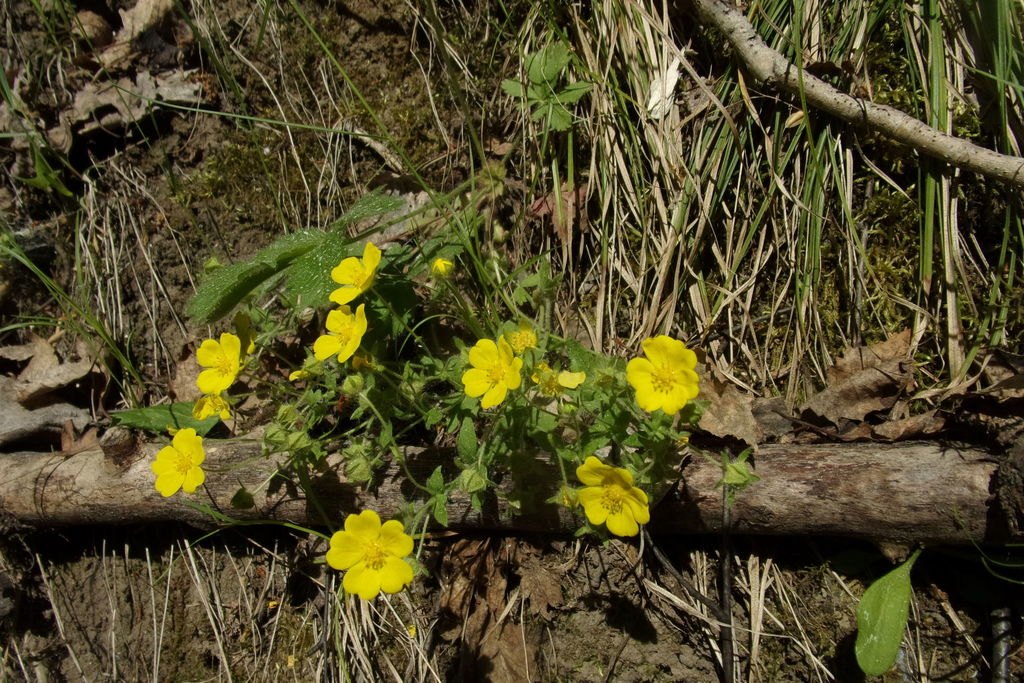
At a glance this cinquefoil reads as a wild strawberry that changed its plans. Potentilla fragarioides, a low perennial of ten to thirty centimetres from East Asia, builds a rosette of strawberry-like compound leaves from a short rootstock, then throws up wiry stems of small yellow five-petalled flowers from spring into summer.
The species name simply says strawberry-like, and the resemblance is real: three to five leaflets with toothed edges and a wrinkled upper surface. The giveaway is the flower, five flat yellow petals in the cinquefoil pattern, and the dry fruit of achenes where the strawberry would set its red aggregate. Runners are short or absent, so it clumps rather than carpets.
Linnaeus described it in 1753. Its range spans a huge east Asian arc, from Siberia through the Russian Far East and Korea to all four main Japanese islands and much of northern and central China, on sunny slopes, field banks and open woodland. Japanese sources describe it as common in lowland and mountain waste ground throughout the country.
Field records peak in April and May, with a secondary summer run where mowing or grazing renews the flush. In Japan and China the plant belongs to folk medicine, and it was that tradition, not the garden, that put the species into twentieth-century pharmacology.
Science & Biotechnology
The pharmacological story is concrete. Japanese work in the mid-twentieth century isolated a catechin-based preparation from the root, sold under the name fragarin as a hemostatic for postpartum and other bleeding, and the root’s d-catechin content was confirmed and studied as a vasoconstrictor. It ranks among the few cinquefoils whose chemistry reached the pharmacy shelf rather than the ethnobotany notebook.
The garden-relevant chemistry is less flattering: like many rosaceous herbs it carries tannins that make raw foliage bitter and astringent, and no part is a food plant. The strawberry resemblance ends at the leaf. Livestock browse it lightly, which is one reason it persists ungrazed along field edges.
Ecologically it is a sun-follower of disturbed ground, the same niche its Japanese habitat notes describe. Its rootstock stores reserves that let it regrow fast after cutting, and its flowers serve generalist small bees and flies. Field data show a clean spring peak, and plants in mown ground produce a second, smaller flowering wave in late summer. Near kin on the list are Potentilla erecta, Geum montanum and Geum aleppicum, all Rosaceae.
Uses & Benefits
In the garden it earns three modest posts: ground cover for lean sun, an edging plant for wilder borders, and a nectar plant for early small pollinators. The foliage stays neat from spring to frost, and the yellow flowers repeat lightly through the season rather than in one dramatic stop.
It is an honest plant for semi-wild settings, gravel margins and the front of a native-style bed, hardy across most temperate climates and indifferent to soil so long as drainage exists. As a medicinal plant its day has passed into laboratory history; the fragarin preparation is a historical pharmacology case rather than a current remedy, and home harvesting is pointless.
The honest limitation is scale. Nothing about it is bold: flowers are two centimetres, leaves are fifteen, and its effect in a border is texture rather than colour. It suits gardeners building ground-layer diversity, not those planting for photographs, and it outperforms its reputation exactly there.
Growing from Seed
Sow on the surface at fifteen to twenty degrees; germination runs one to three weeks with no pretreatment, though a month of cold stratification evens it out on older seed. Seedlings are small and quick, and a spring sowing gives plantable stock by early autumn.
Set out thirty centimetres apart in sun and average soil. Water the first season, then leave it alone; drought, mowing and neglect are all tolerated. Clumps can be split in spring, each piece with a bud and a few roots, and the rootstock accepts this readily. Pests are not on the list.
For seed, cut the dry heads into a paper bag when the receptacle browns and rub the achenes free. Store cool and dry; viability holds two to three years. In lean ground with some bare soil, established plants self-sow a light second generation without becoming a nuisance.
Our Take
Our take: this is a quiet specialist, and the better for it. Between lawn and border, on a dry bank where nothing ambitious survives, it holds ground and feeds the earliest bees. Its pharmacological past is a good story, but the garden case stands on its own.
The honest deal: buy it for the leaf season and the reliability, not the flowers. Sown in a drift with spring bulbs it disappears politely when the show moves on, and returns each year for the price of one sowing. Few plants at this scale are as undemanding.
Related Reading
Gardeners who grow Strawberry Cinquefoil often pair it with these related subjects: