


Helianthus angustifolius Seeds | Swamp Sunflower
LATIN NAME: Helianthus angustifolius
COMMON NAME: Swamp Sunflower
Plant Profile
Helianthus angustifolius is a perennial sunflower of the Asteraceae, native to the coastal plain of the southeastern United States, from New Jersey south to Florida and west to Texas. It grows in wet pine savanna, bogs and roadside ditches, in ground that is wet for much of the year.
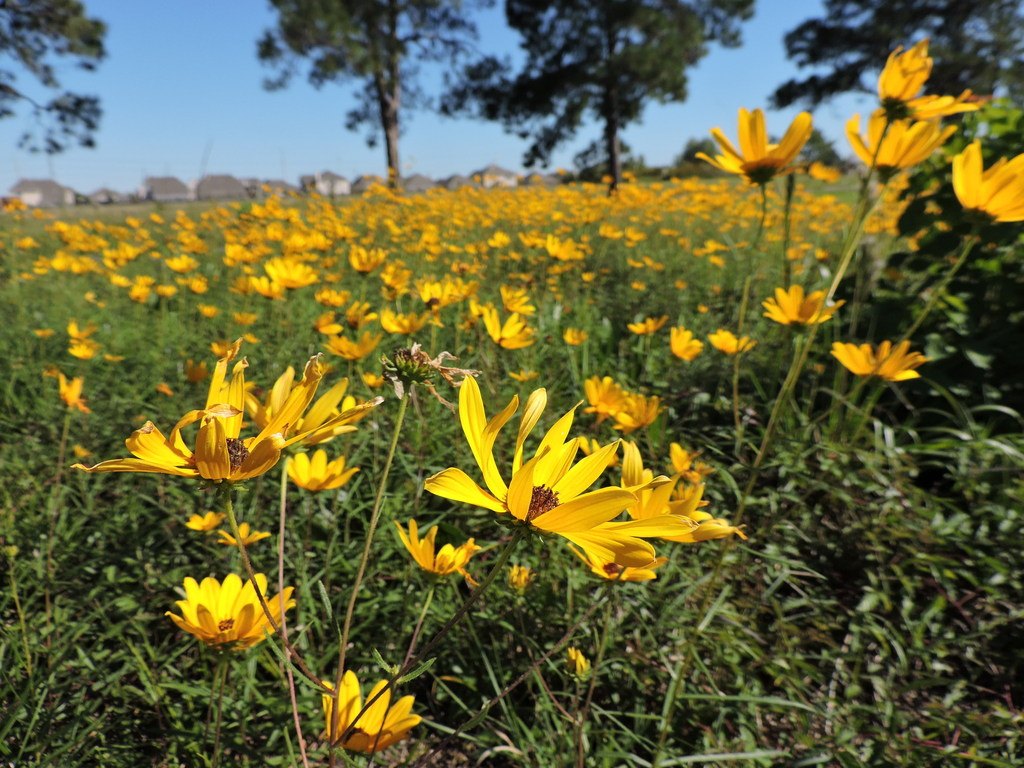
It grows 1.5 to 2 m tall on stiff, upright stems, with narrow, willow-like leaves 10 to 15 cm long and 1 cm wide. The flowers are 5 to 7 cm across, with golden rays and a darker centre, and they are produced in such numbers in October that the plant becomes a cloud of yellow at a time when most of the garden has finished.
The species is one of the last sunflowers to flower, and it ranks among the most valuable for late-season pollinators, since it provides nectar and pollen when little else is available. It is also one of the tallest, and a clump in full flower is a landmark in an autumn garden.
It spreads by rhizomes, so it can form large colonies in the wild, and why it needs room in a garden. The cultivar First Light is a more compact form, 1.2 m high, with paler flowers, and it is easier to place in a border than the species. For more of the Asteraceae, the list offers Helianthus maximiliani, Calocephalus brownii and Madia sativa.
Science & Biotechnology
Helianthus is a genus of about 70 species, all North American, and it includes the cultivated sunflower, H. annuus. The genus is characterised by the large flower heads and by the tuberous roots of some species, including the Jerusalem artichoke, H. tuberosus. The genus has a base chromosome number of x = 17, which is unusually high for the Asteraceae, and the species vary in ploidy. That is one reason the genus is so diverse, and one reason it has been studied extensively as a model for polyploid evolution.
The flowers are pollinated by bees and by butterflies, and they are self-incompatible, which means that two different plants are needed for a good seed set. That is why a single plant in a garden sets little seed, and why a group of three or more is better for both seed and display.
The rhizomatous habit is an adaptation to the wet, fire-prone habitats where the plant grows, since the roots survive fire and drought and allow the plant to regrow quickly. In a garden that same habit is a liability, and it is why the plant needs a root barrier or a bed of its own.
Uses & Benefits
It is used at the back of a border, in a wild garden and at the edge of a pond, where its height and its late season are assets. It is also a good cut flower, and it ranks among the few yellow flowers that looks right in an autumn arrangement.
The plant is a magnet for bees, butterflies and hoverflies in October, and it ranks among the best plants for a pollinator garden in the southeastern United States. The seed is eaten by finches and by other small birds in winter, and the stems provide cover for insects.
The plant is not edible, and the foliage is not palatable to livestock. It is grown for ornament and for ecology rather than for food, and its value in a garden is in what it does in autumn, when most plants have stopped.
It tolerates wet ground and poor soil, which makes it useful in a rain garden or a ditch, and it ranks among the few tall perennials that will grow in the wet strip behind a pond. It is also tolerant of salt, which makes it useful in a coastal garden.
Growing from Seed
Six to eight weeks of indoor growing before the last frost, at 18 to 21 °C, and only a light covering. Give it a fortnight, then a week more. The seed is large and germinates reliably, and the seedlings are vigorous. Transfer to 9 cm pots and grow on at 15 °C. Plant out in spring, 60 cm apart, in full sun and moist soil. The plant tolerates poor ground but not drought, and it flowers best in a site that stays damp.
Water it regularly for a season and mulch to keep the moisture in. The plant is tall and may need staking in a windy site, particularly if it is grown in rich soil. Cut it back by half in early summer for a shorter, bushier plant that flowers a fortnight later.
Divide clumps every three or four years in spring, and be ruthless about removing the runners that escape. If you do not want it to spread, plant it in a bottomless bucket or against a concrete path, where the rhizomes cannot travel.
Our Take
Swamp sunflower is a plant for the back of a border and for October, when the garden is running out of colour. It is tall, generous and full of bees, and it ranks among the best plants for a pollinator garden in the southeast. Give it room, or give it a bucket, and let it flower. It is worth the space for the week in October when it turns the border gold.
Related Reading
Gardeners who grow Swamp Sunflower often pair it with these related subjects: