


Primula denticulata Seeds | Drumstick Primula
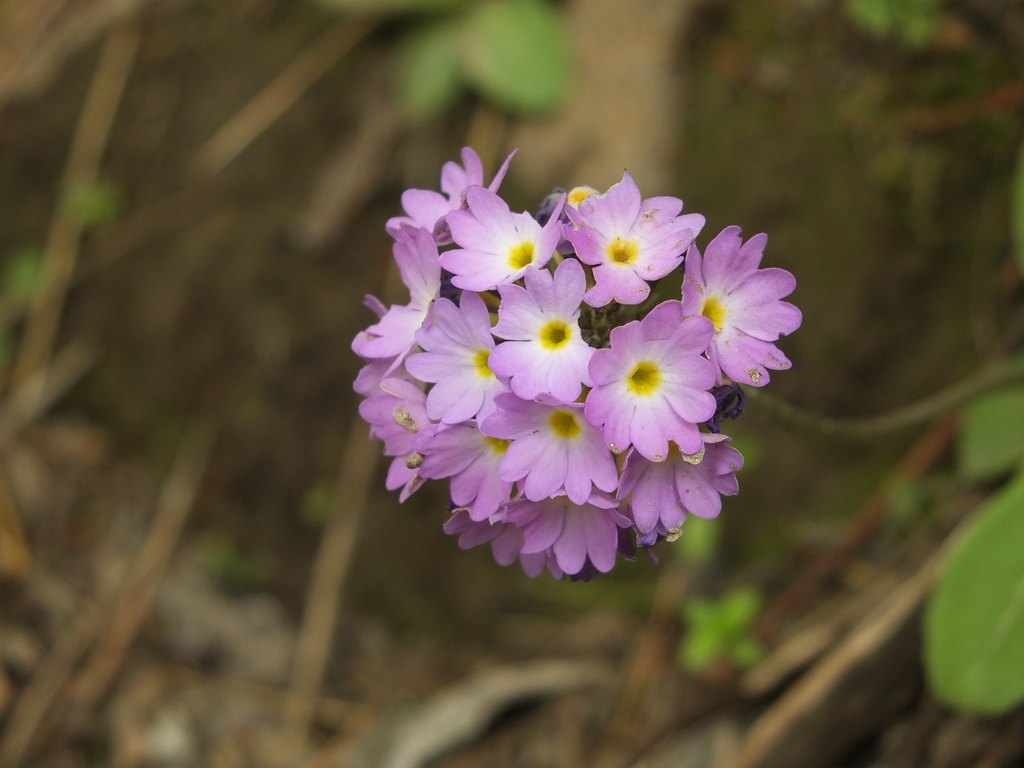
LATIN NAME: Primula denticulata
COMMON NAME: Drumstick Primula
Plant Profile
Primula denticulata announces spring in a way few perennials can match: a tight ball of purple flowers on a naked stem, held clear of the ground before a single leaf has properly unfurled. The common name drumstick describes the shape exactly, and the effect lasts for six weeks.
It is an herbaceous perennial of about forty-five centimetres in height and spread, with rosettes of oval, slightly toothed leaves that appear after flowering and stay green into autumn. The flowers may be purple, lavender, pink or white, and a well-grown clump carries a dozen stems at once. Seed-grown plants vary in shade, and a batch will give purples, lavenders and the occasional white, which is half the pleasure of raising them.
The specific epithet refers to the small teeth on the leaf margin, a detail you need a lens to appreciate. The species was described by James Edward Smith from Himalayan material, and its range runs from Afghanistan and Pakistan across the Himalaya to southern Xizang, Bhutan, northeast India and northern Myanmar. It was among the first Himalayan primulas to reach European gardens, arriving in the early nineteenth century and spreading through the seed lists within a generation.
It grows between fifteen hundred and forty-five hundred metres, in shrubberies and open slopes that stay moist, often along drainage lines and seepage channels. That altitude range explains the plant’s tolerance of cold and its complete intolerance of summer drought.
Science & Biotechnology
The genus is chemically notorious for primin, a benzoquinone that causes contact dermatitis in a proportion of gardeners. Primula denticulata carries primin and other quinoid compounds in its leaves and stems, so handling a clump bare-handed can leave a streaked rash on the forearm. The reaction appears a day or two later as an itchy erythema, and it fades over a week or so without scarring.
Each head is a simple umbel, not the tiered candelabra of the bog primulas, with many flowers packed onto a short receptacle. The corolla tube is longer than the calyx, and the throat carries a yellow eye that functions as a nectar guide for the small bees and hoverflies that work the plant.
The flowering sequence is a piece of mountain engineering. The scape elongates before the leaves expand, so the flowers are presented in open light while the plant is still low, and the leaf rosette only reaches full size once the seed is set and the demand for water has fallen. The Primulaceae list also carries Primula vulgaris, Primula alpicola and Primula obconica.
Uses & Benefits
In the garden it belongs at the edge of a pond, in a damp meadow strip, or in the shade of deciduous shrubs where the soil never dries out. It naturalises readily in such places and will build into sheets of colour that look as though nobody planted them.
Garden records peak in April, with March and May on either side, which puts it at the front of the season, ahead of most of the candelabra primulas. That timing is its main selling point: the drumsticks arrive when the border is still mostly soil.
The plant has an Award of Garden Merit and a long history in cultivation, and seed-grown strains are usually more vigorous than divisions from old clumps. The white and pink forms are worth selecting if you raise a batch, since a mixed row produces a range of shades rather than a block of purple.
Growing from Seed
Sow fresh seed on the surface in autumn or early spring, because it needs light and, in most strains, a cold spell to germinate evenly. Press it onto a peaty compost, do not cover it, and leave the tray in a cold frame through winter; seedlings appear with the first warm days.
Prick out when the first true leaf shows, into a mix that holds moisture without staying sodden. The seedlings are slow for a month and then sudden, and they resent drying out at any stage. Grow them on cool and bright, and plant out in autumn rather than spring.
Division is possible but rarely necessary. Lift a clump after flowering, split it into pieces with a root and a growing point each, and replant at the same depth. Wear gloves for the whole operation, and wash your hands and forearms afterwards rather than simply wiping them.
Our Take
Drumstick primula is the plant that starts the bog garden in March, and it does so without any of the fuss that the candelabra primulas demand. Give it wet ground and light shade and it will look after itself, spreading slowly and never becoming a nuisance.
The one thing worth taking seriously is the sap. If you have ever pulled up a primula and found a red, itching line across your wrist a day later, you already know why the gloves are not optional. Everything else about this plant is easy.
Related Reading
Readers interested in Drumstick Primula frequently explore these as well: