


Bupleurum rotundifolium Seeds | Hare’s Ear
LATIN NAME: Bupleurum rotundifolium
COMMON NAME: Hare’s Ear
Plant Profile
Hare’s ear is the umbellifer that forgot to be an umbellifer. Bupleurum rotundifolium, an upright annual of thirty to sixty centimetres, has no ordinary leaves on the flower stem: the round blue-green leaves are joined right through, and the stem appears to thread them like a buttonhole.
The umbels sit directly above those perfoliate leaves, which curl up around them and do the job of bracts. Yellow-green flowers in small flat heads open from the centre outward, and the whole spray, leaf and bloom together, reads as one pale green-gold object rather than a flower on foliage. Each umbel has few rays, four to eight, which keeps the heads small and flat.
Linnaeus named it in 1753; the genus name couples the Greek for ox and rib, a botanist’s note on the ridged leaves of the type species. English farming gave it the better names, thorow-wax for the way the stem goes through the leaf, and hare’s ear for the shape.
It was a weed of the old cornfields, sown and harvested with the rye across central Europe, Britain and Russia. Seed cleaning and herbicides erased it from most of that range, and its British stronghold shrank to a few counties, a decline that left it scarcer in the wild than in the flower trade. A few populations survive on churchyard banks and old field borders where spraying never reached.
Science & Biotechnology
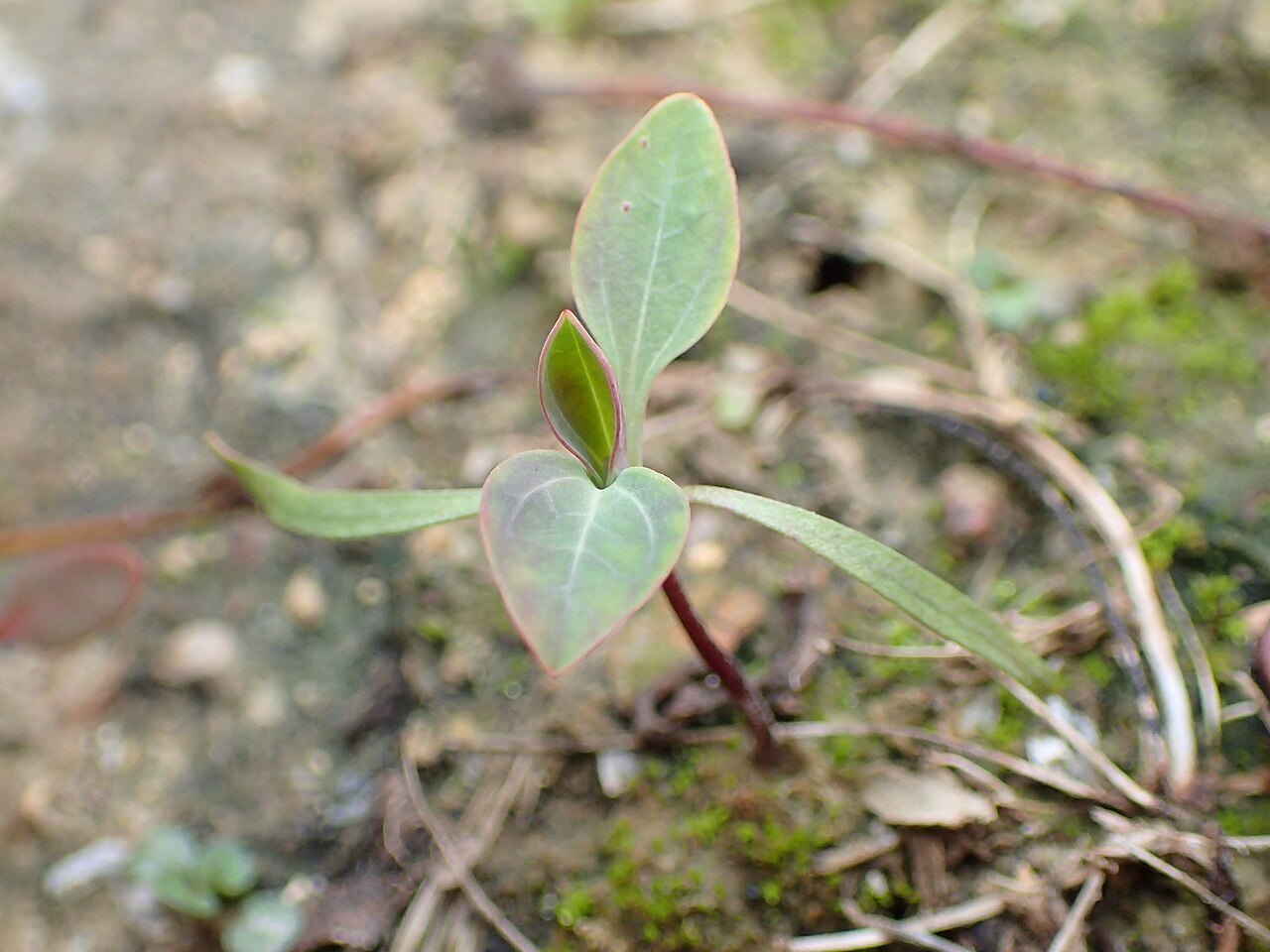
Botanically the fused leaves are the show. A seedling starts with ordinary simple leaves; only when the flowering stem runs do the pairs fuse around it into perfoliate cups. This is rare in the carrot family, and it is why a stem needs no other green: architecture and decoration come in one piece.
The genus is a medicinal dynasty in Asia. Its Chinese relatives are the source of saikosaponins, triterpene glycosides studied for anti-inflammatory and liver-protective effects, and hare’s ear shares the family chemistry at lower strength. No part of this annual carries a kitchen use, and none is needed.
Public observation records across its enormous naturalised span, from Morocco to Japan and North America, peak in May and June. At a glance the species looks weedy in the data: roadsides, field edges and abandoned ground dominate, which is exactly what an arable weed does when the farms stop farming it. Near kin on the list are Bupleurum chinense, Cuminum cyminum and Carum carvi, all Apiaceae.
Uses & Benefits
The cut-flower trade adopted it wholesale. Growers sow it in succession and cut the whole spray with two or three umbels open, the perfoliate leaves standing in for greenery; it lasts over a week in the vase and its colour blends with everything, making it the quiet structural half of many bouquets.
In the border it fills the same role in place: air above, structure below, with the blue-green foliage carrying the show before and after the modest bloom. It pairs naturally with nigella and cornflower, the three of them repeating the same soft blue-gold register through early summer.
It is not fussy, but it is brief. Sown in spring it flowers for six weeks and dies with the first hard cut of autumn; gardeners wanting the effect all season must sow twice. That is the entire complaint, and the reason it stays a sowing plant rather than a fixture.
Growing from Seed
Sow direct in spring or in autumn for early bloom; it forms a taproot and resents potting on. Germination runs one to three weeks at fifteen to eighteen degrees, uneven but sufficient. Thin to twenty-five centimetres. A cold week improves rates on stored seed.
Full sun and ordinary to poor soil, no feeding and little water once established. It stands light drought and windy sites without staking, its stems stiff enough to carry the sprays. Sow a second batch three weeks after the first to stretch the cutting season. Aphids occasionally cluster on the young growth; a jet of water settles that.
Seed sets in the small ridged fruits of the umbel and is ready when the heads turn tan; cut the whole umbels into a bag and rub. Self-sowing is modest, one thin generation in loose soil, and saved seed keeps about three years before rates fall away.
Our Take
Our take: hare’s ear is the florist’s annual that gardeners should steal back. No other sowing plant gives that cool blue-green architecture, and a row of it costs less than a single bunch from the market. Sow more than seems sensible.
The honest framing is that it is a professional’s plant: brief, structural, best in numbers. Give it a dedicated row in the cutting patch rather than a scattered place in the border, and it will return value every summer for the price of one packet.
Related Reading
Gardeners who grow Hare’s Ear often pair it with these related subjects: