


Cynanchum chinense Seeds | Chinese Swallow-wort
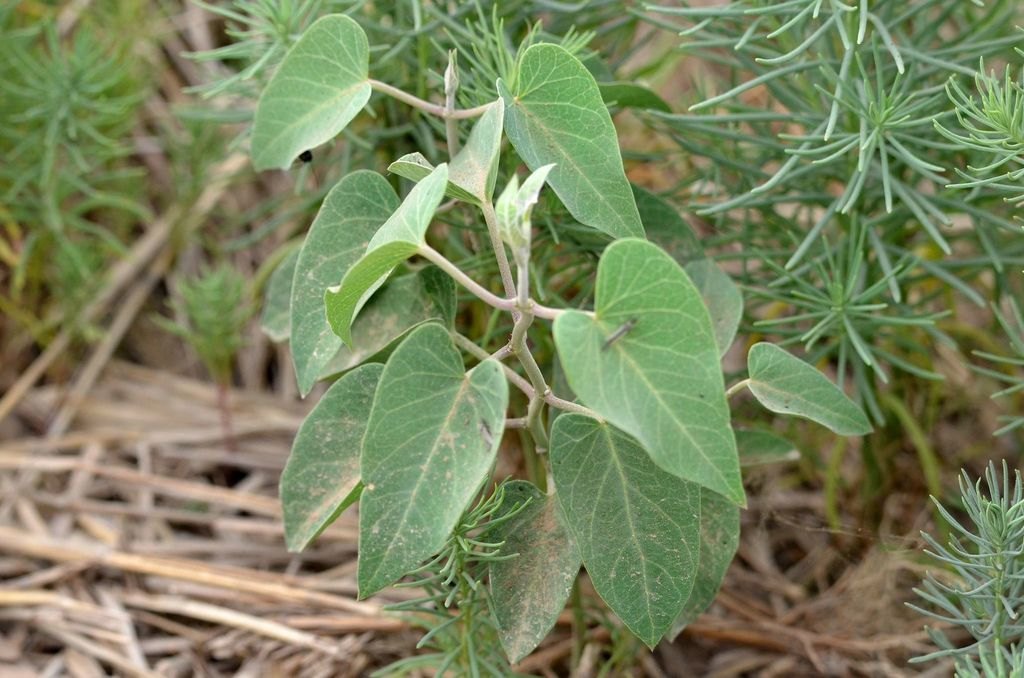
LATIN NAME: Cynanchum chinense
COMMON NAME: Chinese Swallow-wort
Plant Profile
Cynanchum chinense is a twining herbaceous vine of northern China, with heart-shaped leaves, small white flowers in loose umbels, and a pair of spindle-shaped follicles that split in autumn to release a coma of long white silk. The Chinese name, e rong teng, means goose-down vine, and it describes the seed far better than any English name does.
The stems are slender, twining anticlockwise, and they will climb anything within reach: a fence, a shrub, a maize stalk, another stem of their own kind. The leaves are opposite, thin, dull green above and paler beneath, with a heart-shaped base and a long drip-tip that is out of proportion to the size of the plant.
It ranges across northern and central China, from Gansu and Shaanxi through Shanxi, Hebei, Henan and Shandong to Jiangsu, Liaoning and Jilin, and it continues into Mongolia and the Korean peninsula. It grows in thickets, on roadsides, along field margins and on the dry hills of the loess country, always in sun.
The genus has been through a long argument. What used to be the milkweed family is now a subfamily of the dogbane family, and within it Cynanchum and Vincetoxicum have been split, merged and split again on the evidence of corona shape, pollinium structure and, more recently, DNA. Chinese treatments have generally kept the two apart.
Science & Biotechnology
The flower has a corona of five fleshy lobes sitting on the staminal column, and the lobes are what separate the genus from its neighbours. The corona is not a decorative frill: it holds nectar, guides the mouthparts of visitors, and in some species it physically traps a proboscis until the insect pulls free with a pollinium attached.
The pollinia are the family’s great invention. Pollen is not shed as loose grains but packed into waxy masses, two per anther, joined by translator arms to a sticky corpusculum. An insect that slips a leg or a mouthpart into the right gap picks up the whole apparatus and carries it, intact, to the next flower.
The plant’s chemistry is the reason it appears in the pharmacopoeia. The genus is rich in C21 steroidal glycosides, compounds built on a pregnane skeleton, and several species have yielded cynanchogenin and related aglycones. The compounds are bitter, biologically active, and in some cases toxic enough that dose matters a great deal. The family connection runs to Cynanchum paniculatum, Tabernaemontana alternifolia and Chonemorpha grandiflora.
Uses & Benefits
In Chinese practice the whole plant or the root is used, gathered in summer and dried, for wind-damp complaints, itching and swellings, usually in compound prescriptions rather than alone. It is a regional and folk medicine rather than a headline drug, and the pharmacological literature on this particular species is thin.
The stems yield a strong bast fibre, and before synthetic rope it was collected for cordage and coarse cloth in the villages where it grew. The seed silk has been used as a stuffing, in the way kapok was, though it lacks the resilience and soon mats down. Both uses are now historical.
Ecologically it is a host plant. The milkweed subfamily feeds a specialised fauna, and in China the vines are eaten by the larvae of danaine and other butterflies, which sequester the plant’s cardiac glycosides and become unpalatable in turn. A patch of e rong teng on a field margin is a small reservoir of that chemistry.
Growing from Seed
Seed should be separated from the coma before sowing, because the silk holds moisture and rots. Sow in spring at about twenty degrees, cover lightly, and expect germination in two to three weeks; fresh seed is much better than old, and chilling is not required. The seedlings are vigorous and need a support within a fortnight of unfolding their first true leaves.
Give it a fence, a tripod or a rough shrub, full sun, and ordinary soil; it will do the rest, and it will do rather a lot of it. The vine grows fast, flowers from midsummer, and sets seed freely, so seedlings appear along any open edge nearby in the following spring. In a small garden that vigour is the main thing to plan for.
The rootstock spreads, and a plant that is not wanted is difficult to remove by pulling, because the broken roots resprout. Site it where it can run, cut it back hard in winter, and remove the follicles before they split if you do not want the silk, and the seedlings, everywhere. It is a plant to give a job to, not one to plant and forget.
Our Take
This is a useful, ordinary, slightly thuggish vine that happens to have one of the best seed displays of any hardy climber. The flowers are small and the habit is unruly, and then October arrives and the pods open into two white brushes that hold light like a lantern. That is the moment the plant justifies the space it has taken all summer.
Grow it for the seed, tolerate the tangle, and keep it out of the vegetable bed. It is not a plant for a tidy garden, and it does not pretend to be one. But on a rough fence at the end of a field, in the low sun of an autumn afternoon, it is very hard to beat.
Related Reading
Gardeners who grow Chinese Swallow-wort often pair it with these related subjects: